State Key Laboratory of Medicinal Chemical Biology, Department of Genetics and Cell Biology, College of Life Sciences, Nankai University , Tianjin 300071 , China ; Tianjin-Oxford Joint Laboratory of Gene Therapy, Tianjin Research Centre of Basic Medical Science, Tianjin Medical University , Tianjin 300070 , China.
Biol Open. 2012 Nov 15;1(11):1118-27. doi: 10.1242/bio.20121586. Epub 2012 Sep 7.
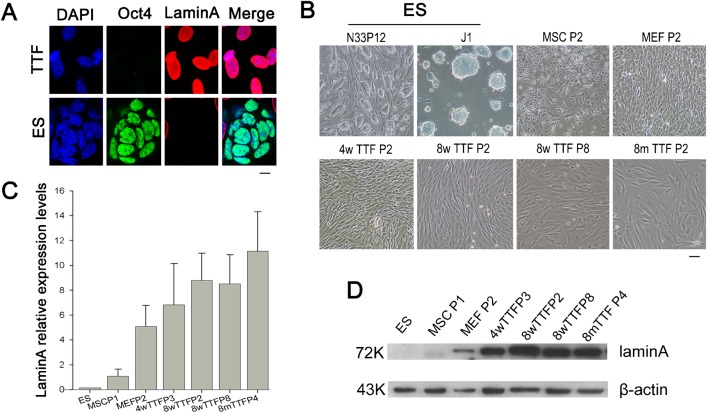
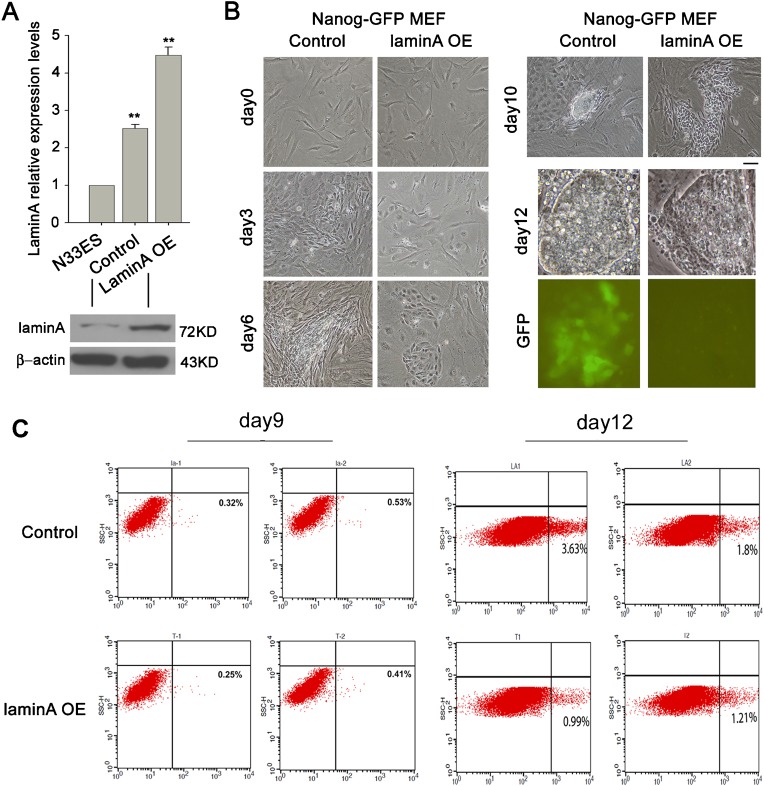
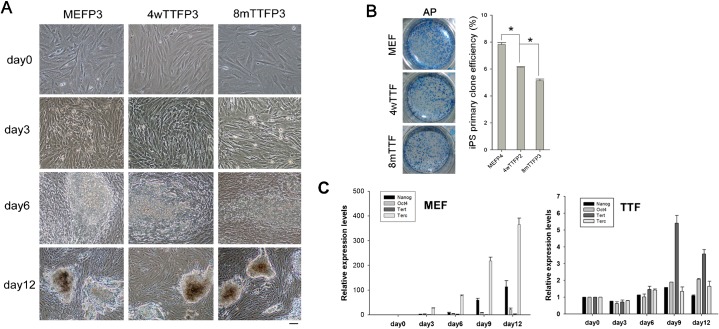
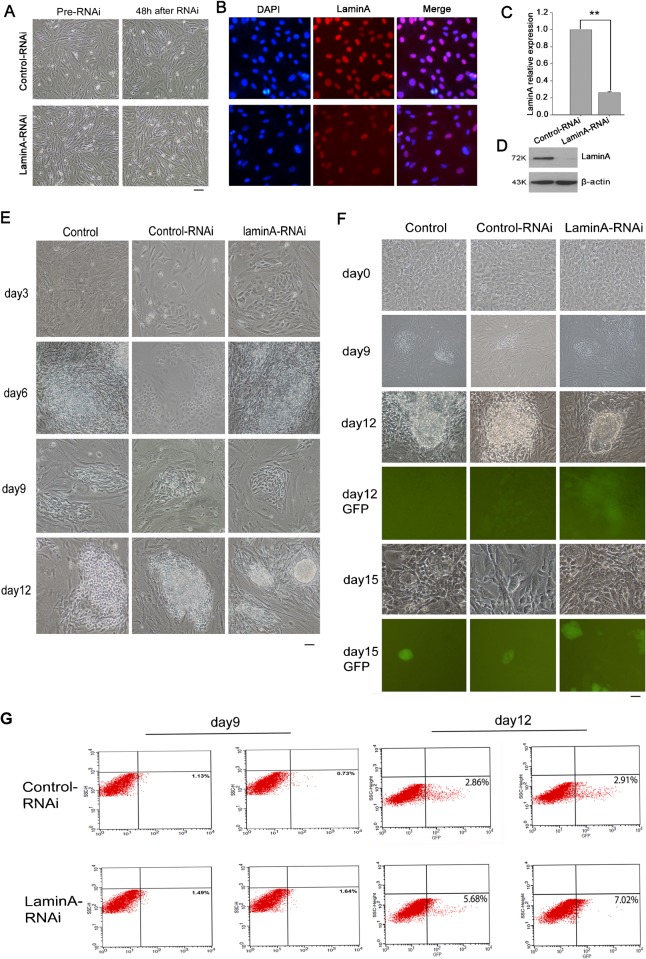
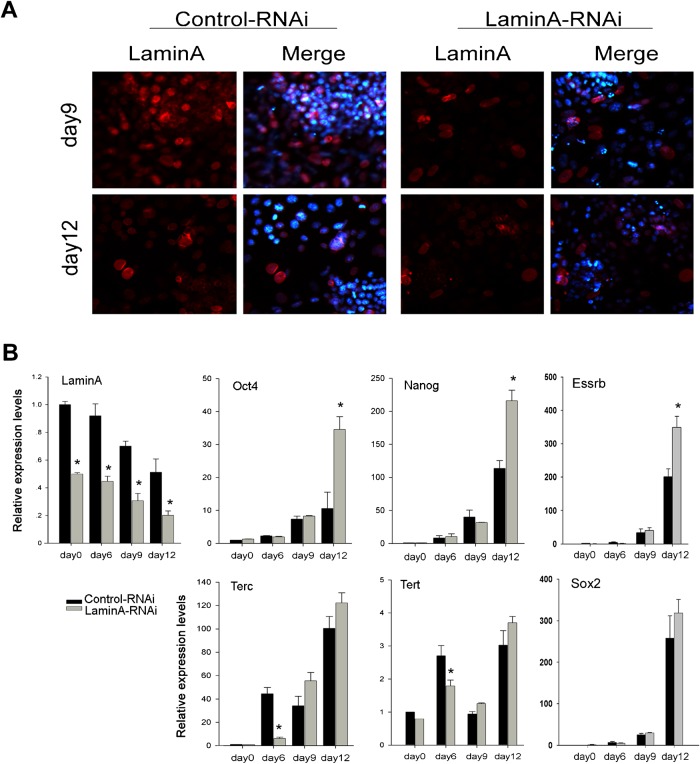
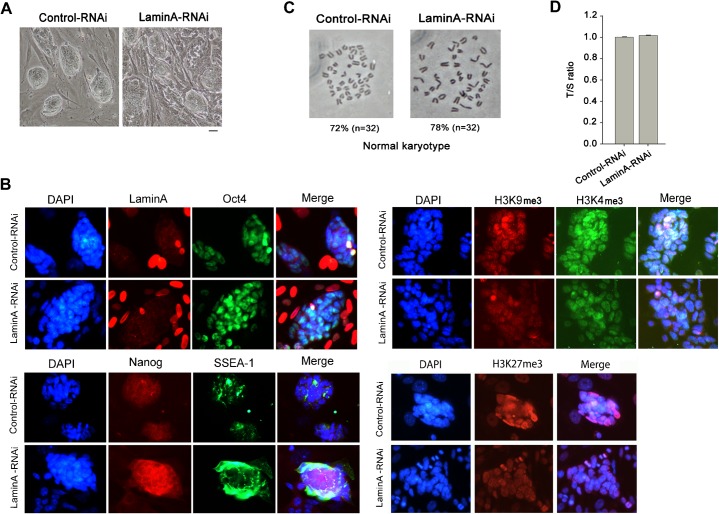
Lamin A is an inner nuclear membrane protein that maintains nuclear structure integrity, is involved in transcription, DNA damage response and genomic stability, and also links to cell differentiation, senescence, premature aging and associated diseases. Induced pluripotent stem (iPS) cells have been successfully generated from various types of cells and used to model human diseases. It remains unclear whether levels of lamin A influence reprogramming of somatic cells to pluripotent states during iPS induction. Consistently, lamin A is expressed more in differentiated than in relatively undifferentiated somatic cells, and increases in expression levels with age. Somatic cells with various expression levels of lamin A differ in their dynamics and efficiency during iPS cell induction. Cells with higher levels of lamin A show slower reprogramming and decreased efficiency to iPS cells. Furthermore, depletion of lamin A by transient shRNA accelerates iPS cell induction from fibroblasts. Reduced levels of lamin A are associated with increased expression of pluripotent genes Oct4 and Nanog, and telomerase genes Tert and Terc. On the contrary, overexpression of lamin A retards somatic cell reprogramming to iPS-like colony formation. Our data suggest that levels of lamin A influence reprogramming of somatic cells to pluripotent stem cells and that artificial silencing of lamin A facilitates iPS cell induction. These findings may have implications in enhancing rejuvenation of senescent or older cells by iPS technology and manipulating lamin A levels.
核层蛋白 A 是一种核内膜蛋白,它维持核结构的完整性,参与转录、DNA 损伤反应和基因组稳定性,还与细胞分化、衰老、早衰和相关疾病有关。已成功地从各种类型的细胞中诱导出多能干细胞(iPS),并用于模拟人类疾病。目前尚不清楚核层蛋白 A 的水平是否会影响 iPS 诱导过程中体细胞向多能状态的重编程。核层蛋白 A 在分化的体细胞中比相对未分化的体细胞中表达更多,并且随着年龄的增长而增加。核层蛋白 A 表达水平不同的体细胞在 iPS 细胞诱导过程中的动力学和效率存在差异。核层蛋白 A 水平较高的细胞表现出较慢的重编程和较低的 iPS 细胞效率。此外,通过瞬时 shRNA 敲低核层蛋白 A 可加速成纤维细胞向 iPS 细胞的诱导。核层蛋白 A 水平降低与多能基因 Oct4 和 Nanog 以及端粒酶基因 Tert 和 Terc 的表达增加有关。相反,核层蛋白 A 的过表达会阻碍体细胞向 iPS 样集落的重编程。我们的数据表明,核层蛋白 A 的水平影响体细胞向多能干细胞的重编程,并且人工沉默核层蛋白 A 有助于 iPS 细胞的诱导。这些发现可能对通过 iPS 技术增强衰老或老年细胞的再生以及操纵核层蛋白 A 水平具有重要意义。