Barcelona Centre for International Health Research, Hospital Clínic-Universitat de Barcelona, Barcelona, Spain. .
Malar J. 2012 Dec 5;11:405. doi: 10.1186/1475-2875-11-405.
Plasmodium vivax has traditionally been considered virtually absent from Western and Central Africa, due to the absence of the Duffy blood group in most of the population living in these areas. Recent reports, however, suggest the circulation of P. vivax in sub-Saharan Africa.
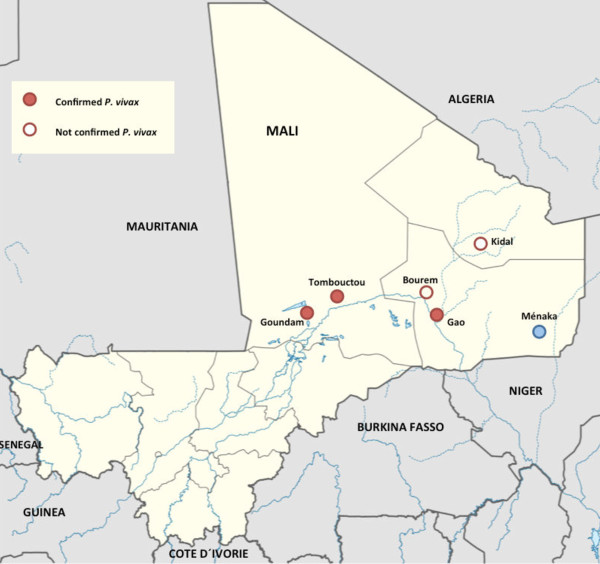
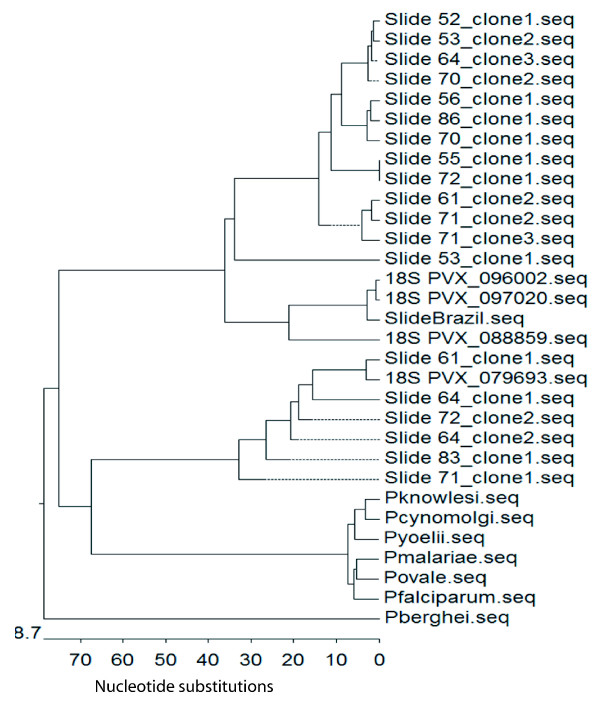
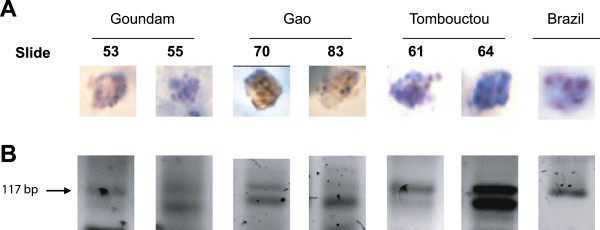
Giemsa/Field-stained smears from febrile patients recruited in five different cities (Goundam, Tombouctou, Gao, Bourem and Kidal) pertaining to three regions from Northern Mali were examined. Nested-PCR and DNA sequence analyses of selected samples were performed to fully confirm the presence of P. vivax infections.
Results demonstrated the presence of P. vivax infections in close to 30% of the cases as detected by Giemsa/Field-stained smears and nested-PCR and DNA-sequence analyses of selected samples unequivocally confirmed the presence of P. vivax.
The diagnostics of this human malaria parasite should be taken into account in the context of malaria control and elimination efforts, not only in Mali, but also in sub-Saharan Africa.
由于生活在这些地区的大多数人缺乏 Duffy 血型,间日疟原虫传统上被认为几乎不存在于西非和中非。然而,最近的报告表明,间日疟原虫在撒哈拉以南非洲流行。
对来自马里北部三个地区的五个不同城市(贡达姆、通布图、加奥、布勒姆和基达尔)招募的发热患者的吉姆萨/现场染色涂片进行了检查。对选定样本进行巢式 PCR 和 DNA 序列分析,以完全确认存在间日疟原虫感染。
吉姆萨/现场染色涂片和巢式 PCR 检测结果表明,接近 30%的病例存在间日疟原虫感染,对选定样本的 DNA 序列分析也明确证实了间日疟原虫的存在。
在疟疾控制和消除工作中,不仅在马里,而且在整个撒哈拉以南非洲,都应该考虑到这种人类疟原虫寄生虫的诊断。