Mosaiques Diagnostics, Hannover, Germany.
PLoS One. 2012;7(12):e51334. doi: 10.1371/journal.pone.0051334. Epub 2012 Dec 7.
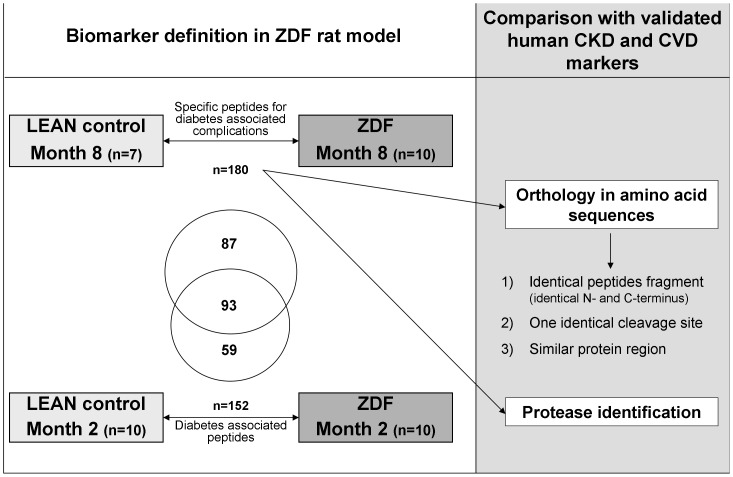
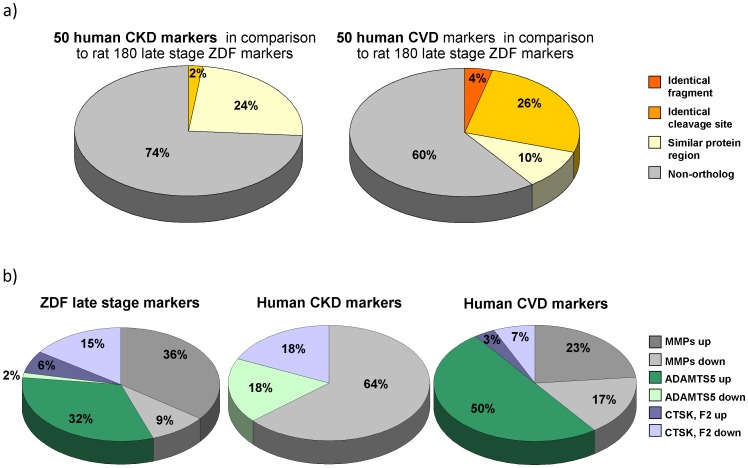
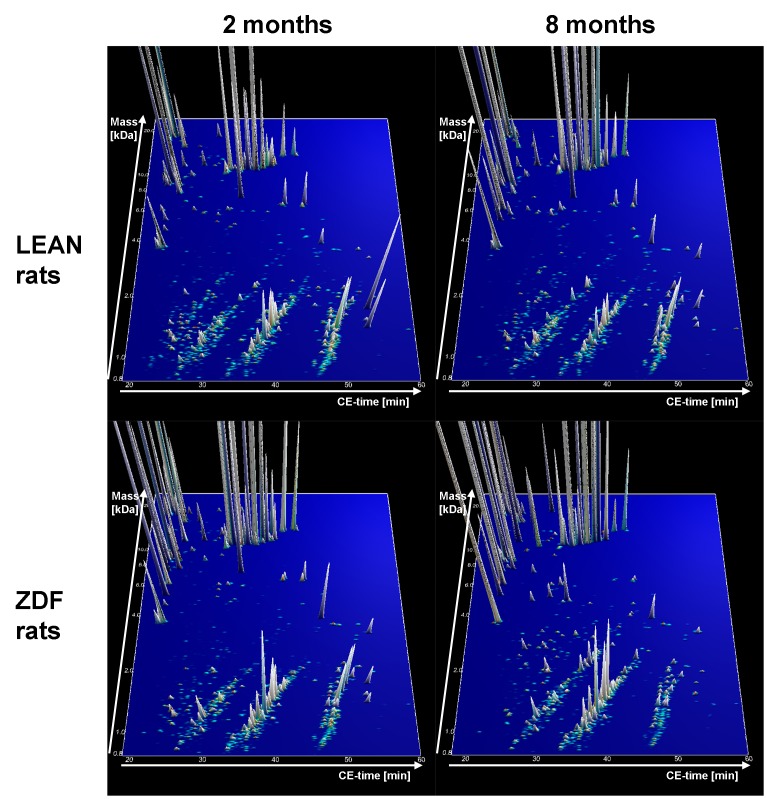
Representative animal models for diabetes-associated vascular complications are extremely relevant in assessing potential therapeutic drugs. While several rodent models for type 2 diabetes (T2D) are available, their relevance in recapitulating renal and cardiovascular features of diabetes in man is not entirely clear. Here we evaluate at the molecular level the similarity between Zucker diabetic fatty (ZDF) rats, as a model of T2D-associated vascular complications, and human disease by urinary proteome analysis. Urine analysis of ZDF rats at early and late stages of disease compared to age- matched LEAN rats identified 180 peptides as potentially associated with diabetes complications. Overlaps with human chronic kidney disease (CKD) and cardiovascular disease (CVD) biomarkers were observed, corresponding to proteins marking kidney damage (eg albumin, alpha-1 antitrypsin) or related to disease development (collagen). Concordance in regulation of these peptides in rats versus humans was more pronounced in the CVD compared to the CKD panels. In addition, disease-associated predicted protease activities in ZDF rats showed higher similarities to the predicted activities in human CVD. Based on urinary peptidomic analysis, the ZDF rat model displays similarity to human CVD but might not be the most appropriate model to display human CKD on a molecular level.
用于评估潜在治疗药物的糖尿病相关血管并发症的代表性动物模型在医学研究中具有极其重要的意义。虽然有几种 2 型糖尿病(T2D)的啮齿动物模型,但它们在再现人类糖尿病的肾脏和心血管特征方面的相关性尚不完全清楚。在这里,我们通过尿蛋白质组分析,从分子水平评估 Zucker 糖尿病肥胖(ZDF)大鼠作为 T2D 相关血管并发症模型与人类疾病的相似性。与年龄匹配的 LEAN 大鼠相比,对疾病早期和晚期的 ZDF 大鼠的尿液分析鉴定出 180 种肽可能与糖尿病并发症有关。与人类慢性肾脏病(CKD)和心血管疾病(CVD)生物标志物存在重叠,对应于标记肾脏损伤的蛋白质(例如白蛋白、α-1 抗胰蛋白酶)或与疾病发展相关的蛋白质(胶原)。与 CKD 图谱相比,这些肽在大鼠和人类中的调节一致性在 CVD 中更为明显。此外,ZDF 大鼠中与疾病相关的预测蛋白酶活性与人类 CVD 中的预测活性具有更高的相似性。基于尿肽组学分析,ZDF 大鼠模型与人类 CVD 具有相似性,但在分子水平上可能不是显示人类 CKD 的最适合模型。