College of Biomedical Engineering, Capital Medical University, Beijing 100069, People's Republic of China.
Biomed Eng Online. 2012 Dec 19;11:96. doi: 10.1186/1475-925X-11-96.
Digital mammography is the most reliable imaging modality for breast carcinoma diagnosis and breast micro-calcifications is regarded as one of the most important signs on imaging diagnosis. In this paper, a computer-aided diagnosis (CAD) system is presented for breast micro-calcifications based on dual-tree complex wavelet transform (DT-CWT) to facilitate radiologists like double reading.
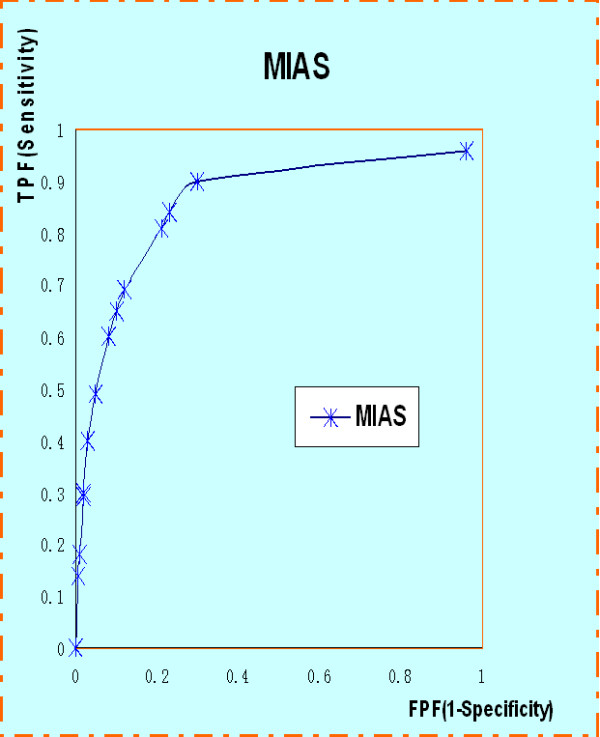
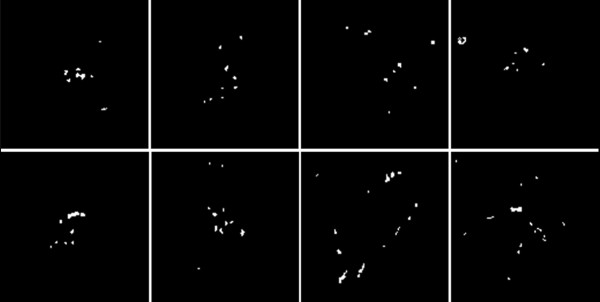
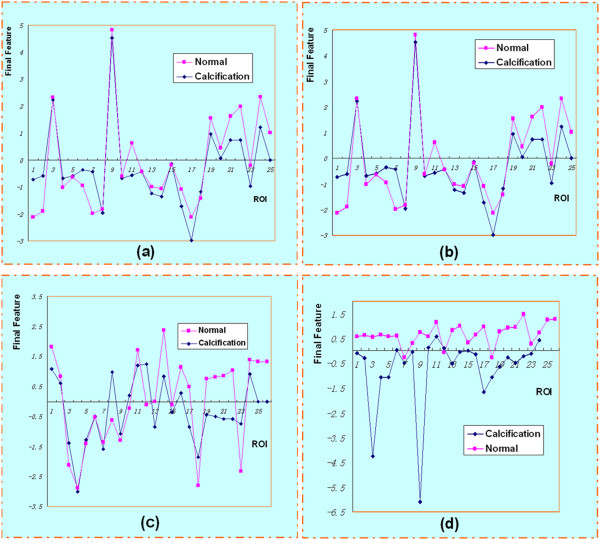
Firstly, 25 abnormal ROIs were extracted according to the center and diameter of the lesions manually and 25 normal ROIs were selected randomly. Then micro-calcifications were segmented by combining space and frequency domain techniques. We extracted three texture features based on wavelet (Haar, DB4, DT-CWT) transform. Totally 14 descriptors were introduced to define the characteristics of the suspicious micro-calcifications. Principal Component Analysis (PCA) was used to transform these descriptors to a compact and efficient vector expression. Support Vector Machine (SVM) classifier was used to classify potential micro-calcifications. Finally, we used the receiver operating characteristic (ROC) curve and free-response operating characteristic (FROC) curve to evaluate the performance of the CAD system.
The results of SVM classifications based on different wavelets shows DT-CWT has a better performance. Compared with other results, DT-CWT method achieved an accuracy of 96% and 100% for the classification of normal and abnormal ROIs, and the classification of benign and malignant micro-calcifications respectively. In FROC analysis, our CAD system for clinical dataset detection achieved a sensitivity of 83.5% at a false positive per image of 1.85.
Compared with general wavelets, DT-CWT could describe the features more effectively, and our CAD system had a competitive performance.
数字乳腺摄影是乳腺癌诊断最可靠的成像方式,而乳腺微钙化被认为是影像学诊断中最重要的标志之一。在本文中,提出了一种基于双树复小波变换(DT-CWT)的乳腺微钙化计算机辅助诊断(CAD)系统,以方便放射科医生进行双重阅读。
首先,根据病变的中心和直径手动提取 25 个异常 ROI,然后随机选择 25 个正常 ROI。然后,结合空域和频域技术对微钙化进行分割。我们基于小波(Haar、DB4、DT-CWT)变换提取了三个纹理特征。总共引入了 14 个描述符来定义可疑微钙化的特征。主成分分析(PCA)用于将这些描述符转换为紧凑高效的向量表示。支持向量机(SVM)分类器用于分类潜在的微钙化。最后,我们使用接收者操作特征(ROC)曲线和自由响应操作特征(FROC)曲线来评估 CAD 系统的性能。
基于不同小波的 SVM 分类结果表明,DT-CWT 具有更好的性能。与其他结果相比,DT-CWT 方法对正常和异常 ROI 的分类分别达到了 96%和 100%的准确率,对良性和恶性微钙化的分类分别达到了 96%和 100%的准确率。在 FROC 分析中,我们的 CAD 系统对临床数据集的检测在每张图像的假阳性率为 1.85 时达到了 83.5%的灵敏度。
与一般小波相比,DT-CWT 可以更有效地描述特征,并且我们的 CAD 系统具有竞争力的性能。