Department of Ophthalmology and Bernstein Center for Computational Neuroscience Göttingen, University Medical Center Göttingen Göttingen, Germany.
Front Neural Circuits. 2012 Dec 19;6:104. doi: 10.3389/fncir.2012.00104. eCollection 2012.
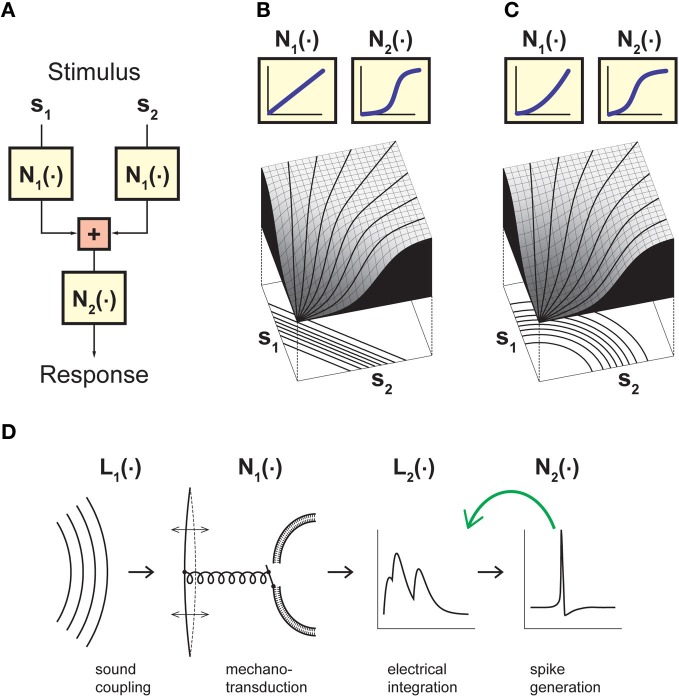
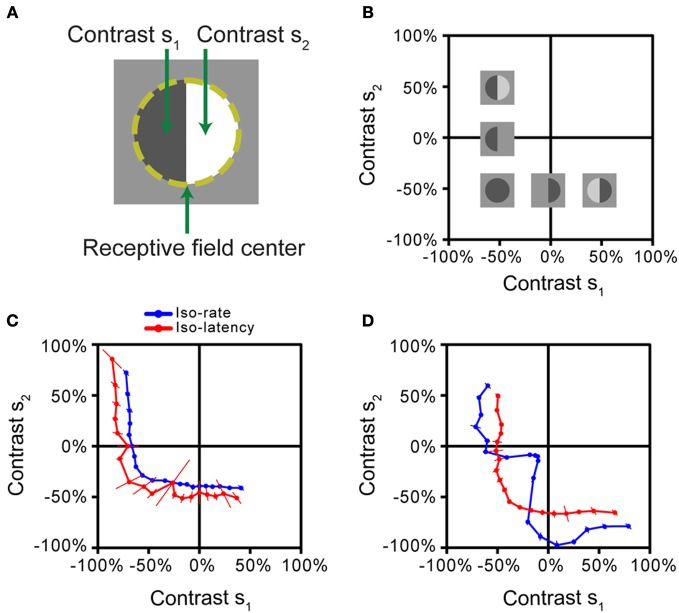
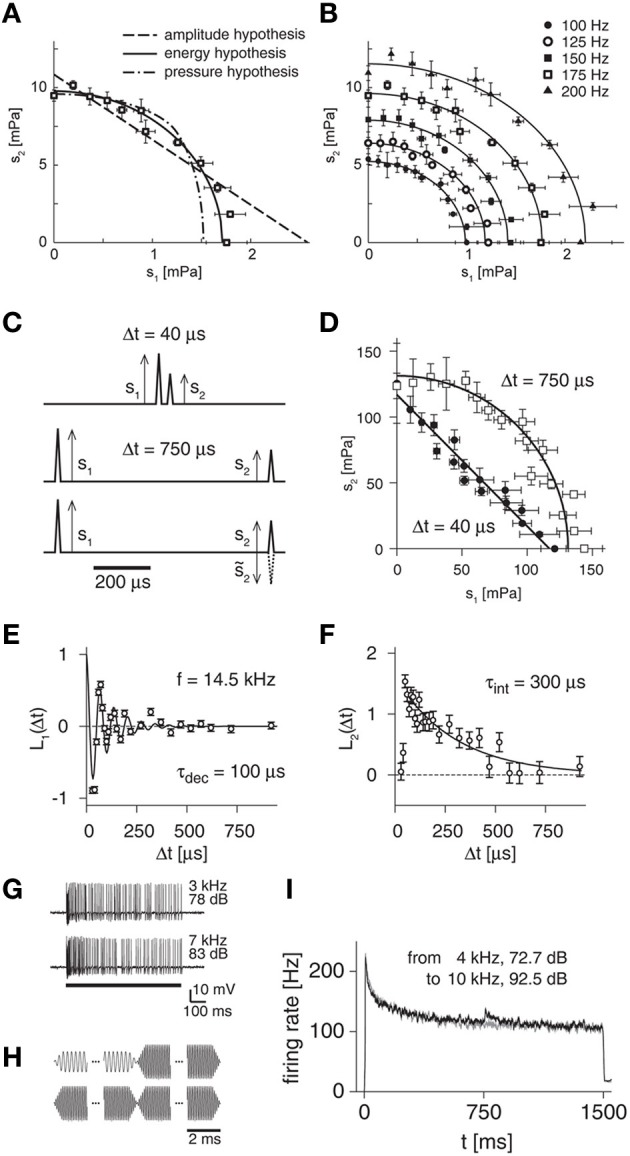
Throughout the nervous system, neurons integrate high-dimensional input streams and transform them into an output of their own. This integration of incoming signals involves filtering processes and complex non-linear operations. The shapes of these filters and non-linearities determine the computational features of single neurons and their functional roles within larger networks. A detailed characterization of signal integration is thus a central ingredient to understanding information processing in neural circuits. Conventional methods for measuring single-neuron response properties, such as reverse correlation, however, are often limited by the implicit assumption that stimulus integration occurs in a linear fashion. Here, we review a conceptual and experimental alternative that is based on exploring the space of those sensory stimuli that result in the same neural output. As demonstrated by recent results in the auditory and visual system, such iso-response stimuli can be used to identify the non-linearities relevant for stimulus integration, disentangle consecutive neural processing steps, and determine their characteristics with unprecedented precision. Automated closed-loop experiments are crucial for this advance, allowing rapid search strategies for identifying iso-response stimuli during experiments. Prime targets for the method are feed-forward neural signaling chains in sensory systems, but the method has also been successfully applied to feedback systems. Depending on the specific question, "iso-response" may refer to a predefined firing rate, single-spike probability, first-spike latency, or other output measures. Examples from different studies show that substantial progress in understanding neural dynamics and coding can be achieved once rapid online data analysis and stimulus generation, adaptive sampling, and computational modeling are tightly integrated into experiments.
在整个神经系统中,神经元整合高维输入流,并将其转化为自身的输出。这种输入信号的整合涉及滤波过程和复杂的非线性操作。这些滤波器和非线性的形状决定了单个神经元的计算特征及其在更大网络中的功能角色。因此,对信号整合的详细描述是理解神经回路信息处理的核心要素。然而,用于测量单个神经元响应特性的传统方法,如反向相关,通常受到刺激整合以线性方式发生的隐含假设的限制。在这里,我们回顾了一种基于探索产生相同神经输出的那些感觉刺激的空间的概念和实验替代方法。正如听觉和视觉系统的最新结果所证明的那样,这种同响应刺激可用于识别与刺激整合相关的非线性,解耦连续的神经处理步骤,并以前所未有的精度确定其特征。自动化闭环实验对于这一进展至关重要,允许在实验期间快速搜索用于识别同响应刺激的策略。该方法的主要目标是感觉系统中的前馈神经信号链,但该方法也已成功应用于反馈系统。根据具体问题,“同响应”可以指预设的发放率、单峰概率、第一峰潜伏期或其他输出度量。来自不同研究的示例表明,一旦将快速在线数据分析和刺激生成、自适应采样和计算建模紧密集成到实验中,就可以在理解神经动力学和编码方面取得重大进展。