Department of Neurobiology, Care Sciences and Society, Division of Physiotherapy, Karolinska Institutet, Huddinge, Sweden.
BMC Musculoskelet Disord. 2012 Dec 29;13:263. doi: 10.1186/1471-2474-13-263.
Musculoskeletal disorders particularly in the back and lower extremities are common among marines. Here, movement-control tests are considered clinically useful for screening and follow-up evaluation. However, few studies have addressed the reliability of clinical tests, and no such published data exists for marines. The present aim was therefore to determine the inter- and intra-observer reliability of clinically convenient tests emphasizing movement control of the back and hip among marines. A secondary aim was to investigate the sensitivity and specificity of these clinical tests for discriminating musculoskeletal pain disorders in this group of military personnel.
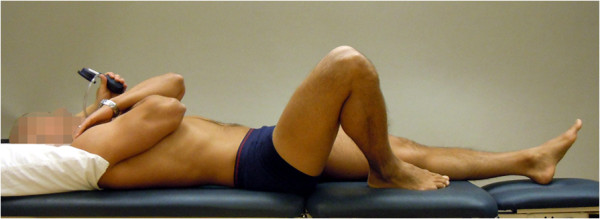
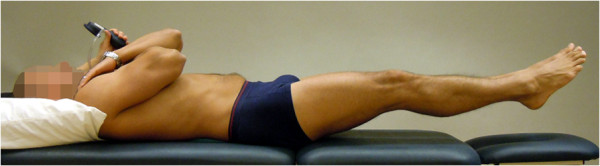
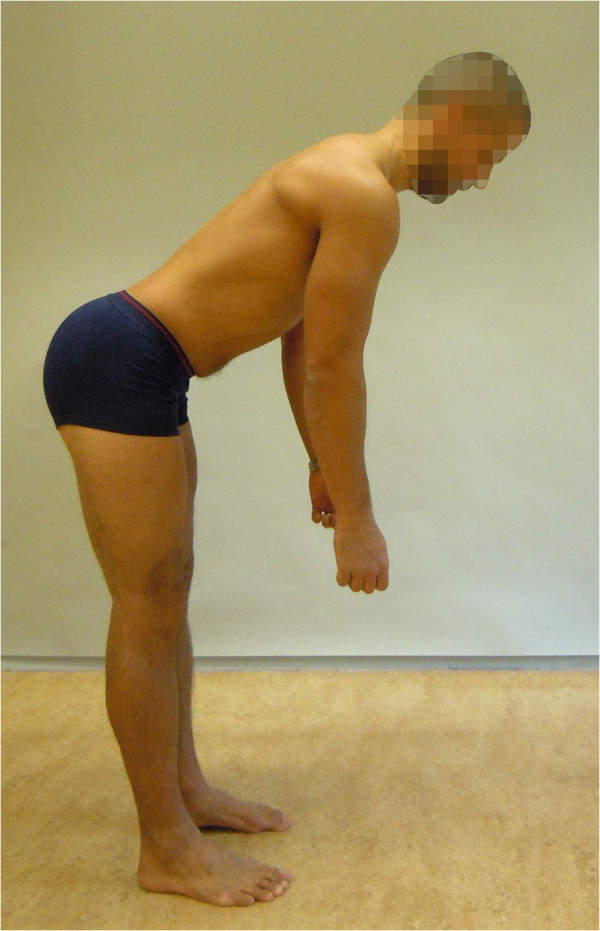
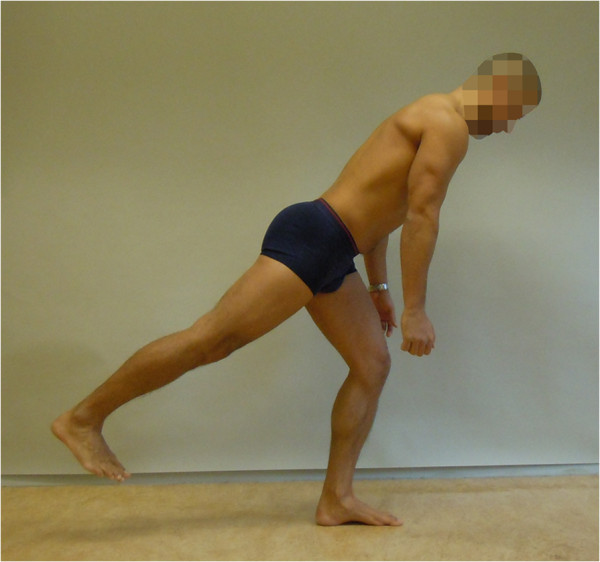
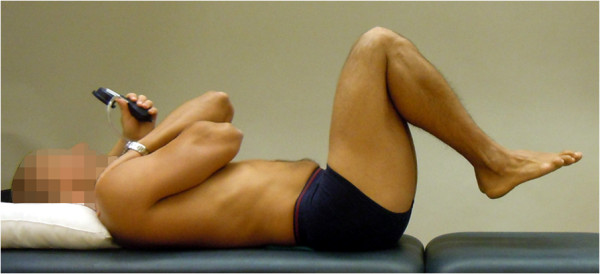
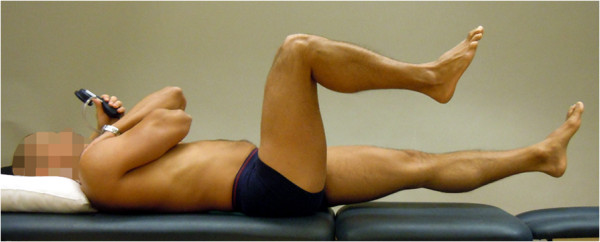
This inter- and intra-observer reliability study used a test-retest approach with six standardized clinical tests focusing on movement control for back and hip. Thirty-three marines (age 28.7 yrs, SD 5.9) on active duty volunteered and were recruited. They followed an in-vivo observation test procedure that covered both low- and high-load (threshold) tasks relevant for marines on operational duty. Two independent observers simultaneously rated performance as "correct" or "incorrect" following a standardized assessment protocol. Re-testing followed 7-10 days thereafter. Reliability was analysed using kappa (κ) coefficients, while discriminative power of the best-fitting tests for back- and lower-extremity pain was assessed using a multiple-variable regression model.
Inter-observer reliability for the six tests was moderate to almost perfect with κ-coefficients ranging between 0.56-0.95. Three tests reached almost perfect inter-observer reliability with mean κ-coefficients > 0.81. However, intra-observer reliability was fair-to-moderate with mean κ-coefficients between 0.22-0.58. Three tests achieved moderate intra-observer reliability with κ-coefficients > 0.41. Combinations of one low- and one high-threshold test best discriminated prior back pain, but results were inconsistent for lower-extremity pain.
Our results suggest that clinical tests of movement control of back and hip are reliable for use in screening protocols using several observers with marines. However, test-retest reproducibility was less accurate, which should be considered in follow-up evaluations. The results also indicate that combinations of low- and high-threshold tests have discriminative validity for prior back pain, but were inconclusive for lower-extremity pain.
肌肉骨骼疾病,特别是背部和下肢,在海军陆战队员中很常见。在这里,运动控制测试被认为是用于筛选和随访评估的临床有用工具。然而,很少有研究涉及临床测试的可靠性,也没有针对海军陆战队员的此类已发表数据。因此,本研究旨在确定强调背部和臀部运动控制的临床测试在海军陆战队员中的临床测试的观察者间和观察者内可靠性。次要目标是研究这些临床测试在区分该组军事人员的肌肉骨骼疼痛障碍方面的敏感性和特异性。
本研究采用了观察者间和观察者内可靠性测试的测试-再测试方法,共使用了 6 种针对背部和臀部运动控制的标准化临床测试。33 名年龄为 28.7 岁(标准差 5.9)的现役海军陆战队员自愿参加并被招募。他们遵循了一个体内观察测试程序,该程序涵盖了与在役海军陆战队员相关的低负荷(阈值)和高负荷(阈值)任务。两名独立的观察者根据标准化评估方案同时将表现评为“正确”或“错误”。然后在 7-10 天后进行重新测试。使用kappa(κ)系数分析可靠性,使用多变量回归模型评估针对背部和下肢疼痛的最佳拟合测试的鉴别力。
六次测试的观察者间可靠性为中度至几乎完美,κ系数范围在 0.56-0.95 之间。三项测试的观察者间可靠性几乎达到完美,平均κ系数>0.81。然而,观察者内可靠性为中等至适度,平均κ系数在 0.22-0.58 之间。三项测试的观察者内可靠性适中,κ系数>0.41。一项低阈值测试和一项高阈值测试的组合最能区分先前的背部疼痛,但对于下肢疼痛,结果不一致。
我们的研究结果表明,使用多名观察者进行筛选方案时,背部和臀部运动控制的临床测试是可靠的。然而,测试-再测试的再现性不够准确,这在随访评估中应加以考虑。结果还表明,低阈值和高阈值测试的组合对先前的背部疼痛具有鉴别力,但对下肢疼痛的结果尚无定论。