Department of Biologic and Materials Sciences, School of Dentistry, University of Michigan, Ann Arbor, MI, USA.
J Bone Miner Res. 2013 Jun;28(6):1422-33. doi: 10.1002/jbmr.1857.
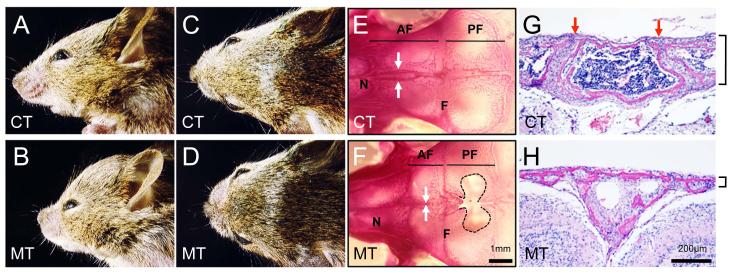
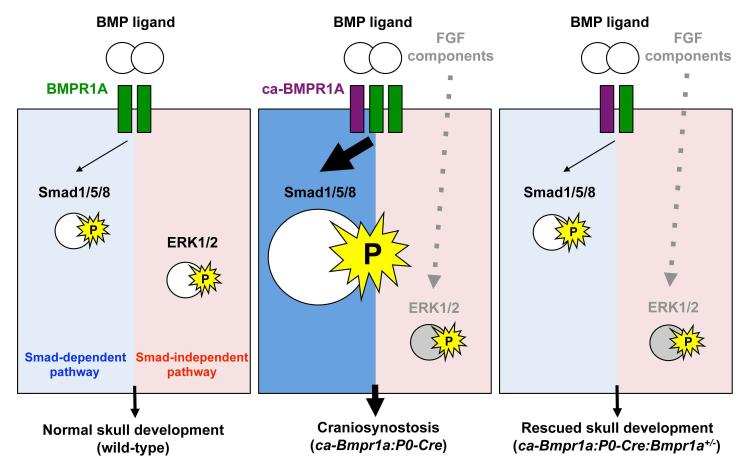
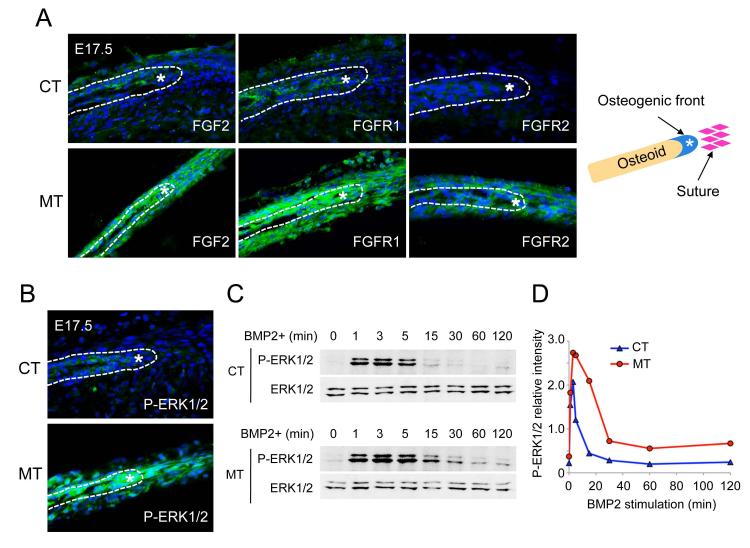
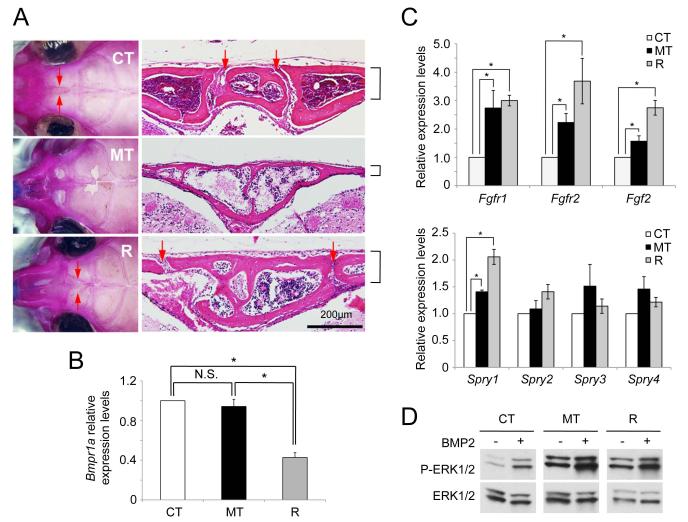
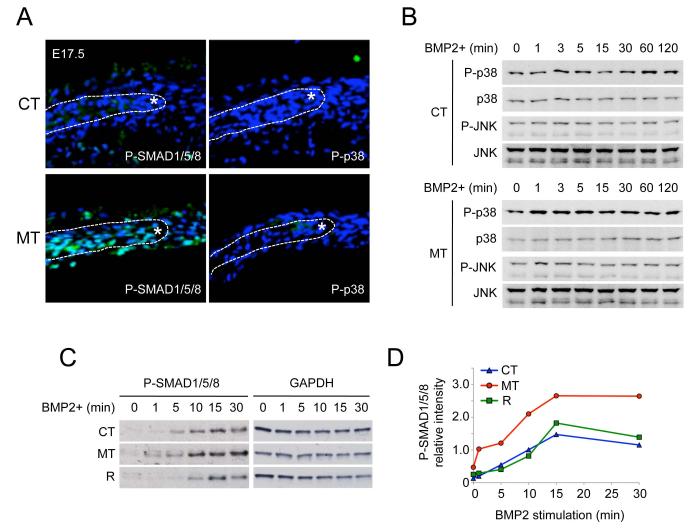
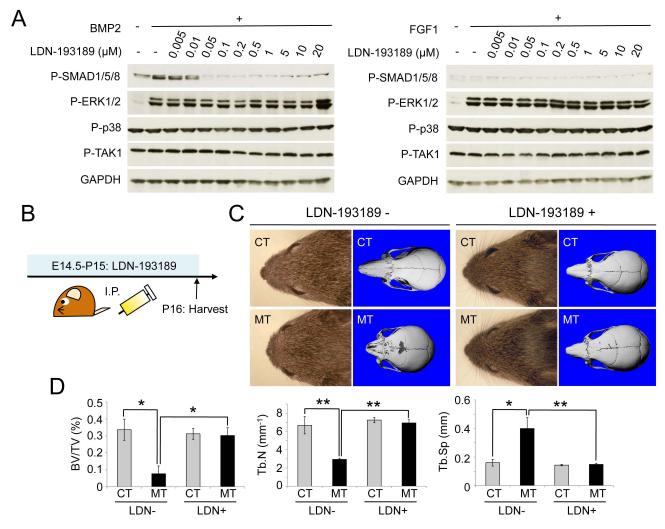
Craniosynostosis describes conditions in which one or more sutures of the infant skull are prematurely fused, resulting in facial deformity and delayed brain development. Approximately 20% of human craniosynostoses are thought to result from gene mutations altering growth factor signaling; however, the molecular mechanisms by which these mutations cause craniosynostosis are incompletely characterized, and the causative genes for diverse types of syndromic craniosynostosis have yet to be identified. Here, we show that enhanced bone morphogenetic protein (BMP) signaling through the BMP type IA receptor (BMPR1A) in cranial neural crest cells, but not in osteoblasts, causes premature suture fusion in mice. In support of a requirement for precisely regulated BMP signaling, this defect was rescued on a Bmpr1a haploinsufficient background, with corresponding normalization of Smad phosphorylation. Moreover, in vivo treatment with LDN-193189, a selective chemical inhibitor of BMP type I receptor kinases, resulted in partial rescue of craniosynostosis. Enhanced signaling of the fibroblast growth factor (FGF) pathway, which has been implicated in craniosynostosis, was observed in both mutant and rescued mice, suggesting that augmentation of FGF signaling is not the sole cause of premature fusion found in this model. The finding that relatively modest augmentation of Smad-dependent BMP signaling leads to premature cranial suture fusion suggests an important contribution of dysregulated BMP signaling to syndromic craniosynostoses and potential strategies for early intervention.
颅缝早闭描述了一种婴儿颅骨的一条或多条缝过早融合的情况,导致面部畸形和大脑发育迟缓。大约 20%的人类颅缝早闭被认为是由于基因突变改变生长因子信号;然而,这些突变导致颅缝早闭的分子机制尚未完全阐明,各种综合征性颅缝早闭的致病基因也尚未确定。在这里,我们表明,颅神经嵴细胞中骨形态发生蛋白(BMP)信号的增强(通过 BMP 类型 IA 受体(BMPR1A)),而不是成骨细胞中,导致小鼠的早期融合。支持精确调节 BMP 信号的要求,这种缺陷在 Bmpr1a 半不足的背景下得到挽救,相应地恢复了 Smad 磷酸化。此外,体内用 LDN-193189 治疗,一种选择性的 BMP 类型 I 受体激酶的化学抑制剂,导致颅缝早闭部分得到挽救。在突变和挽救的小鼠中都观察到成纤维细胞生长因子(FGF)途径的信号增强,该途径已被牵连到颅缝早闭中,这表明 FGF 信号的增强不是该模型中发现的早期融合的唯一原因。发现相对适度的 Smad 依赖性 BMP 信号增强会导致过早的颅缝融合,这表明失调的 BMP 信号对综合征性颅缝早闭有重要贡献,并为早期干预提供了潜在策略。