Department of Molecular Medicine, Padua University, Padua, Italy.
BMC Cancer. 2013 Jan 3;13:4. doi: 10.1186/1471-2407-13-4.
Cancer is a significant and growing problem worldwide. While this increase may, in part, be attributed to increasing longevity, improved case notifications and risk-enhancing lifestyle (such as smoking, diet and obesity), hygiene-related factors resulting in immuno-regulatory failure may also play a major role and call for a revision of vaccination strategies to protect against a range of cancers in addition to infections.
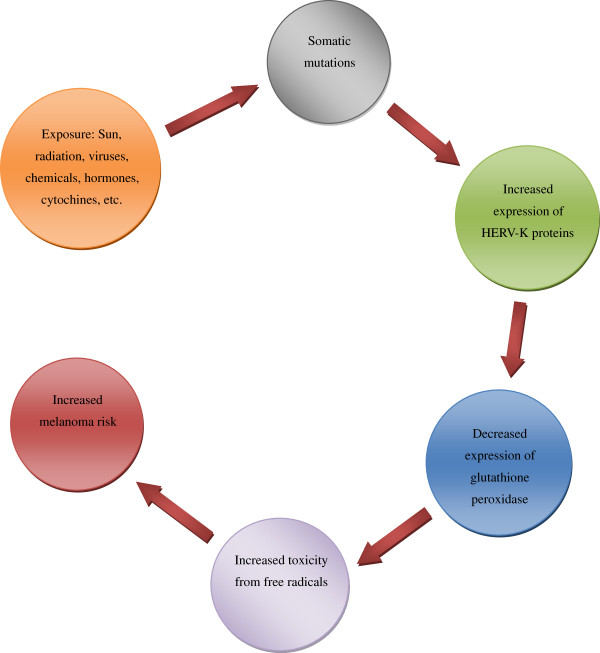
Human endogenous retroviruses (HERVs) are a significant component of a wider family of retroelements that constitutes part of the human genome. They were originated by the integration of exogenous retroviruses into the human genome millions of years ago. HERVs are estimated to comprise about 8% of human DNA and are ubiquitous in somatic and germinal tissues.Physiologic and pathologic processes are influenced by some biologically active HERV families. HERV antigens are only expressed at low levels by the host, but in circumstances of inappropriate control their genes may initiate or maintain pathological processes. Although the precise mechanism leading to abnormal HERVs gene expression has yet to be clearly elucidated, environmental factors seem to be involved by influencing the human immune system.HERV-K expression has been detected in different types of tumors.Among the various human endogenous retroviral families, the K series was the latest acquired by the human species. Probably because of its relatively recent origin, the HERV-K is the most complete and biologically active family.The abnormal expression of HERV-K seemingly triggers pathological processes leading to melanoma onset, but also contributes to the morphological and functional cellular modifications implicated in melanoma maintenance and progression.The HERV-K-MEL antigen is encoded by a pseudo-gene incorporated in the HERV-K env-gene. HERV-K-MEL is significantly expressed in the majority of dysplastic and normal naevi, as well as other tumors like sarcoma, lymphoma, bladder and breast cancer. An amino acid sequence similar to HERV-K-MEL, recognized to cause a significant protective effect against melanoma, is shared by the antigenic determinants expressed by some vaccines such as BCG, vaccinia virus and the yellow fever virus.HERV-K are also reactivated in the majority of human breast cancers. Monoclonal and single-chain antibodies against the HERV-K Env protein recently proved capable of blocking the proliferation of human breast cancer cells in vitro, inhibiting tumor growth in mice bearing xenograft tumors.
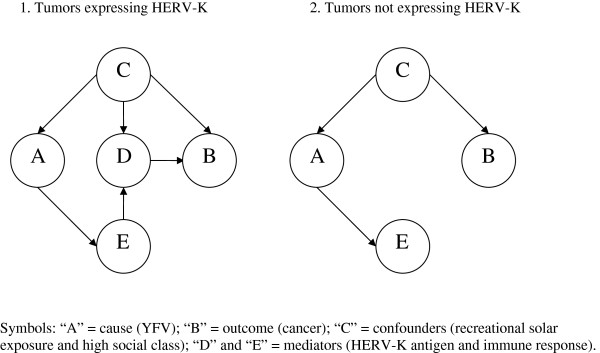
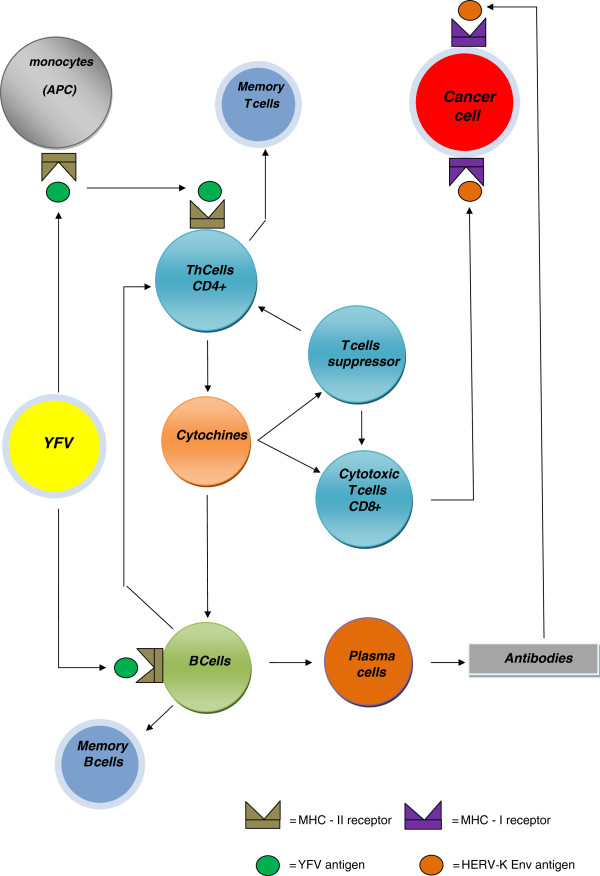
A recent epidemiological study provided provisional evidence of how melanoma risk could possibly be reduced if the yellow fever virus vaccine (YFV) were received at least 10 years before, possibly preventing tumor initiation rather than culling melanoma cells already compromised. Further research is recommended to confirm the temporal pattern of this protection and eliminate/attenuate the potential role of relevant confounders as socio-economic status and other vaccinations.It appears also appropriate to examine the potential protective effect of YFV against other malignancies expressing high levels of HERV-K antigens, namely breast cancer, sarcoma, lymphoma and bladder cancer.Tumor immune-therapy, as described for the monoclonal antibodies against breast cancer, is indeed considered more complex and less advantageous than immune-prevention. Cellular immunity possibly triggered by vaccines as for YFV might also be involved in anti-cancer response, in addition to humoral immunity.
癌症是全球一个重大且日益严重的问题。这种增长在一定程度上可能归因于寿命延长、病例通报改善和风险增强的生活方式(如吸烟、饮食和肥胖),但与卫生相关的因素导致免疫调节失败也可能起主要作用,需要修订疫苗接种策略,以预防除感染以外的多种癌症。
人类内源性逆转录病毒(HERV)是构成人类基因组的更大范围逆转录元件家族的重要组成部分。它们是由数百万年前外源逆转录病毒整合到人类基因组中而产生的。HERV 估计占人类 DNA 的 8%,在体细胞和生殖组织中普遍存在。一些具有生物活性的 HERV 家族影响生理和病理过程。HERV 抗原仅由宿主低水平表达,但在控制不当的情况下,其基因可能启动或维持病理过程。尽管导致异常 HERV 基因表达的确切机制尚未明确阐明,但环境因素似乎通过影响人类免疫系统而参与其中。不同类型的肿瘤中均检测到 HERV-K 的表达。在各种人类内源性逆转录病毒家族中,K 系列是人类最近获得的。可能由于其相对较新的起源,HERV-K 是最完整和最具生物活性的家族。HERV-K 的异常表达似乎引发了导致黑色素瘤发病的病理过程,但也导致了黑色素瘤维持和进展所涉及的形态和功能细胞改变。HERV-K-MEL 抗原由整合到 HERV-K env 基因中的假基因编码。HERV-K-MEL 在大多数发育不良和正常痣以及肉瘤、淋巴瘤、膀胱癌和乳腺癌等其他肿瘤中均显著表达。与一些疫苗(如卡介苗、牛痘病毒和黄热病病毒)表达的抗原决定簇共享的 HERV-K-MEL 氨基酸序列,被认为对黑色素瘤有显著的保护作用。HERV-K 在大多数人类乳腺癌中也被重新激活。针对 HERV-K Env 蛋白的单克隆和单链抗体最近被证明能够在体外阻断人乳腺癌细胞的增殖,抑制携带异种移植肿瘤的小鼠的肿瘤生长。
最近的一项流行病学研究提供了初步证据,表明如果黄热病疫苗(YFV)在 10 年前至少接种一次,可能会预防肿瘤的发生而不是清除已经受损的黑色素瘤细胞,那么黑色素瘤的风险可能会降低。建议进一步研究以确认这种保护的时间模式,并消除/减轻相关混杂因素(如社会经济地位和其他疫苗接种)的潜在作用。似乎也有必要检查 YFV 对其他高表达 HERV-K 抗原的恶性肿瘤(如乳腺癌、肉瘤、淋巴瘤和膀胱癌)的潜在保护作用。如针对乳腺癌的单克隆抗体所述,肿瘤免疫疗法被认为比免疫预防更复杂,优势也更小。除体液免疫外,疫苗(如 YFV)可能引发的细胞免疫也可能参与抗癌反应。