Department of Biology, Queens College, the City University of New York, 65-30 Kissena Boulevard, Flushing, NY 11367-1597, USA.
Mob DNA. 2013 Jan 3;4(1):3. doi: 10.1186/1759-8753-4-3.
LINE-1 (L1) is the dominant category of transposable elements in placental mammals. L1 has significantly affected the size and structure of all mammalian genomes and understanding the nature of the interactions between L1 and its mammalian host remains a question of crucial importance in comparative genomics. For this reason, much attention has been dedicated to the evolution of L1. Among the most studied elements is the mouse L1 which has been the subject of a number of studies in the 1980s and 1990s. These seminal studies, performed in the pre-genomic era when only a limited number of L1 sequences were available, have significantly improved our understanding of L1 evolution. Yet, no comprehensive study on the evolution of L1 in mouse has been performed since the completion of this genome sequence.
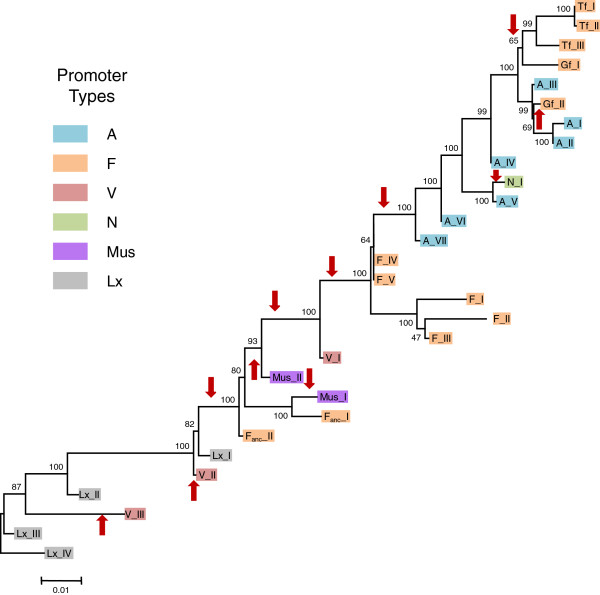
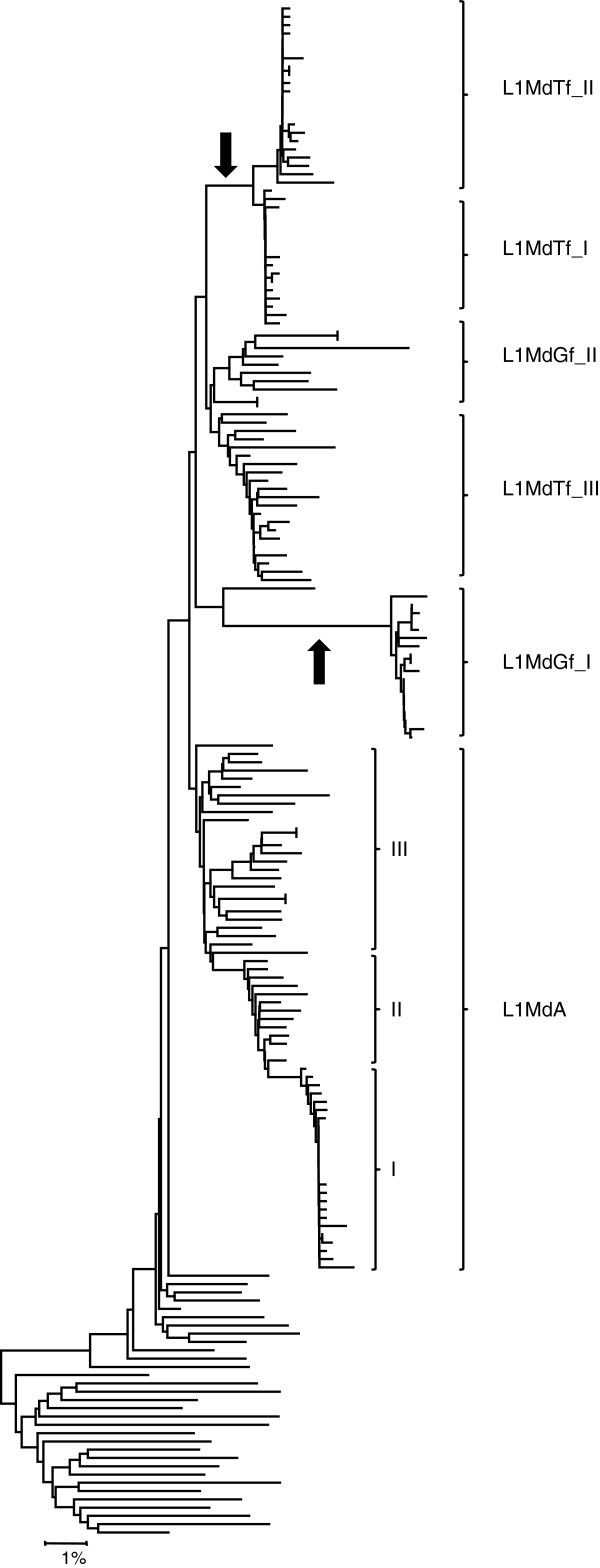
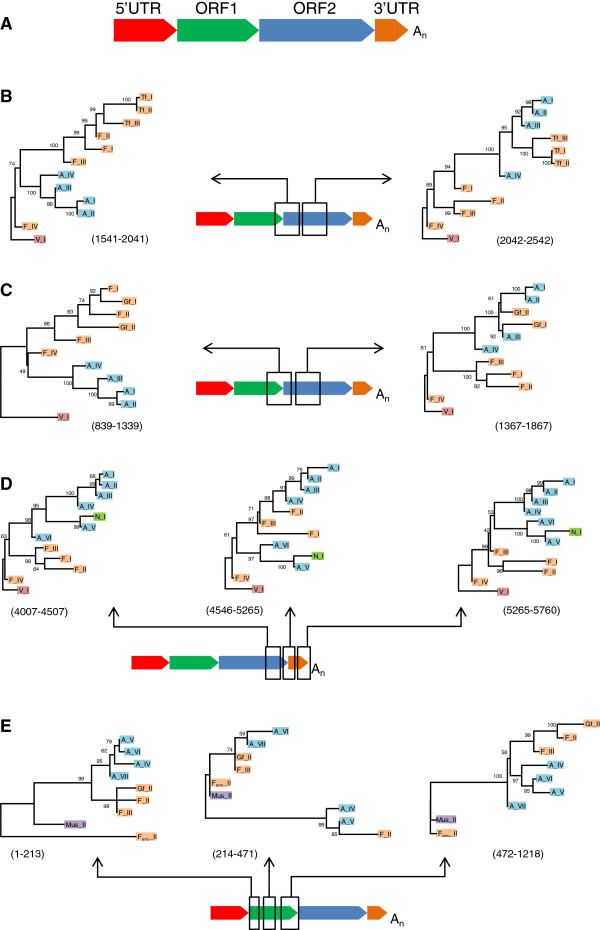
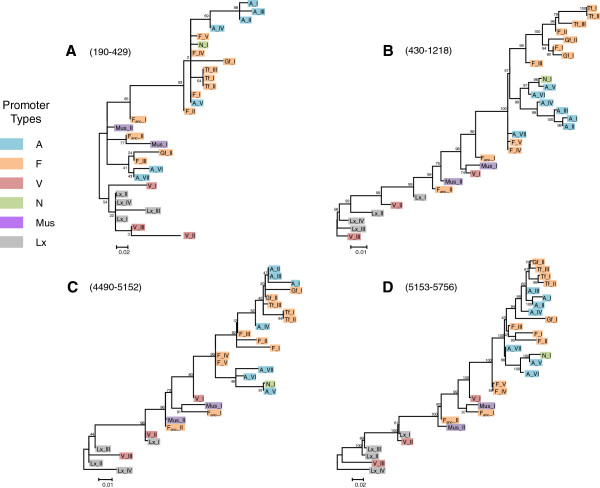
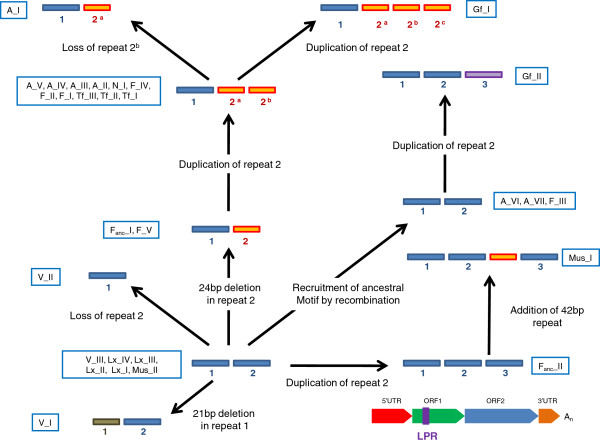
Using the Genome Parsing Suite we performed the first evolutionary analysis of mouse L1 over the entire length of the element. This analysis indicates that the mouse L1 has recruited novel 5'UTR sequences more frequently than previously thought and that the simultaneous activity of non-homologous promoters seems to be one of the conditions for the co-existence of multiple L1 families or lineages. In addition the exchange of genetic information between L1 families is not limited to the 5'UTR as evidence of inter-family recombination was observed in ORF1, ORF2, and the 3'UTR. In contrast to the human L1, there was little evidence of rapid amino-acid replacement in the coiled-coil of ORF1, although this region is structurally unstable. We propose that the structural instability of the coiled-coil domain might be adaptive and that structural changes in this region are selectively equivalent to the rapid evolution at the amino-acid level reported in the human lineage.
The pattern of evolution of L1 in mouse shows some similarity with human suggesting that the nature of the interactions between L1 and its host might be similar in these two species. Yet, some notable differences, particularly in the evolution of ORF1, suggest that the molecular mechanisms involved in host-L1 interactions might be different in these two species.
LINE-1(L1)是胎盘哺乳动物中转座元件的主要类别。L1 极大地影响了所有哺乳动物基因组的大小和结构,理解 L1 与其哺乳动物宿主之间的相互作用的性质仍然是比较基因组学中至关重要的问题。出于这个原因,人们对 L1 的进化给予了极大的关注。在研究最多的元件中,有一种是小鼠 L1,它在 20 世纪 80 年代和 90 年代的一些研究中被作为研究对象。这些开创性的研究是在基因组时代之前进行的,当时只有有限数量的 L1 序列可用,这些研究极大地提高了我们对 L1 进化的理解。然而,自完成这个基因组序列以来,还没有对小鼠 L1 的进化进行全面研究。
我们使用基因组解析套件对整个 L1 元件进行了首次进化分析。该分析表明,与之前的想法相比,小鼠 L1 招募新的 5'UTR 序列的频率更高,并且非同源启动子的同时活动似乎是多个 L1 家族或谱系共存的条件之一。此外,L1 家族之间的遗传信息交换不仅限于 5'UTR,因为在 ORF1、ORF2 和 3'UTR 中观察到了家族间重组的证据。与人类 L1 不同,尽管该区域结构不稳定,但在 ORF1 的卷曲螺旋结构域中几乎没有快速氨基酸替换的证据。我们提出,卷曲螺旋结构域的结构不稳定性可能是适应性的,并且该区域的结构变化在选择上相当于人类谱系中报道的快速进化。
小鼠 L1 的进化模式与人类有一些相似之处,这表明 L1 与其宿主之间的相互作用的性质在这两个物种中可能相似。然而,一些显著的差异,特别是在 ORF1 的进化方面,表明这两个物种中涉及宿主-L1 相互作用的分子机制可能不同。