University of Oxford, Department of Pharmacology, Mansfield Road, Oxford OX1 3QT, UK.
Nat Commun. 2013;4:1332. doi: 10.1038/ncomms2320.
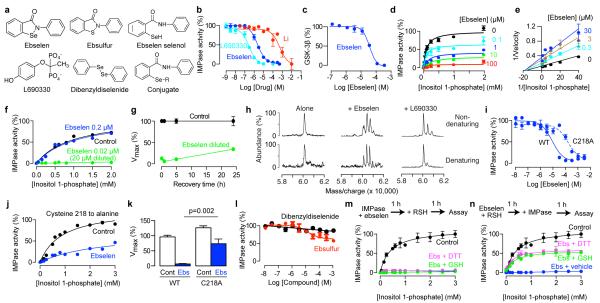
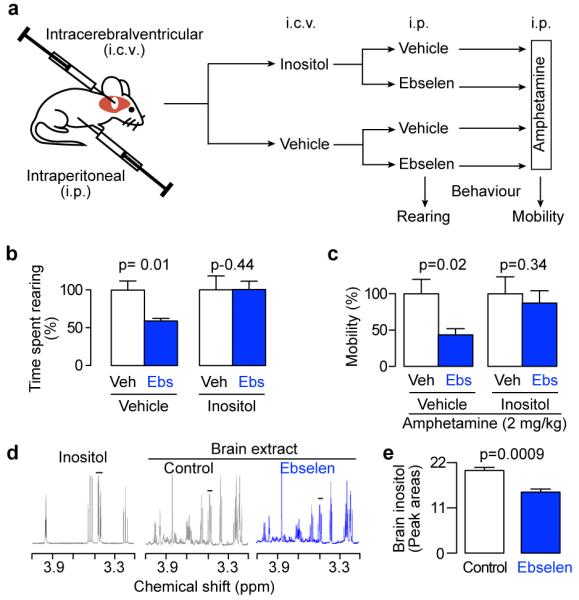
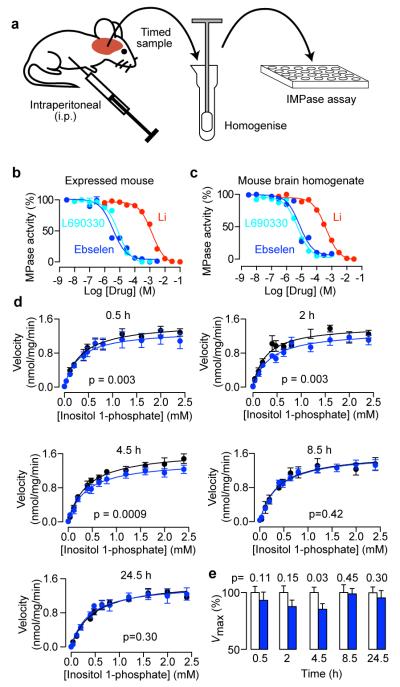
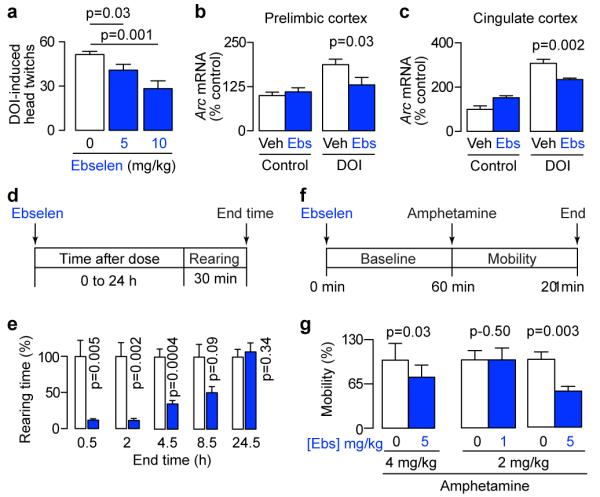
Lithium is the most effective mood stabilizer for the treatment of bipolar disorder, but it is toxic at only twice the therapeutic dosage and has many undesirable side effects. It is likely that a small molecule could be found with lithium-like efficacy but without toxicity through target-based drug discovery; however, therapeutic target of lithium remains equivocal. Inositol monophosphatase is a possible target but no bioavailable inhibitors exist. Here we report that the antioxidant ebselen inhibits inositol monophosphatase and induces lithium-like effects on mouse behaviour, which are reversed with inositol, consistent with a mechanism involving inhibition of inositol recycling. Ebselen is part of the National Institutes of Health Clinical Collection, a chemical library of bioavailable drugs considered clinically safe but without proven use. Therefore, ebselen represents a lithium mimetic with the potential both to validate inositol monophosphatase inhibition as a treatment for bipolar disorder and to serve as a treatment itself.
锂是治疗双相情感障碍最有效的情绪稳定剂,但它的毒性仅为治疗剂量的两倍,而且有许多不良副作用。通过基于靶点的药物发现,很可能会发现一种与锂类似疗效但没有毒性的小分子;然而,锂的治疗靶点仍然存在争议。肌醇单磷酸酶是一个可能的靶点,但没有可利用的抑制剂存在。在这里,我们报告抗氧化剂依布硒啉可以抑制肌醇单磷酸酶,并诱导类似锂的作用,对小鼠的行为产生影响,而肌醇可以逆转这些影响,这与抑制肌醇循环的机制一致。依布硒啉是美国国立卫生研究院临床收藏的一部分,这是一个生物利用药物的化学库,被认为在临床上是安全的,但没有经过证实的用途。因此,依布硒啉是一种锂模拟物,有可能验证肌醇单磷酸酶抑制作为双相情感障碍的治疗方法,并作为一种治疗方法本身。