Neurosciences and Mental Health Program, Research Institute, The Hospital for Sick Children, University of Toronto, Toronto, Canada.
J Abnorm Child Psychol. 2013 Apr;41(3):497-507. doi: 10.1007/s10802-012-9693-9.
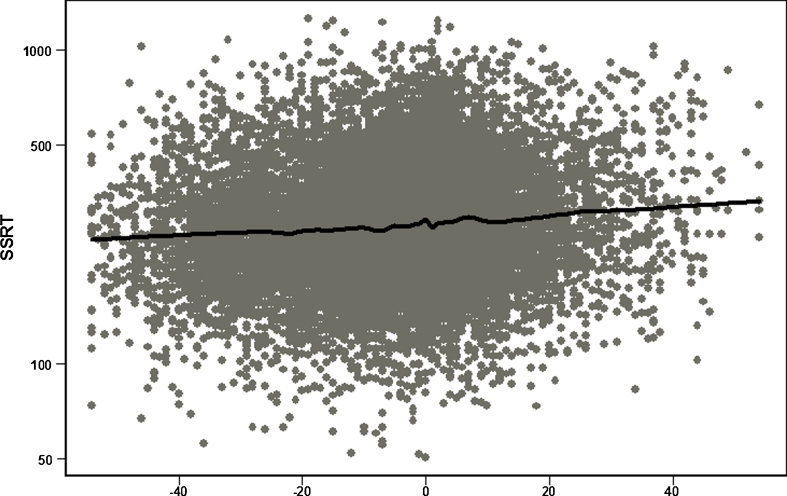
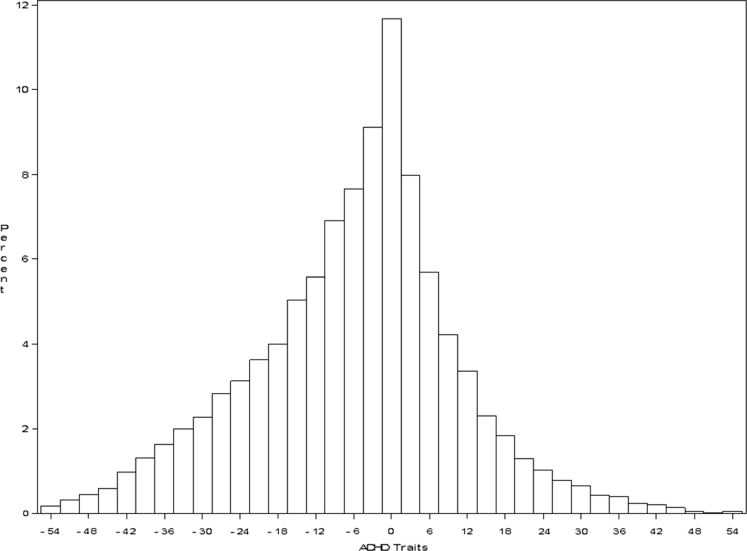
Endophenotypes or intermediate phenotypes are of great interest in neuropsychiatric genetics because of their potential for facilitating gene discovery. We evaluated response inhibition, latency and variability measures derived from the stop task as endophenotypes of ADHD by testing whether they were related to ADHD traits in the general population, heritable and shared genetic risk with ADHD traits. Participants were 16,099 children and adolescents, ages 6 to 18 years who visited a local science center. We measured ADHD traits using the Strengths and Weaknesses of ADHD-symptoms and Normal-Behavior (SWAN) rating scale and performance on the stop signal task (SST)-response inhibition (SSRT), response latency (GoRT), and response variability (GoRTSD). Regression analysis was used to assess the relationship of cognitive measures and ADHD traits while controlling for family, age, sex, ethnicity, socioeconomic status and treatment status. Heritability of ADHD and cognitive traits was estimated using SOLAR in 7,483 siblings from 3,507 families that included multiple siblings. Bivariate relationships between pairs of variables were examined. Individuals with greater ADHD trait scores had worse response inhibition, slower response latency, and greater variability. Younger participants and girls had inferior performance although the gender effects were minimal and evident in youngest participants. Inhibition, latency, variability, total ADHD traits, inattention and hyperactivity-impulsivity scores were significantly heritable. ADHD traits and inhibition, but not latency or variability were coheritable. In the largest study in the general population, we found support for the validity of response inhibition as an endophenotype of ADHD.
内表型或中间表型在神经精神遗传学中很有研究价值,因为它们有可能促进基因发现。我们通过检验它们是否与一般人群中的 ADHD 特征、与 ADHD 特征的遗传相关性和共同遗传风险有关,来评估来自停止任务的反应抑制、潜伏期和变异性测量作为 ADHD 的内表型。参与者为 16099 名年龄在 6 至 18 岁的儿童和青少年,他们访问了当地的一个科学中心。我们使用 ADHD 症状和正常行为(SWAN)评定量表来衡量 ADHD 特征,使用停止信号任务(SST)来衡量反应抑制(SSRT)、反应潜伏期(GoRT)和反应变异性(GoRTSD)。回归分析用于评估认知测量与 ADHD 特征之间的关系,同时控制家庭、年龄、性别、种族、社会经济地位和治疗状况。使用 SOLAR 软件在来自 3507 个家庭的 7483 对兄弟姐妹中估计了 ADHD 和认知特征的遗传率,这些家庭中有多个兄弟姐妹。检查了变量对之间的双变量关系。具有更高 ADHD 特征得分的个体具有更差的反应抑制、更慢的反应潜伏期和更大的变异性。尽管性别效应最小,并且仅在最年轻的参与者中明显,但年轻参与者和女孩的表现较差。抑制、潜伏期、变异性、总 ADHD 特征、注意力不集中和多动冲动得分具有显著的遗传性。ADHD 特征和抑制,但不是潜伏期或变异性具有共同遗传性。在一般人群中进行的最大规模研究中,我们发现反应抑制作为 ADHD 的内表型具有有效性的支持。