Program in Neuroscience, University of Maryland School of Medicine, Baltimore, MD 21201, USA.
J Gen Physiol. 2013 Feb;141(2):229-41. doi: 10.1085/jgp.201210870. Epub 2013 Jan 14.
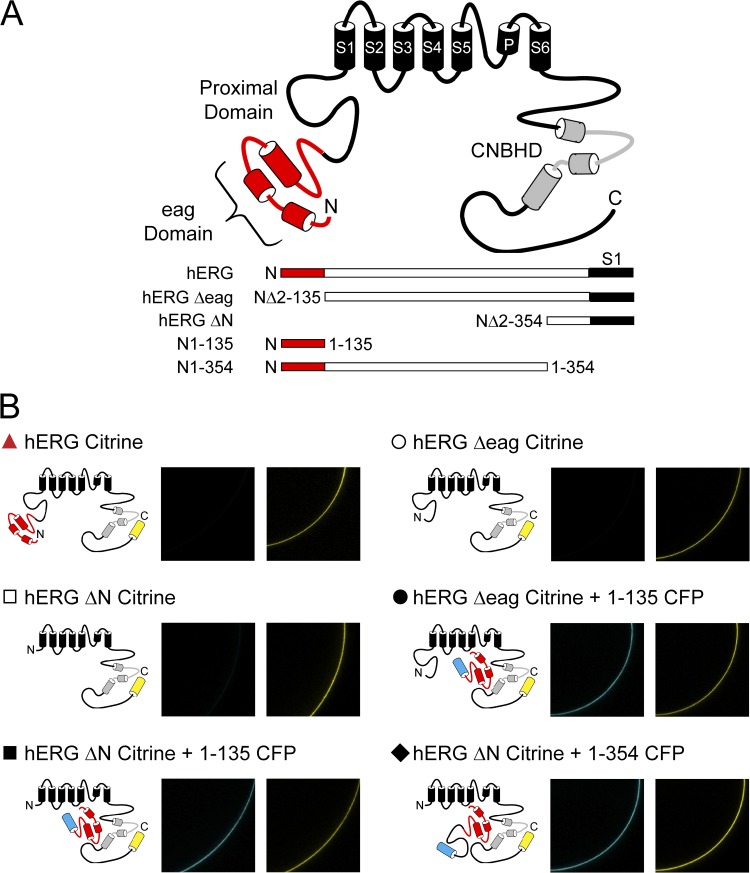
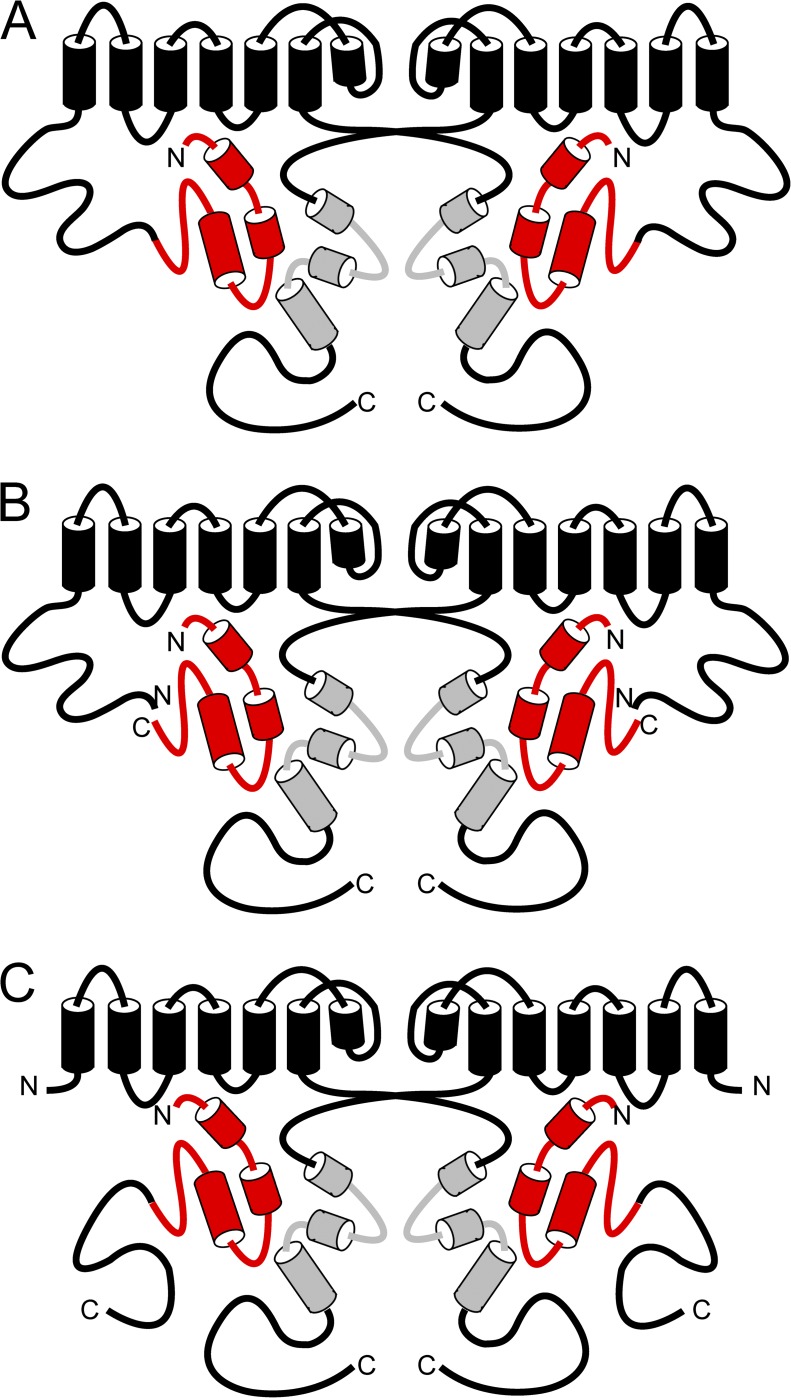
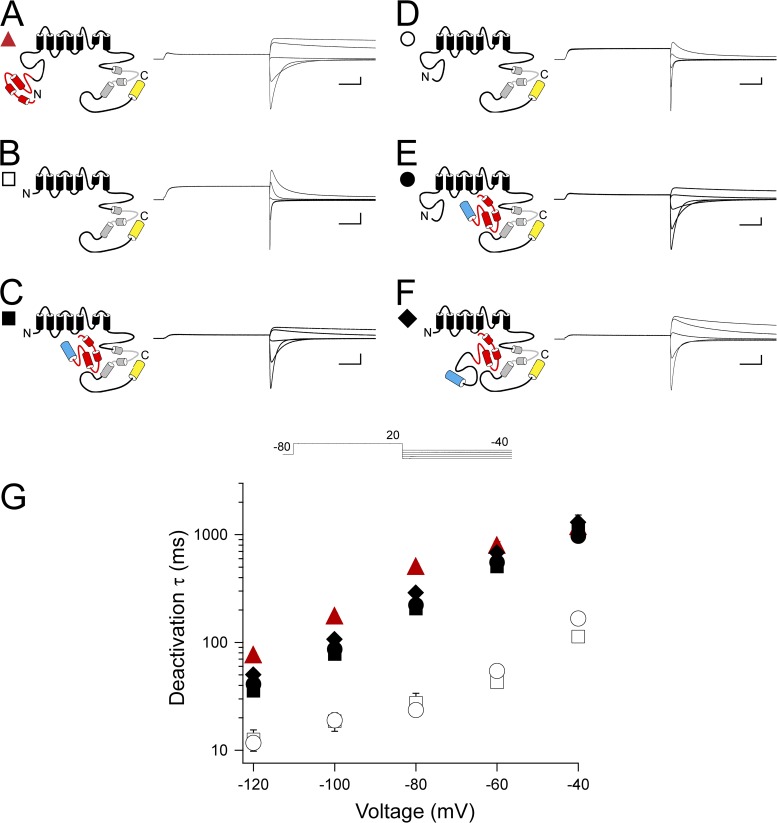
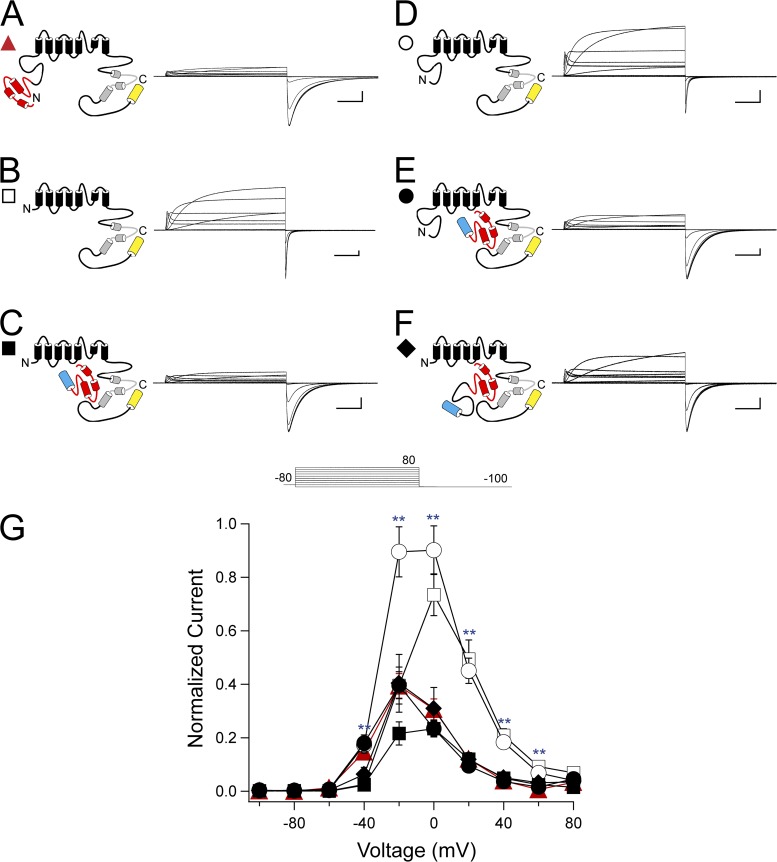
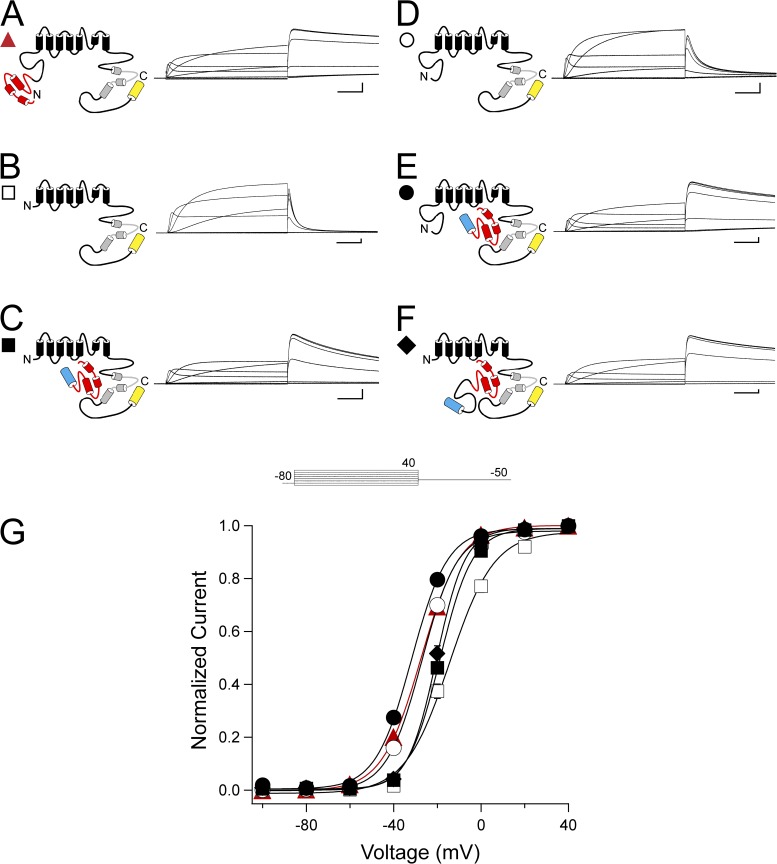
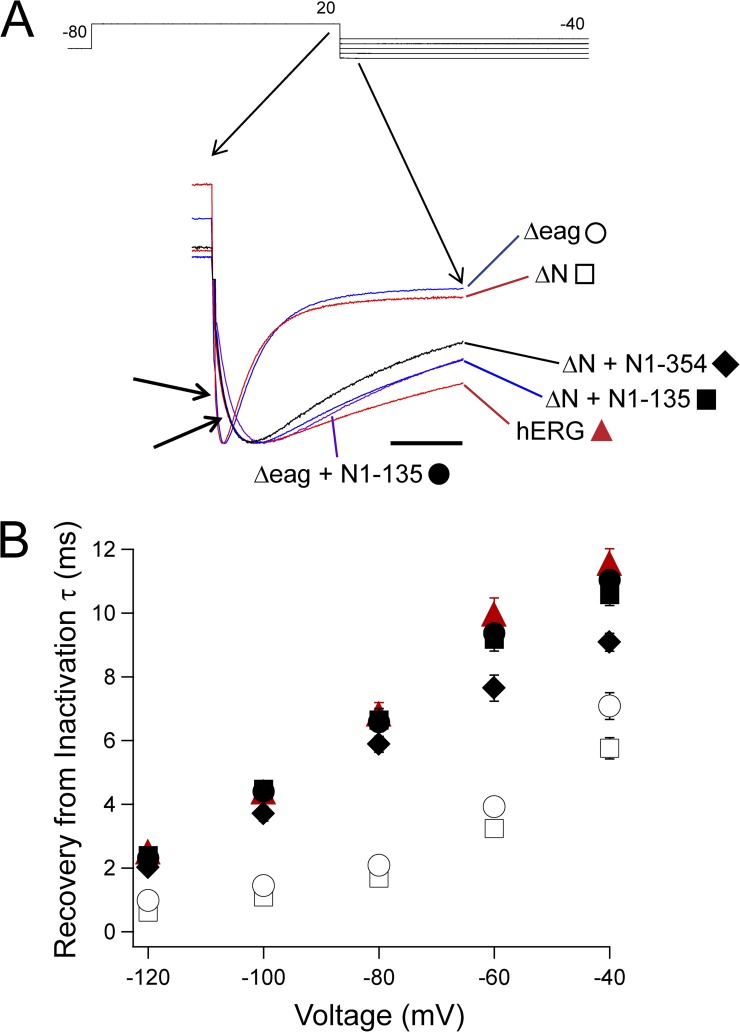
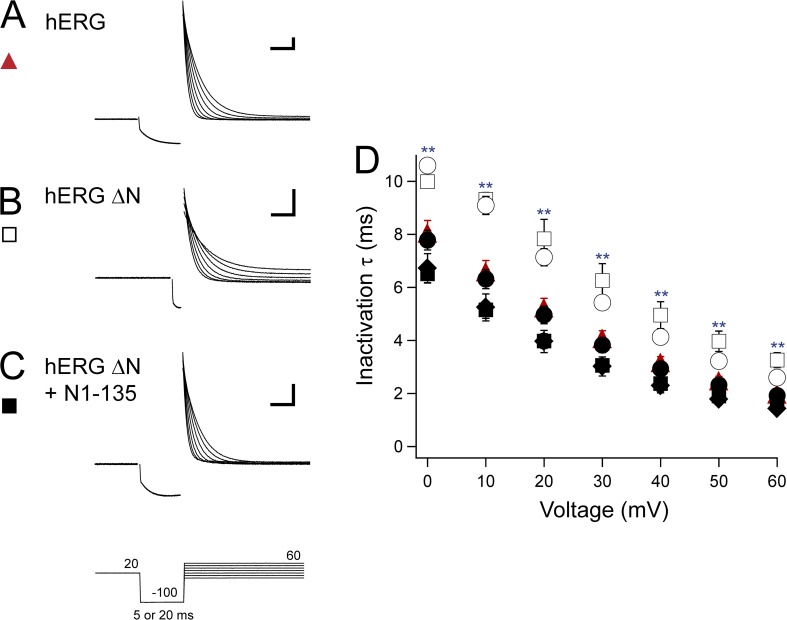
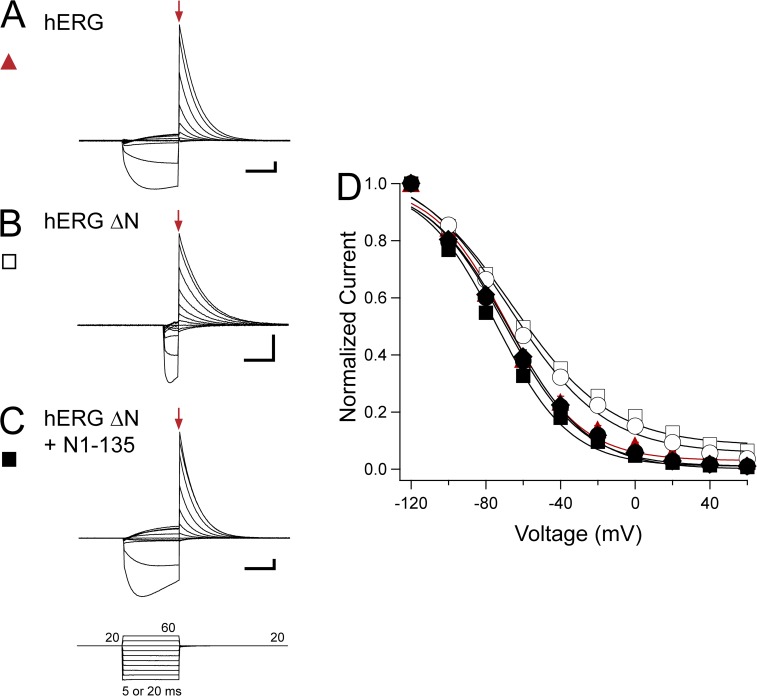
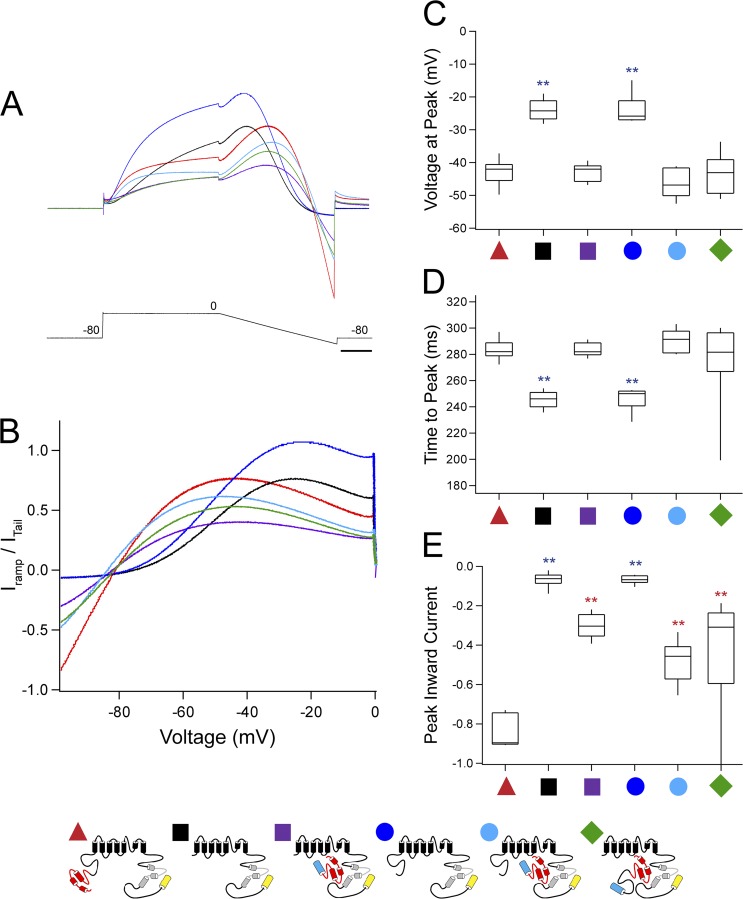
Human ether-á-go-go (eag)-related gene (hERG) potassium channel kinetics are characterized by rapid inactivation upon depolarization, along with rapid recovery from inactivation and very slow closing (deactivation) upon repolarization. These factors combine to create a resurgent hERG current, where the current amplitude is paradoxically larger with repolarization than with depolarization. Previous data showed that the hERG N-terminal eag domain regulated deactivation kinetics by making a direct interaction with the C-terminal region of the channel. A primary mechanism for fast inactivation depends on residues in the channel pore; however, inactivation was also shown to be slower after deletion of a large N-terminal region. The mechanism for N-terminal region regulation of inactivation is unclear. Here, we investigated the contributions of the large N-terminal domains (amino acids 1-354), including the eag domain (amino acids 1-135), to hERG channel inactivation kinetics and steady-state inactivation properties. We found that N-deleted channels lacking just the eag domain (Δ2-135) or both the eag domain and the adjacent proximal domain (Δ2-354) had less rectifying current-voltage (I-V) relationships, slower inactivation, faster recovery from inactivation, and lessened steady-state inactivation. We coexpressed genetically encoded N-terminal fragments for the eag domain (N1-135) or the eag domain plus the proximal domain (N1-354) with N-deleted hERG Δ2-135 or hERG Δ2-354 channels and found that the resulting channels had more rectifying I-V relationships, faster inactivation, slower recovery from inactivation, and increased steady-state inactivation, similar to those properties measured for wild-type (WT) hERG. We also found that the eag domain-containing fragments regulated the time to peak and the voltage at the peak of a resurgent current elicited with a ramp voltage protocol. The eag domain-containing fragments effectively converted N-deleted channels into WT-like channels. Neither the addition of the proximal domain to the eag domain in N1-354 fragments nor the presence of the proximal domain in hERG Δ2-135 channels measurably affected inactivation properties; in contrast, the proximal region regulated steady-state activation in hERG Δ2-135 channels. The results show that N-terminal region-dependent regulation of channel inactivation and resurgent current properties are caused by a direct interaction of the eag domain with the rest of the hERG channel.
人类醚-α--go-go(eag)相关基因(hERG)钾通道动力学的特征是在去极化时快速失活,以及在失活后快速恢复,在复极化时非常缓慢关闭(失活)。这些因素共同导致 hERG 电流的复燃,其中复极时的电流幅度比去极化时更大,这是一种反常现象。先前的数据表明,hERG N 端 eag 结构域通过与通道的 C 端区域直接相互作用来调节失活动力学。快速失活的主要机制取决于通道孔中的残基;然而,在缺失较大的 N 端区域后,失活也变得更慢。N 端区域调节失活的机制尚不清楚。在这里,我们研究了包括 eag 结构域(氨基酸 1-135)在内的大 N 端结构域(氨基酸 1-354)对 hERG 通道失活动力学和稳态失活特性的贡献。我们发现,仅缺失 eag 结构域(Δ2-135)或 eag 结构域及其相邻近端结构域(Δ2-354)的 N 端缺失通道具有更小的整流电流-电压(I-V)关系、更慢的失活、更快的失活恢复以及减弱的稳态失活。我们与 N 端缺失的 hERG Δ2-135 或 hERG Δ2-354 通道共表达基因编码的 N 端片段,用于 eag 结构域(N1-135)或 eag 结构域加近端结构域(N1-354),发现由此产生的通道具有更整流的 I-V 关系、更快的失活、更慢的失活恢复以及增加的稳态失活,类似于测量的野生型(WT)hERG 的特性。我们还发现,eag 结构域包含的片段调节了使用斜坡电压方案诱发出的复燃电流的峰值时间和峰值电压。含有 eag 结构域的片段有效地将 N 端缺失的通道转换为类似 WT 的通道。在 N1-354 片段中,近端结构域的添加或在 hERG Δ2-135 通道中存在近端结构域都不会显著影响失活特性;相反,近端区域调节 hERG Δ2-135 通道的稳态激活。结果表明,N 端区域依赖性的通道失活和复燃电流特性的调节是由 eag 结构域与 hERG 通道其余部分的直接相互作用引起的。