Interdisciplinary Nanoscience Center, Aarhus University, Ny Munkegade 120, Aarhus C DK-8000, Denmark.
Nucleic Acids Res. 2013 Mar 1;41(5):2807-16. doi: 10.1093/nar/gks1283. Epub 2013 Jan 15.
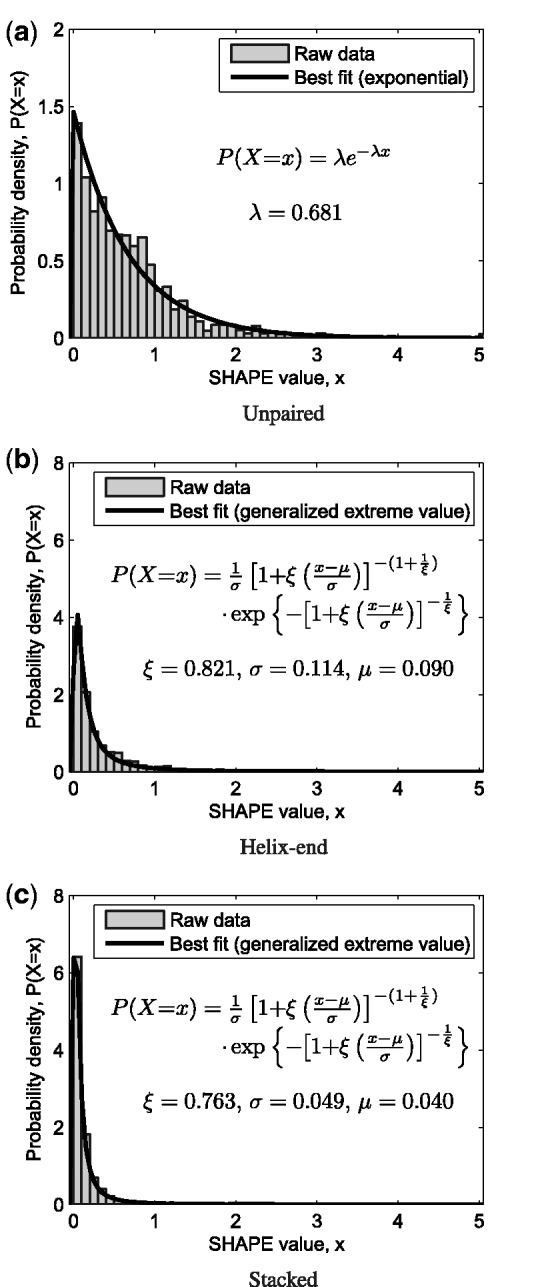
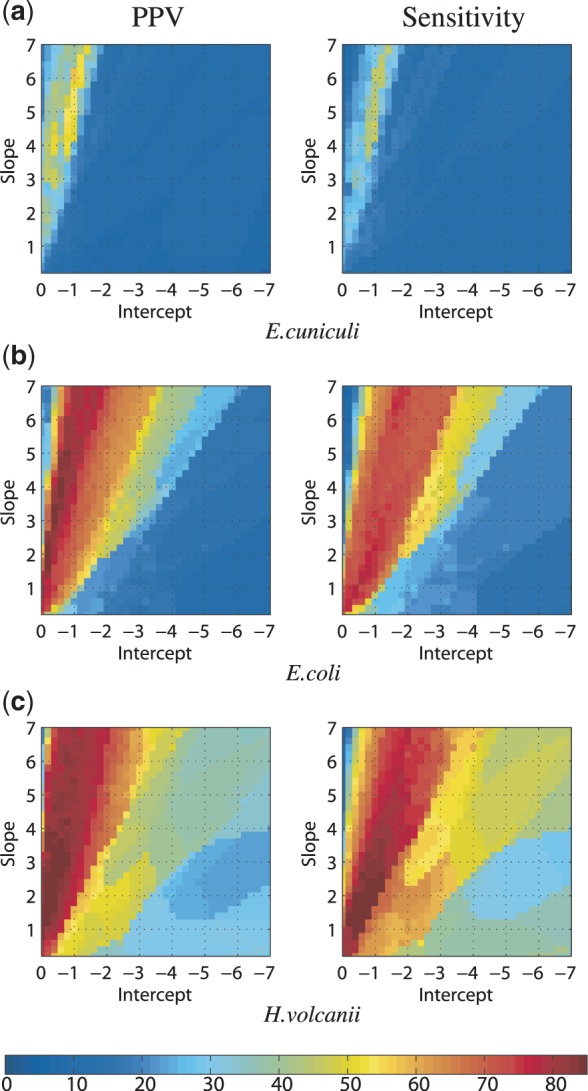
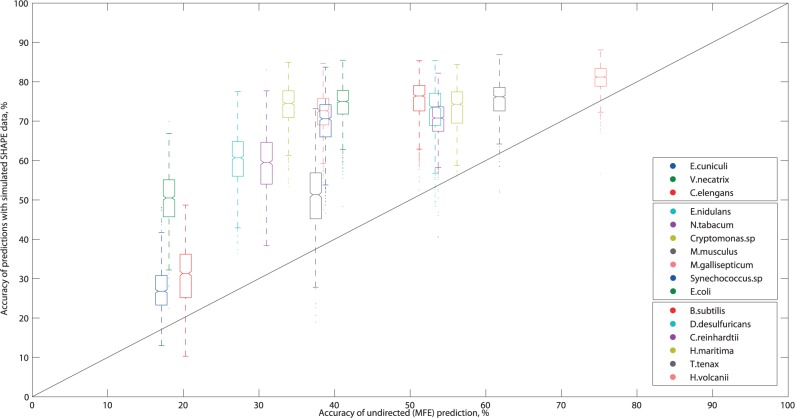
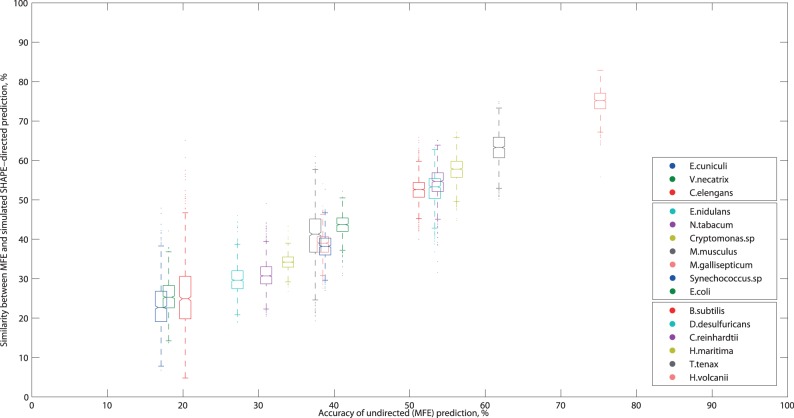
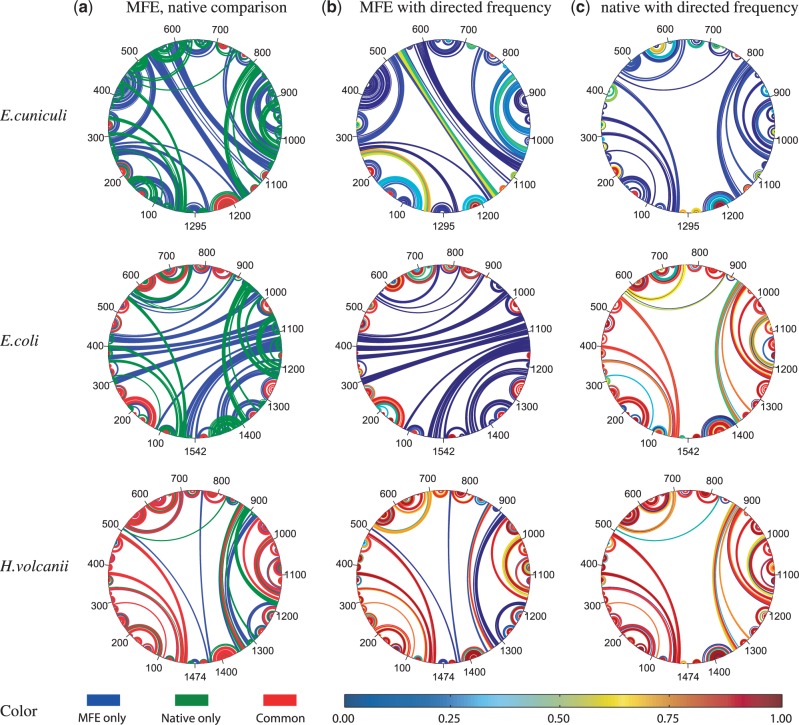
Recent advances in RNA structure determination include using data from high-throughput probing experiments to improve thermodynamic prediction accuracy. We evaluate the extent and nature of improvements in data-directed predictions for a diverse set of 16S/18S ribosomal sequences using a stochastic model of experimental SHAPE data. The average accuracy for 1000 data-directed predictions always improves over the original minimum free energy (MFE) structure. However, the amount of improvement varies with the sequence, exhibiting a correlation with MFE accuracy. Further analysis of this correlation shows that accurate MFE base pairs are typically preserved in a data-directed prediction, whereas inaccurate ones are not. Thus, the positive predictive value of common base pairs is consistently higher than the directed prediction accuracy. Finally, we confirm sequence dependencies in the directability of thermodynamic predictions and investigate the potential for greater accuracy improvements in the worst performing test sequence.
RNA 结构测定的最新进展包括利用高通量探测实验的数据来提高热力学预测的准确性。我们使用实验 SHAPE 数据的随机模型,评估了针对一组多样化的 16S/18S 核糖体序列的定向数据预测的改进程度和性质。对于 1000 个定向数据预测,平均准确性总是比原始最小自由能(MFE)结构有所提高。然而,改进的幅度随序列而变化,与 MFE 准确性相关。对这种相关性的进一步分析表明,准确的 MFE 碱基对通常在定向预测中得以保留,而不准确的则不然。因此,常见碱基对的阳性预测值始终高于定向预测的准确性。最后,我们确认了热力学预测的定向性在序列上的依赖性,并研究了在性能最差的测试序列中提高准确性的潜力。