Institute for Genome Sciences and Policy, Duke University Medical Center, Durham, North Carolina, USA.
PLoS One. 2013;8(1):e52198. doi: 10.1371/journal.pone.0052198. Epub 2013 Jan 9.
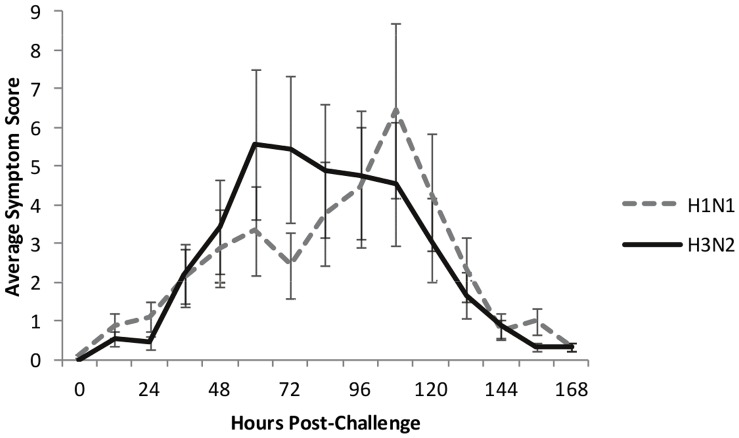
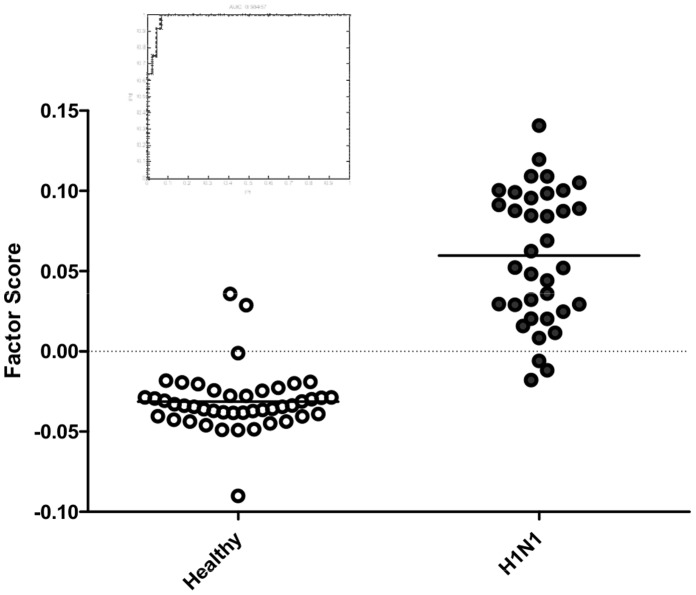
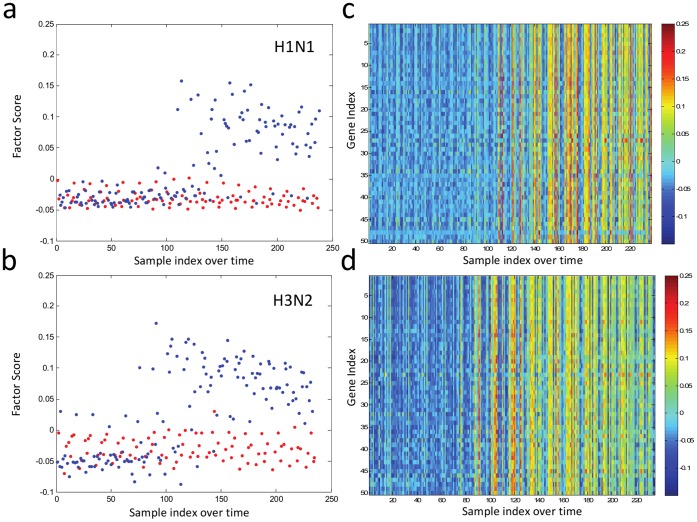
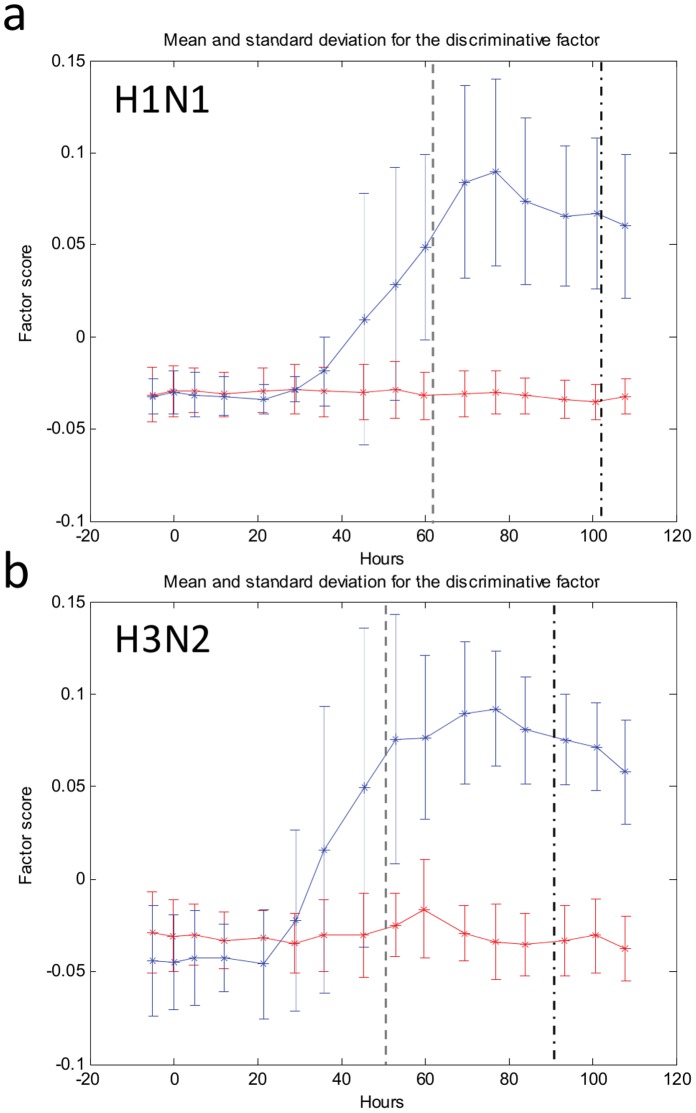
There is great potential for host-based gene expression analysis to impact the early diagnosis of infectious diseases. In particular, the influenza pandemic of 2009 highlighted the challenges and limitations of traditional pathogen-based testing for suspected upper respiratory viral infection. We inoculated human volunteers with either influenza A (A/Brisbane/59/2007 (H1N1) or A/Wisconsin/67/2005 (H3N2)), and assayed the peripheral blood transcriptome every 8 hours for 7 days. Of 41 inoculated volunteers, 18 (44%) developed symptomatic infection. Using unbiased sparse latent factor regression analysis, we generated a gene signature (or factor) for symptomatic influenza capable of detecting 94% of infected cases. This gene signature is detectable as early as 29 hours post-exposure and achieves maximal accuracy on average 43 hours (p = 0.003, H1N1) and 38 hours (p-value = 0.005, H3N2) before peak clinical symptoms. In order to test the relevance of these findings in naturally acquired disease, a composite influenza A signature built from these challenge studies was applied to Emergency Department patients where it discriminates between swine-origin influenza A/H1N1 (2009) infected and non-infected individuals with 92% accuracy. The host genomic response to Influenza infection is robust and may provide the means for detection before typical clinical symptoms are apparent.
基于宿主的基因表达分析在传染病的早期诊断方面具有巨大的潜力。特别是,2009 年的流感大流行凸显了传统基于病原体的检测方法在疑似上呼吸道病毒感染方面的挑战和局限性。我们将人类志愿者接种 A 型流感(A/Brisbane/59/2007(H1N1)或 A/Wisconsin/67/2005(H3N2)),并在接种后 7 天内每隔 8 小时检测外周血转录组。在 41 名接种的志愿者中,有 18 名(44%)出现症状性感染。使用无偏稀疏潜在因素回归分析,我们生成了一个用于检测症状性流感的基因特征(或因子),能够检测到 94%的感染病例。该基因特征最早可在暴露后 29 小时检测到,平均在出现临床症状前 43 小时(p=0.003,H1N1)和 38 小时(p 值=0.005,H3N2)达到最大准确性。为了检验这些发现与自然获得性疾病的相关性,从这些挑战研究中构建的复合流感 A 特征被应用于急诊科患者,它能够以 92%的准确率区分感染和未感染猪源流感 A/H1N1(2009)的个体。宿主对流感感染的基因组反应是强大的,它可能为在典型临床症状出现之前进行检测提供了手段。