Key Laboratory of Organic Solids, Beijing National Laboratory for Molecular Sciences, Institute of Chemistry , Chinese Academy of Sciences, Beijing 100190, China.
Sci Rep. 2013;3:1080. doi: 10.1038/srep01080. Epub 2013 Jan 16.
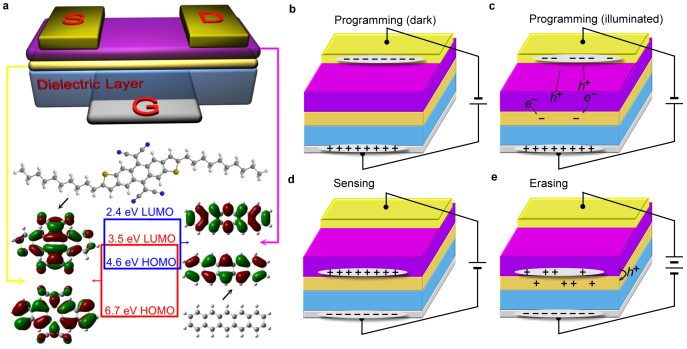
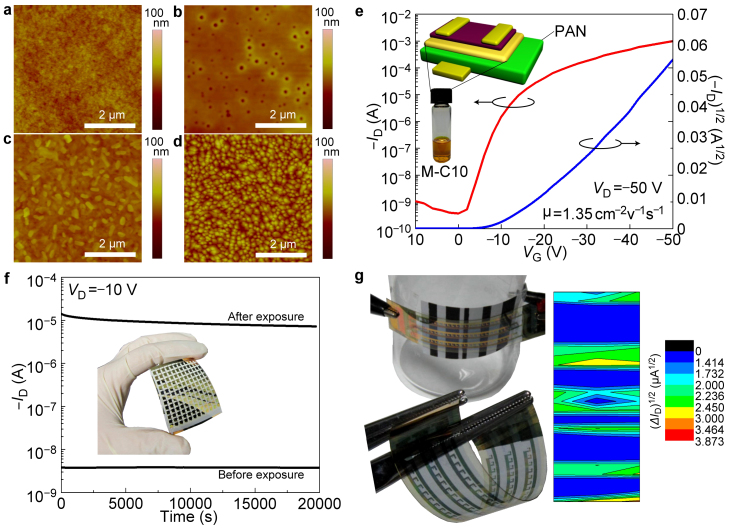
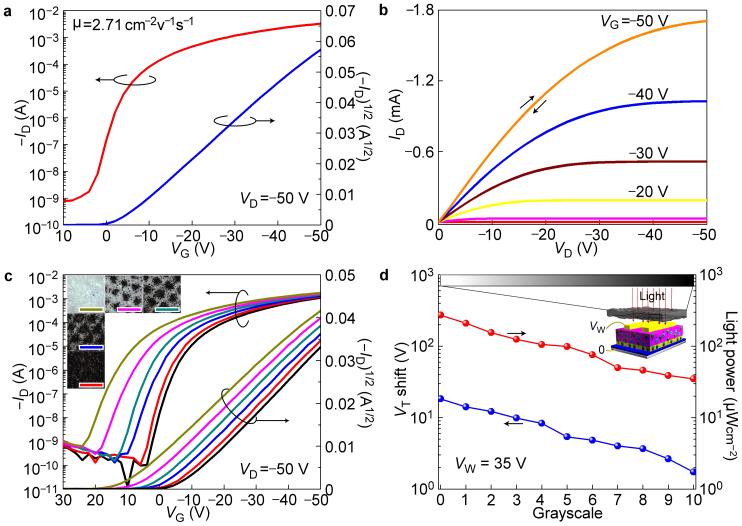
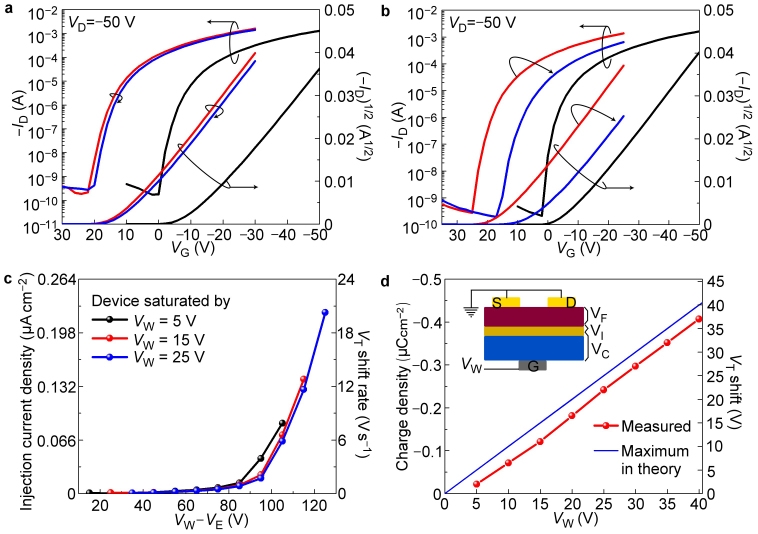
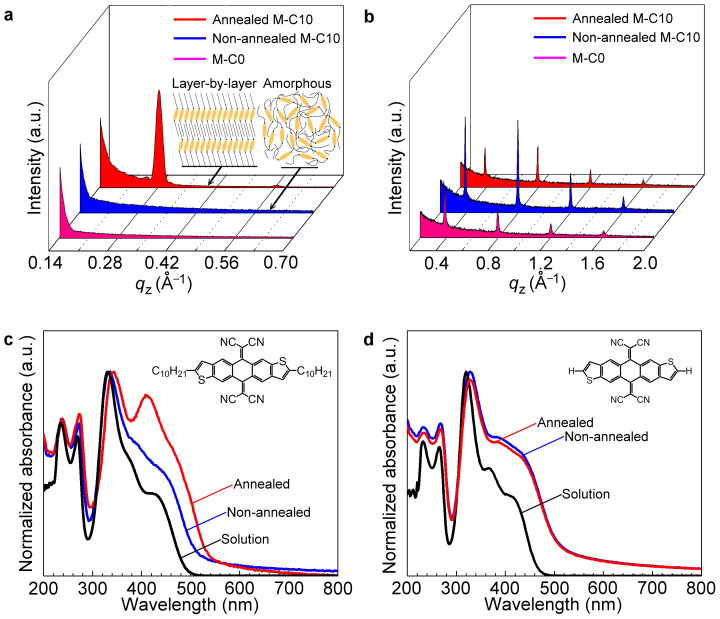
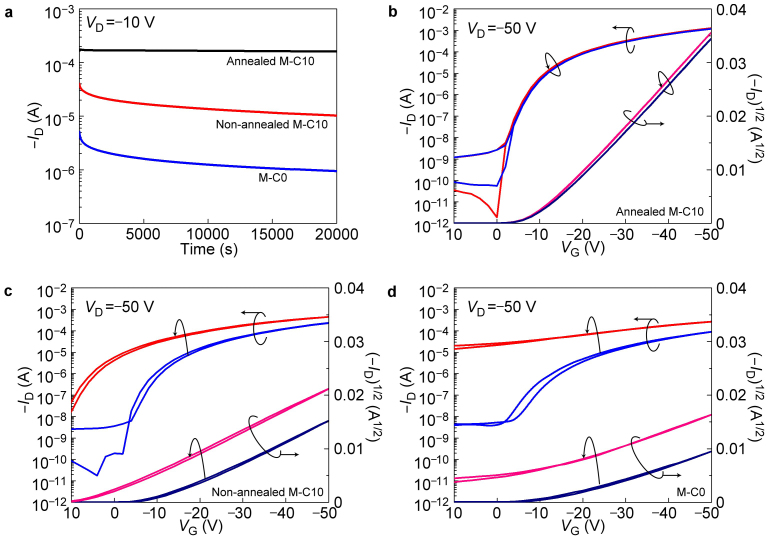
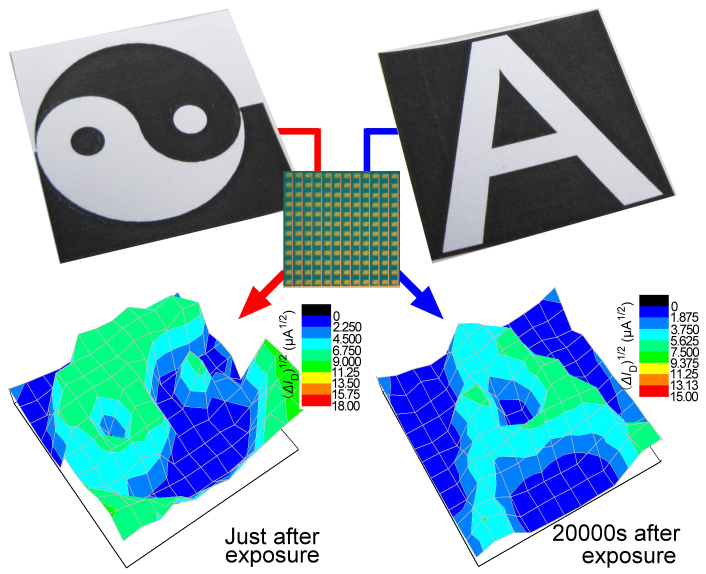
Existing organic imaging circuits, which offer attractive benefits of light weight, low cost and flexibility, are exclusively based on phototransistor or photodiode arrays. One shortcoming of these photo-sensors is that the light signal should keep invariant throughout the whole pixel-addressing and reading process. As a feasible solution, we synthesized a new charge storage molecule and embedded it into a device, which we call light-charge organic memory (LCOM). In LCOM, the functionalities of photo-sensor and non-volatile memory are integrated. Thanks to the deliberate engineering of electronic structure and self-organization process at the interface, 92% of the stored charges, which are linearly controlled by the quantity of light, retain after 20000 s. The stored charges can also be non-destructively read and erased by a simple voltage program. These results pave the way to large-area, flexible imaging circuits and demonstrate a bright future of small molecular materials in non-volatile memory.
现有的有机成像电路具有重量轻、成本低、灵活性好等优点,但其仅基于光电晶体管或光电二极管阵列。这些光传感器的一个缺点是,在整个像素寻址和读取过程中,光信号应保持不变。作为一种可行的解决方案,我们合成了一种新型的电荷存储分子,并将其嵌入到我们称之为光电荷有机存储器(LCOM)的器件中。在 LCOM 中,光传感器和非易失性存储器的功能集成在一起。由于在界面处进行了电子结构和自组织过程的精心设计,92%的存储电荷可以通过光的数量进行线性控制,在 20000 秒后仍能保留。存储电荷也可以通过简单的电压程序进行非破坏性读取和擦除。这些结果为大面积、灵活的成像电路铺平了道路,并展示了小分子材料在非易失性存储器中的光明前景。