Mendes César S, Bartos Imre, Akay Turgay, Márka Szabolcs, Mann Richard S
Department of Biochemistry and Molecular Biophysics , Columbia University , New York , USA.
Elife. 2013 Jan 8;2:e00231. doi: 10.7554/eLife.00231.
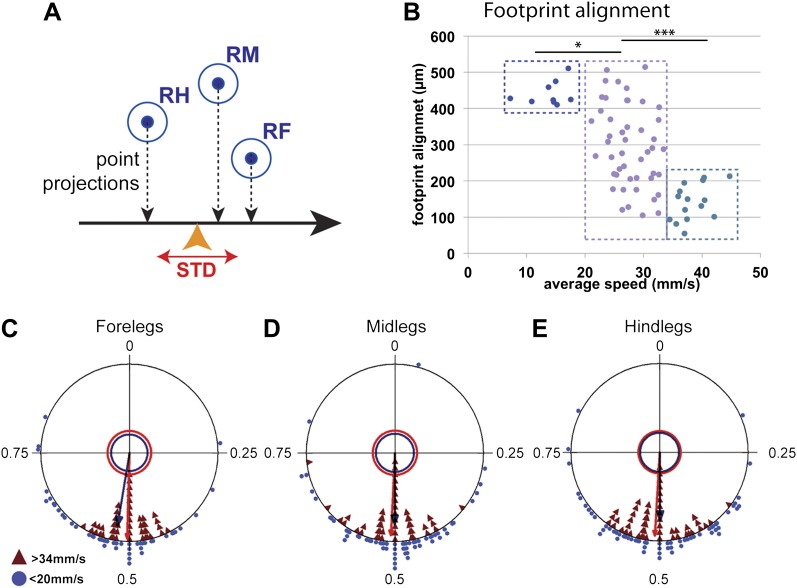
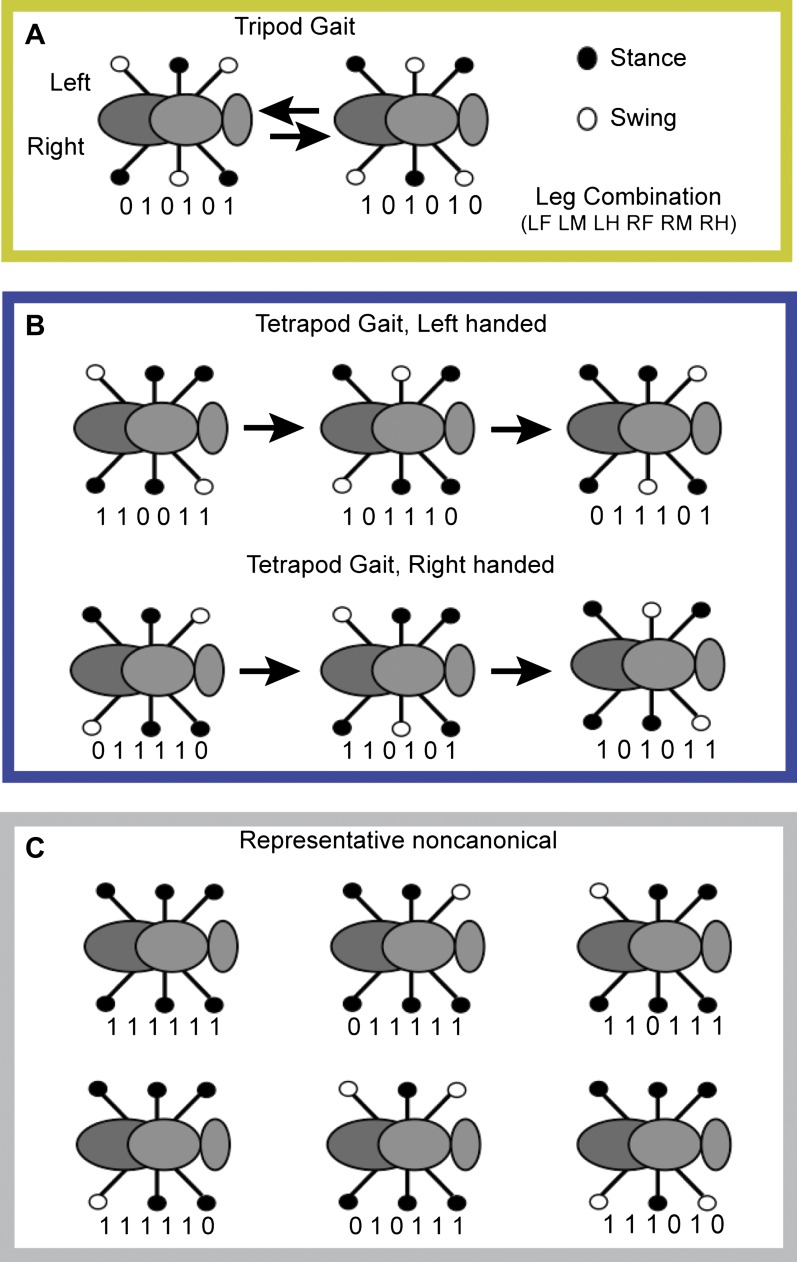
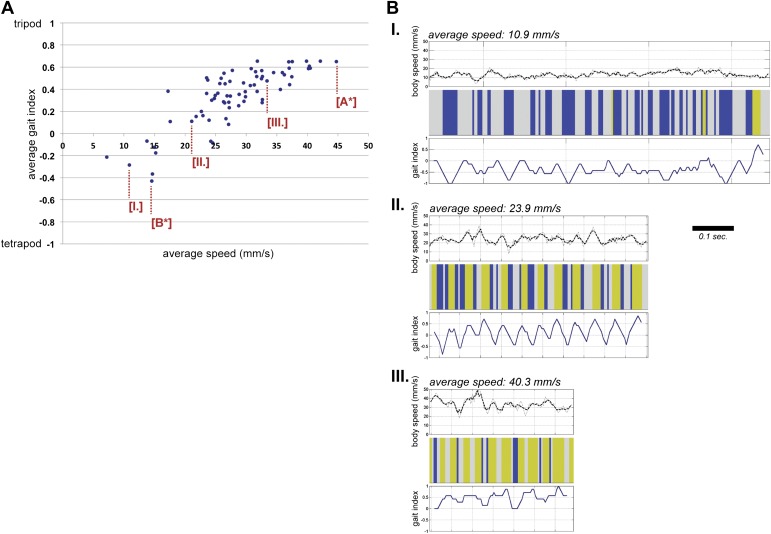
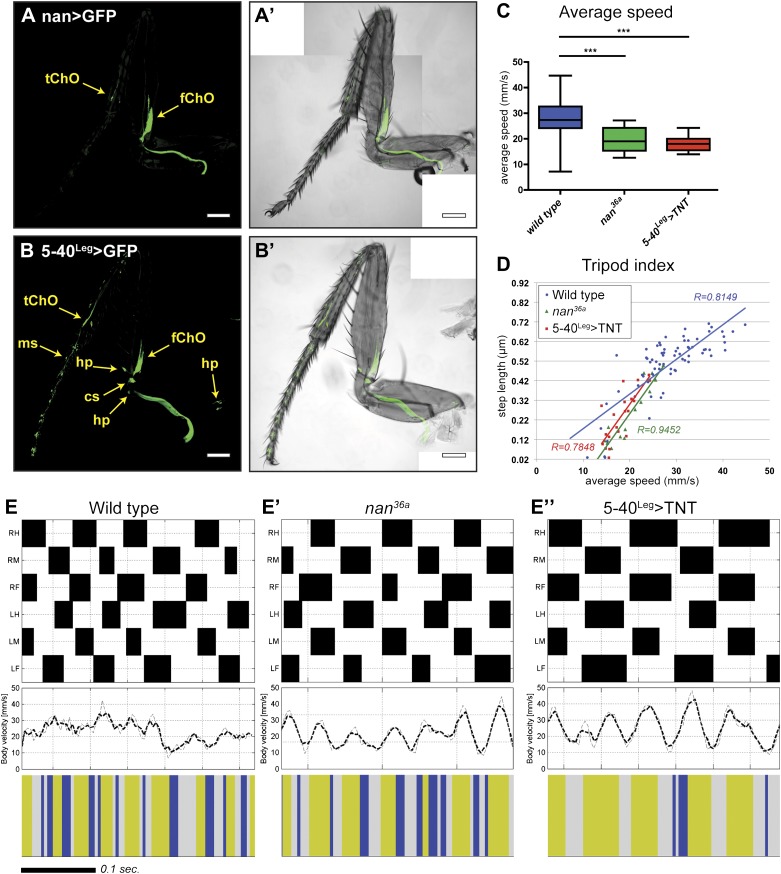
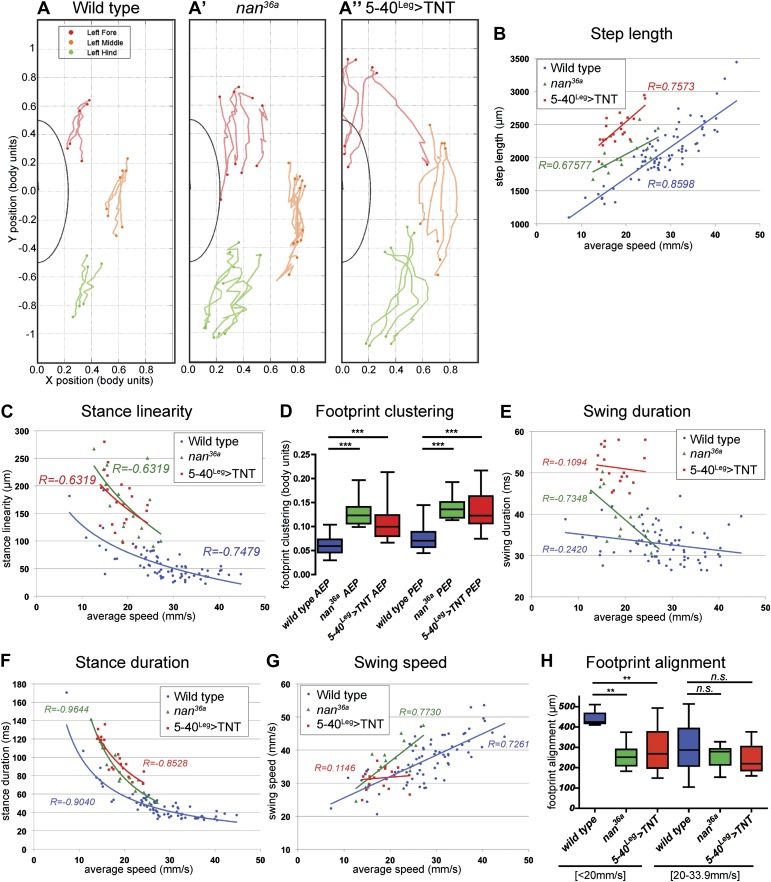
Coordinated walking in vertebrates and multi-legged invertebrates [corrected] such as Drosophila melanogaster requires a complex neural network coupled to sensory feedback. An understanding of this network will benefit from systems such as Drosophila that have the ability to genetically manipulate neural activities. However, the fly's small size makes it challenging to analyze walking in this system. In order to overcome this limitation, we developed an optical method coupled with high-speed imaging that allows the tracking and quantification of gait parameters in freely walking flies with high temporal and spatial resolution. Using this method, we present a comprehensive description of many locomotion parameters, such as gait, tarsal positioning, and intersegmental and left-right coordination for wild type fruit flies. Surprisingly, we find that inactivation of sensory neurons in the fly's legs, to block proprioceptive feedback, led to deficient step precision, but interleg coordination and the ability to execute a tripod gait were unaffected.DOI:http://dx.doi.org/10.7554/eLife.00231.001.
脊椎动物以及多足无脊椎动物(如黑腹果蝇)的协调行走需要一个与感觉反馈相耦合的复杂神经网络。对这一网络的理解将受益于诸如果蝇这样能够对神经活动进行基因操纵的系统。然而,果蝇体型微小,使得在该系统中分析行走具有挑战性。为了克服这一限制,我们开发了一种结合高速成像的光学方法,该方法能够以高时间和空间分辨率跟踪和量化自由行走果蝇的步态参数。使用这种方法,我们对许多运动参数进行了全面描述,例如野生型果蝇的步态、跗节定位以及节间和左右协调。令人惊讶的是,我们发现,果蝇腿部感觉神经元失活以阻断本体感受反馈,会导致步精度不足,但腿间协调以及执行三脚架步态的能力不受影响。DOI:http://dx.doi.org/10.7554/eLife.00231.001