Iraji Fariba, Tagmirriahi Nabet, Gavidnia Keyvan
Department of Dermatology, Skin Diseases and Leishmaniasis Research Center, Isfahan University of Medical Sciences, Isfahan, Iran.
Adv Biomed Res. 2012;1:39. doi: 10.4103/2277-9175.100134. Epub 2012 Aug 28.
Melasma, a common disorder of hyperpigmentation, is often difficult to treat. Although 10% zinc sulfate solution has been reported to be useful for patients with melasma, controlled trials are lacking.
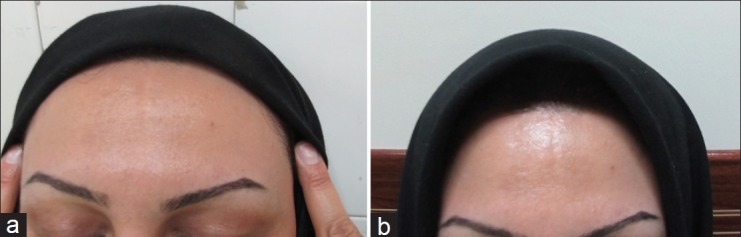
72 women with moderate to severe melasma were divided randomly into 2 groups. Group A were treated with 10% zinc sulfate solution and group B with 4% hydroquinone cream twice-daily. The results were evaluated by photoevaluation by patients based on subjective satisfaction and a blinded dermatologist using MASI score. Assessments were obtained at baseline and at 2 and 6 months after starting treatment.
According to MASI score changes during treatment, there was a reduction in both groups at 2 months, however, the reduction in group B was more significant (the reduction in mean ± SD MASI was 0.7 ± 0.7 in group A vs. 2.7 ± 1.6 in group B). In addition, the patients in group B continued to decrease MASI score for the remainder of the study period at 6 months follow-up (0.3 ± 0.5) in comparison with patients in group A who did not show more reduction in MASI score.
The study indicates that topical zinc sulfate is not as effective in treating disease as was observed in the previous open study. A comparative study with sunscreen and placebo is necessary to determine if topical zinc sulfate is truly superior to sunscreen and placebo in this respect.
黄褐斑是一种常见的色素沉着紊乱疾病,通常难以治疗。尽管有报道称10%硫酸锌溶液对黄褐斑患者有效,但缺乏对照试验。
72名中度至重度黄褐斑女性被随机分为两组。A组用10%硫酸锌溶液治疗,B组用4%氢醌霜每日两次治疗。结果由患者根据主观满意度进行照片评估,并由一名不知情的皮肤科医生使用MASI评分进行评估。在基线以及开始治疗后2个月和6个月时进行评估。
根据治疗期间MASI评分变化,两组在2个月时均有降低,但B组降低更显著(A组平均±标准差MASI降低为0.7±0.7,B组为2.7±1.6)。此外,在6个月随访的研究剩余期间,B组患者的MASI评分持续降低(0.3±0.5),而A组患者的MASI评分没有进一步降低。
该研究表明,局部用硫酸锌在治疗该疾病方面不如之前的开放性研究所观察到的那样有效。有必要进行一项防晒霜和安慰剂的对照研究,以确定局部用硫酸锌在这方面是否真的优于防晒霜和安慰剂。