Department of Neurology, University of Iowa, Iowa City, IA, USA.
Neuroscience. 2013 Apr 3;235:87-95. doi: 10.1016/j.neuroscience.2013.01.019. Epub 2013 Jan 16.
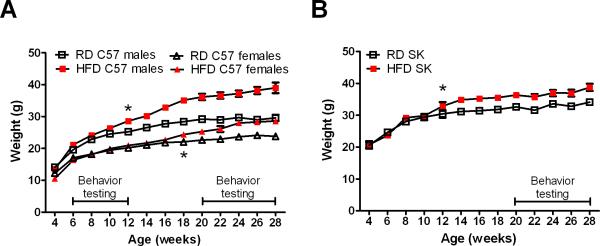
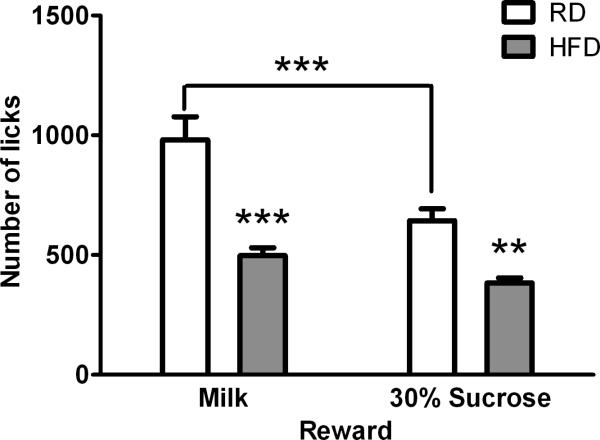
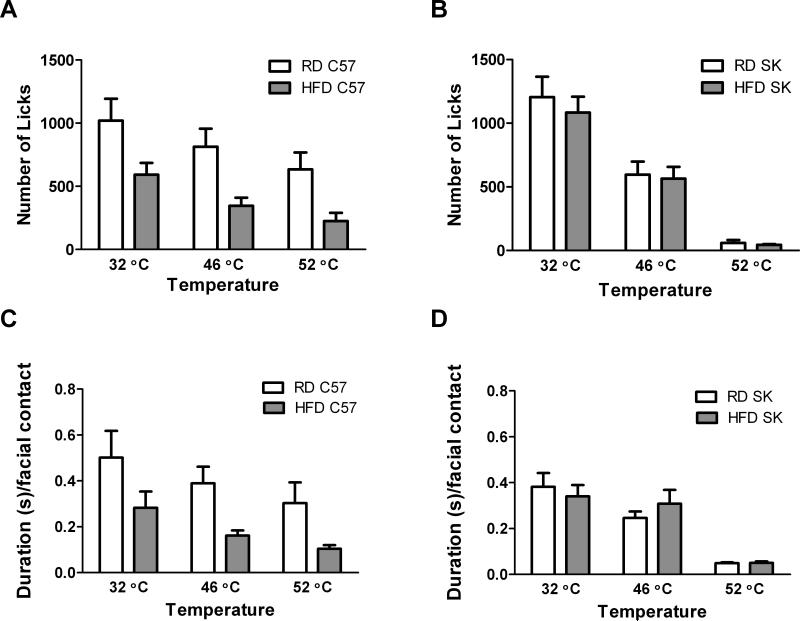
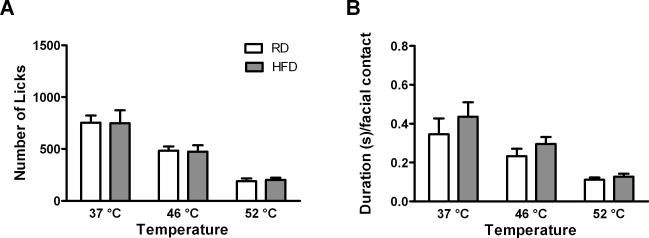
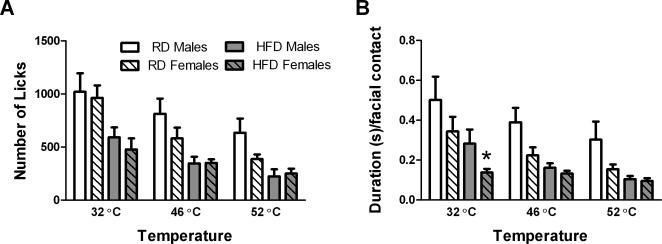
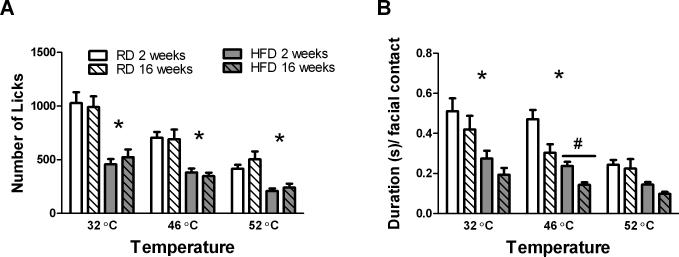
Obesity has been associated with multiple chronic pain disorders, including migraine. We hypothesized that diet-induced obesity would be associated with a reduced threshold for thermal nociception in the trigeminal system. In this study, we sought to examine the effect of diet-induced obesity on facial pain behavior. Mice of two different strains were fed high-fat or regular diet (RD) and tested using a well-established operant facial pain assay. We found that the effects of diet on behavior in this assay were strain and reward dependent. Obesity-prone C57BL/6J mice fed a high-fat diet (HFD) display lower number of licks of a caloric, palatable reward (33% sweetened condensed milk or 30% sucrose) than control mice. This occurred at all temperatures, in both sexes, and was evident even before the onset of obesity. This diminished reward-seeking behavior was not observed in obesity-resistant SKH1-E (SK) mice. These findings suggest that diet and strain interact to modulate reward-seeking behavior. Furthermore, we observed a difference between diet groups in operant behavior with caloric, palatable rewards, but not with a non-caloric neutral reward (water). Importantly, we found no effect of diet-induced obesity on acute thermal nociception in the absence of inflammation or injury. This indicates that thermal sensation in the face is not affected by obesity-associated peripheral neuropathy as it occurs when studying pain behaviors in the rodent hindpaw. Future studies using this model may reveal whether obesity facilitates the development of chronic pain after injury or inflammation.
肥胖与多种慢性疼痛疾病有关,包括偏头痛。我们假设饮食诱导的肥胖与三叉神经系统中热伤害感受阈值降低有关。在这项研究中,我们试图研究饮食诱导的肥胖对面部疼痛行为的影响。两种不同品系的小鼠分别喂食高脂肪或常规饮食(RD),并使用一种成熟的操作性面部疼痛测定法进行测试。我们发现,饮食对该测定法中行为的影响取决于品系和奖励。喂食高脂肪饮食(HFD)的肥胖易感 C57BL/6J 小鼠舔食热量可口的奖励(33%加糖炼乳或 30%蔗糖)的次数少于对照小鼠。这种情况发生在所有温度下,无论是雄性还是雌性,甚至在肥胖发生之前就已经明显。肥胖抵抗的 SKH1-E(SK)小鼠则没有观察到这种奖励寻求行为的减少。这些发现表明,饮食和品系相互作用调节奖励寻求行为。此外,我们观察到在使用热量可口的奖励进行操作性行为时,饮食组之间存在差异,但在使用非热量中性奖励(水)时则没有差异。重要的是,我们发现饮食诱导的肥胖对急性热伤害感受没有影响,无论是在没有炎症或损伤的情况下。这表明,面部的热感觉不受肥胖相关的周围神经病变的影响,因为在研究啮齿动物后爪的疼痛行为时会发生这种情况。使用这种模型的未来研究可能会揭示肥胖是否会促进损伤或炎症后慢性疼痛的发展。