Department of Immunology and Molecular Microbiology, BK21 CLS, School of Dentistry and Dental Research Institute, Seoul National University, Seoul, Korea.
PLoS One. 2013;8(1):e53703. doi: 10.1371/journal.pone.0053703. Epub 2013 Jan 15.
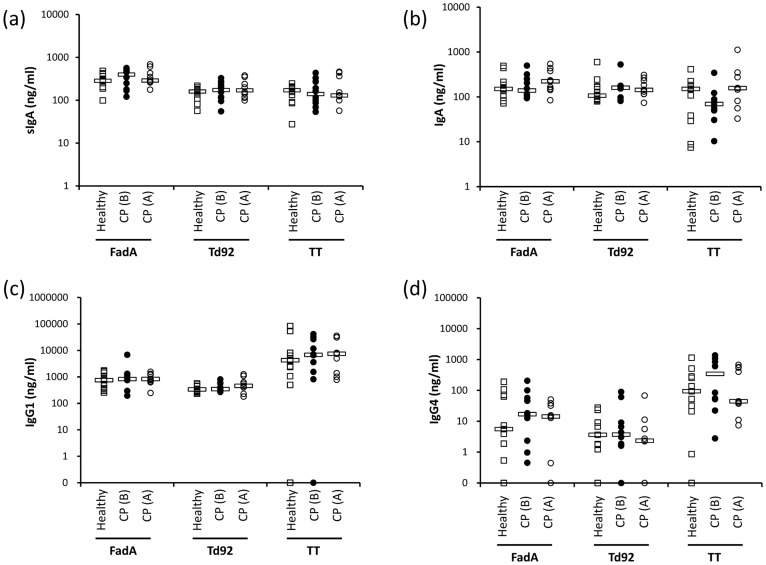
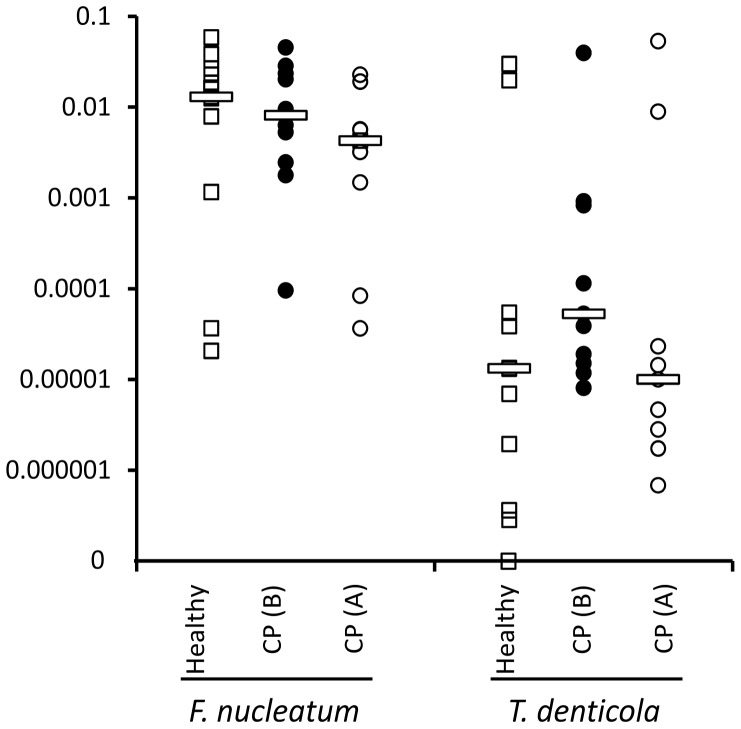
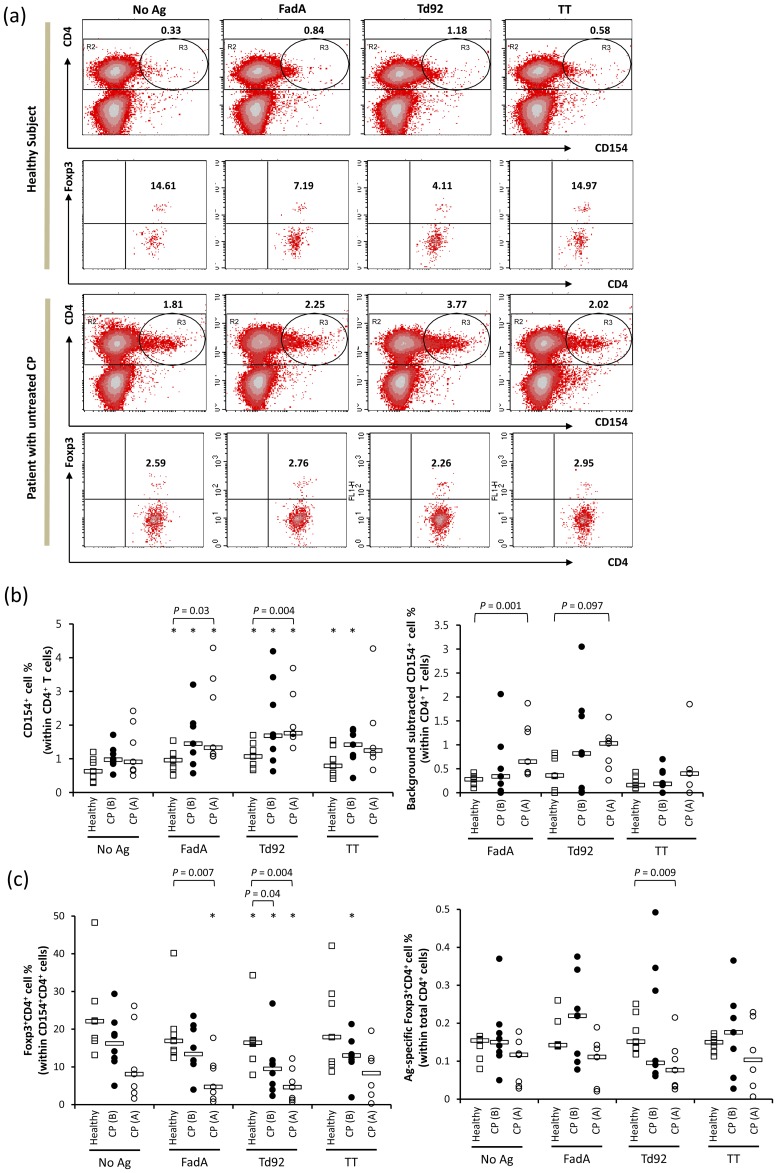
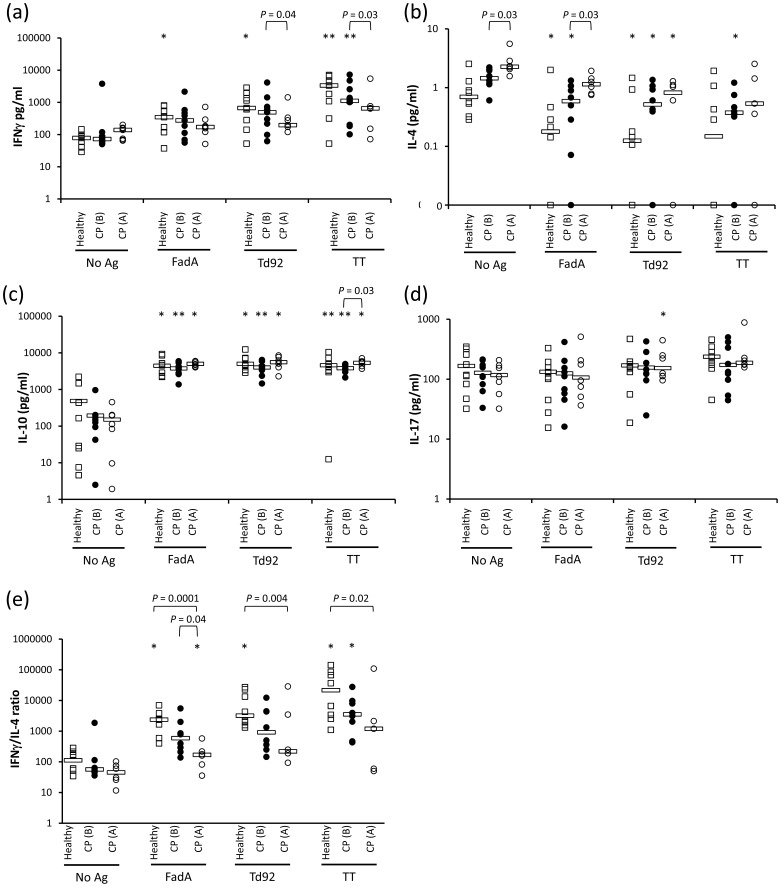
The characteristics of the T cell response to the members of oral flora are poorly understood. We characterized the antibody and T cell responses to FadA and Td92, adhesins from Fusobacterium nucleatum, an oral commensal, and Treponema denticola, a periodontal pathogen, respectively. Peripheral blood and saliva were obtained from healthy individuals and patients with untreated chronic periodontitis (CP, n = 11 paris) and after successful treatment of the disease (n = 9). The levels of antigen-specific antibody were measured by ELISA. In plasma, IgG1 was the most abundant isotype of Ab for both Ags, followed by IgA and then IgG4. The levels of FadA-specific salivary IgA (sIgA) were higher than Td92-specific sIgA and the FadA-specific IgA levels observed in plasma. However, the periodontal health status of the individuals did not affect the levels of FadA- or Td92-specific antibody. Even healthy individuals contained FadA- and Td92-specific CD4(+) T cells, as determined by the detection of intracytoplasmic CD154 after short-term in vitro stimulation of peripheral blood mononuclear cells (PBMCs) with the antigens. Patients with CP tended to possess increased numbers of FadA- and Td92-specific CD4(+) T cells but reduced numbers of Td92-specific Foxp3(+)CD4(+) Tregs than the healthy subjects. Both FadA and Td92 induced the production of IFNγ and IL-10 but inhibited the secretion of IL-4 by PBMCs. In conclusion, F. nucleatum induced Th3 (sIgA)- and Th1 (IFNγ and IgG1)-dominant immune responses, whereas T. denticola induced a Th1 (IFNγ and IgG1)-dominant response. This IFNγ-dominant cytokine response was impaired in CP patients, and the Td92-induced IFNγ levels were negatively associated with periodontal destruction in patients. These findings may provide new insights into the homeostatic interaction between the immune system and oral bacteria and the pathogenesis of periodontitis.
口腔菌群成员的 T 细胞反应特征尚不清楚。我们分别对口腔共生菌核梭杆菌的黏附素 FadA 和牙周致病菌牙髓卟啉单胞菌的黏附素 Td92 的抗体和 T 细胞反应进行了特征分析。从健康个体和未经治疗的慢性牙周炎(CP,n = 11 对)以及疾病成功治疗后(n = 9)的个体中获得外周血和唾液。通过 ELISA 测定抗原特异性抗体水平。在血浆中,针对两种抗原,IgG1 是 Ab 最丰富的同种型,其次是 IgA,然后是 IgG4。FadA 特异性唾液 IgA(sIgA)水平高于 Td92 特异性 sIgA,并且高于血浆中观察到的 FadA 特异性 IgA 水平。然而,个体的牙周健康状况并不影响 FadA 或 Td92 特异性抗体的水平。即使是健康个体,也含有 FadA 和 Td92 特异性 CD4+T 细胞,这是通过用抗原短期体外刺激外周血单核细胞(PBMCs)后检测细胞内 CD154 来确定的。与健康受试者相比,CP 患者倾向于具有更多数量的 FadA 和 Td92 特异性 CD4+T 细胞,但 Td92 特异性 Foxp3+CD4+Treg 数量减少。FadA 和 Td92 均可诱导 IFNγ 和 IL-10 的产生,但抑制 PBMCs 分泌 IL-4。总之,F. nucleatum 诱导 Th3(sIgA)和 Th1(IFNγ 和 IgG1)优势免疫反应,而 T. denticola 诱导 Th1(IFNγ 和 IgG1)优势反应。这种 IFNγ 优势细胞因子反应在 CP 患者中受损,并且 Td92 诱导的 IFNγ 水平与患者的牙周破坏呈负相关。这些发现可能为免疫系统和口腔细菌之间的动态相互作用以及牙周炎的发病机制提供新的见解。