Joseph Henry Laboratories of Physics, Princeton University, Princeton, NJ 08544, USA.
Mol Syst Biol. 2013;9:639. doi: 10.1038/msb.2012.72.
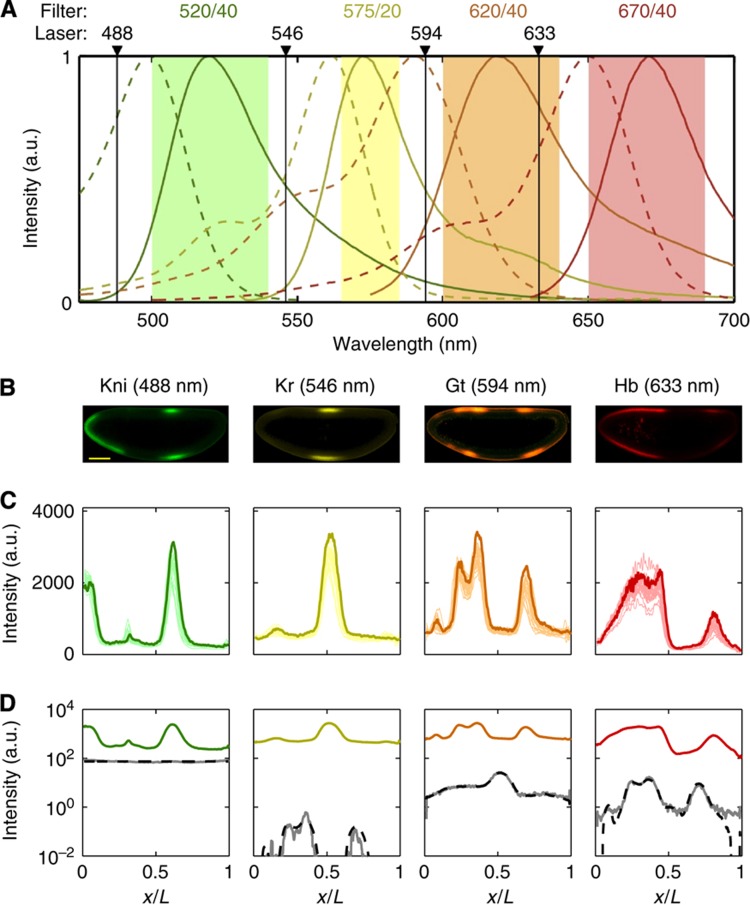
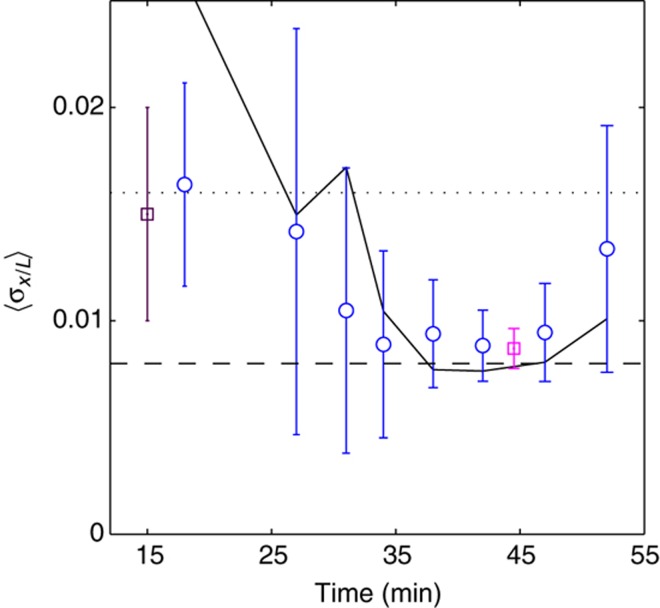
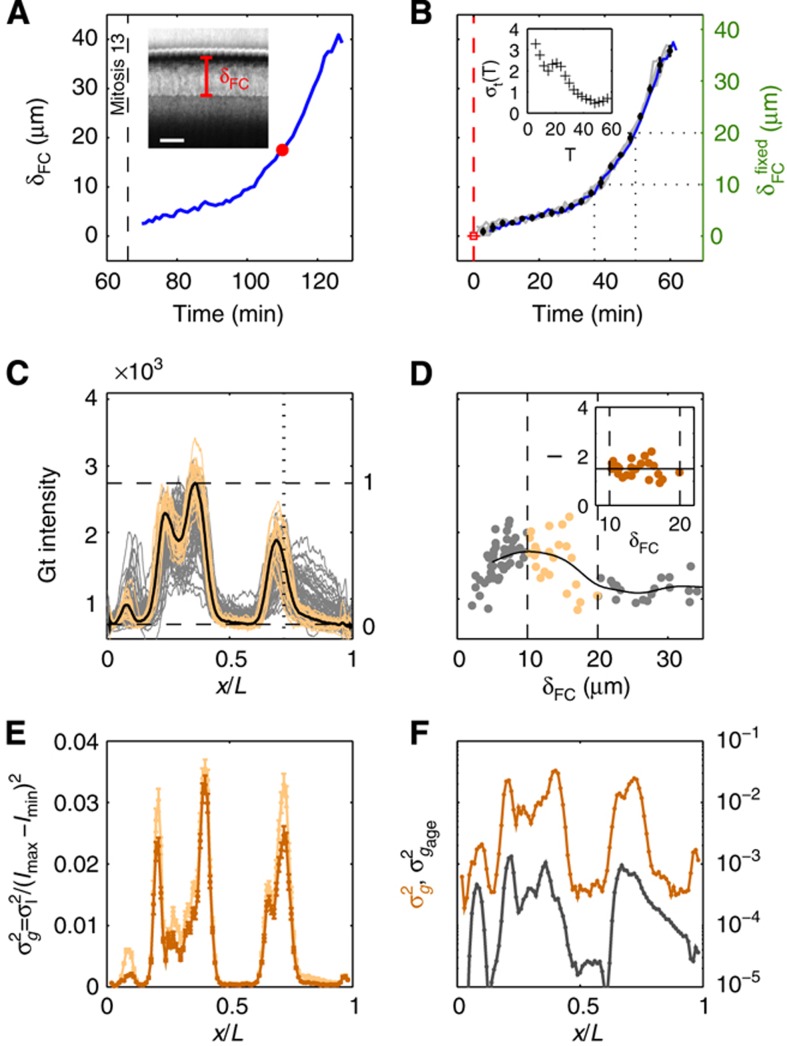
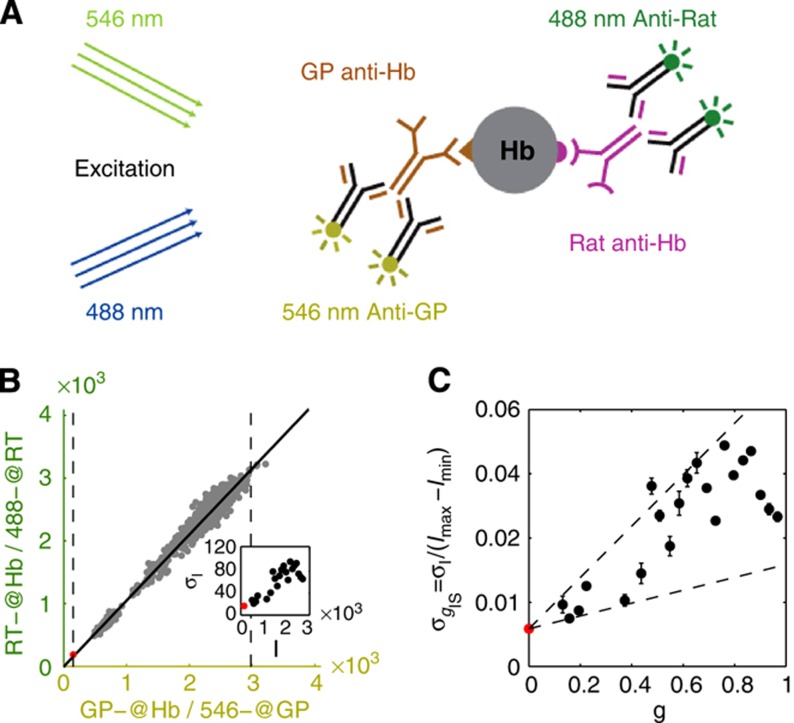
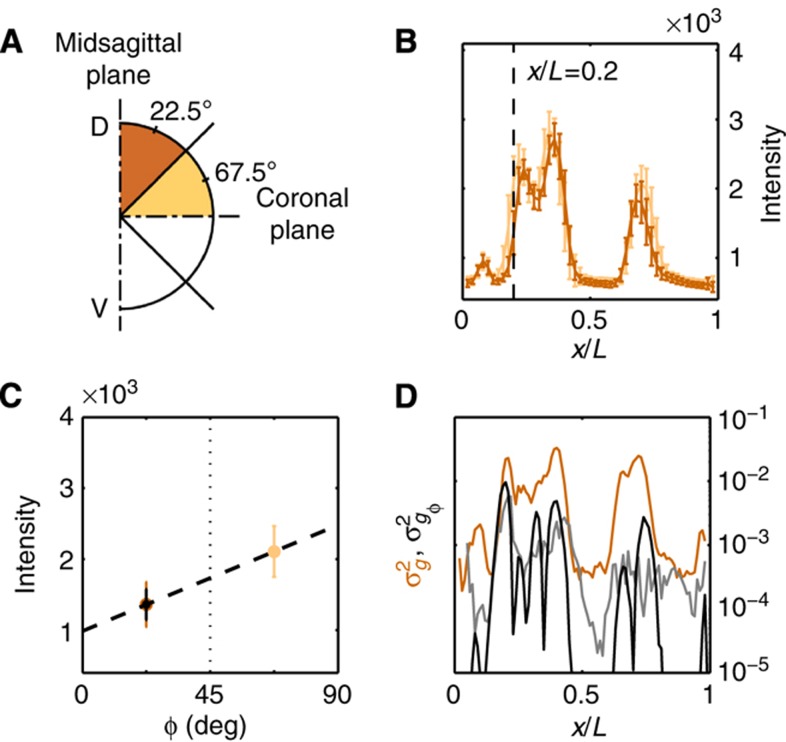
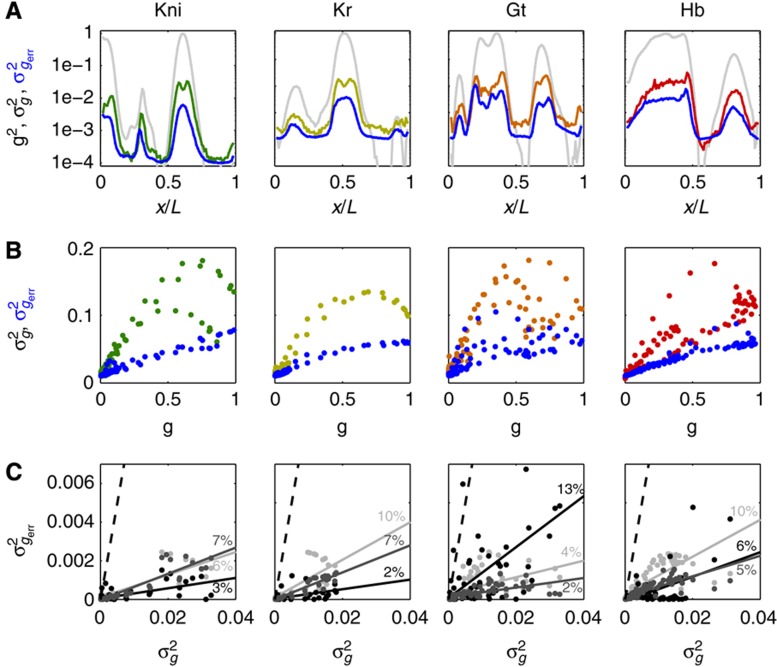
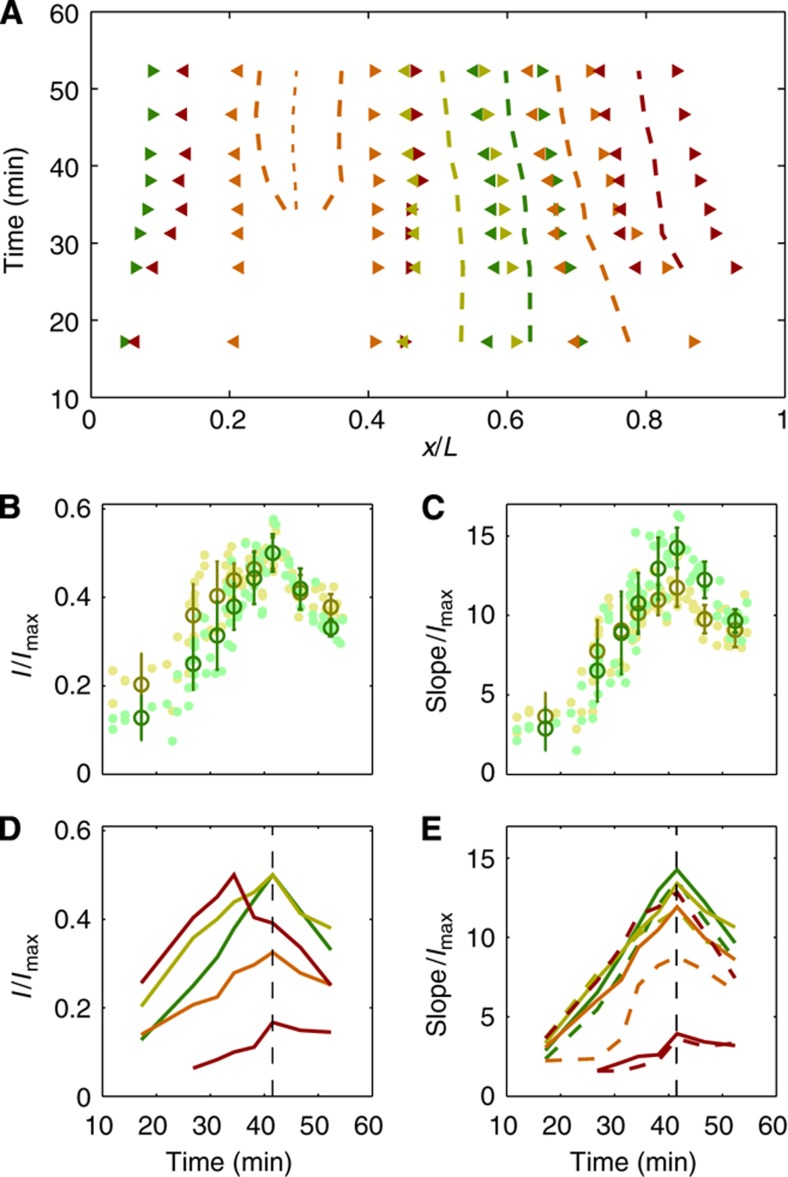
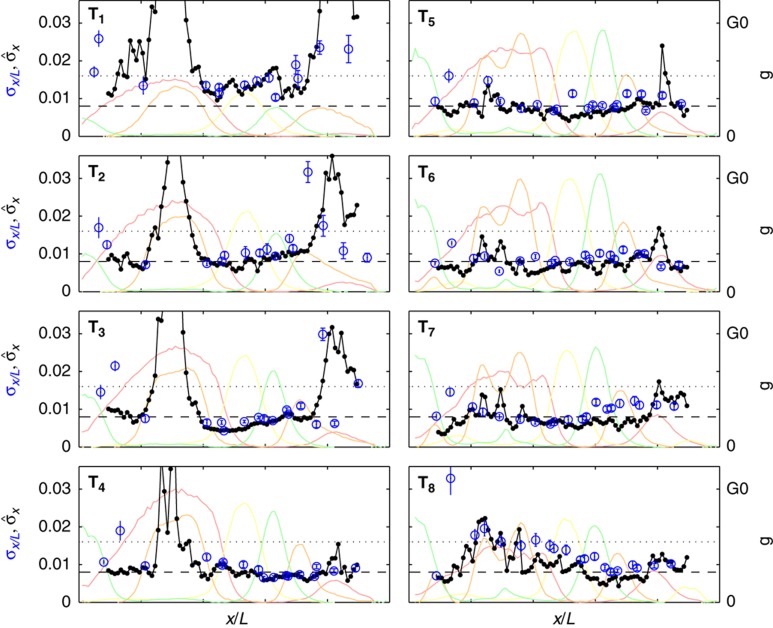
Quantification of gene expression has become a central tool for understanding genetic networks. In many systems, the only viable way to measure protein levels is by immunofluorescence, which is notorious for its limited accuracy. Using the early Drosophila embryo as an example, we show that careful identification and control of experimental error allows for highly accurate gene expression measurements. We generated antibodies in different host species, allowing for simultaneous staining of four Drosophila gap genes in individual embryos. Careful error analysis of hundreds of expression profiles reveals that less than ∼20% of the observed embryo-to-embryo fluctuations stem from experimental error. These measurements make it possible to extract not only very accurate mean gene expression profiles but also their naturally occurring fluctuations of biological origin and corresponding cross-correlations. We use this analysis to extract gap gene profile dynamics with ∼1 min accuracy. The combination of these new measurements and analysis techniques reveals a twofold increase in profile reproducibility owing to a collective network dynamics that relays positional accuracy from the maternal gradients to the pair-rule genes.
基因表达的定量分析已经成为理解遗传网络的重要工具。在许多系统中,测量蛋白质水平唯一可行的方法是免疫荧光法,但这种方法的准确性却备受诟病。本文以早期果蝇胚胎为研究对象,通过仔细识别和控制实验误差,实现了高度精确的基因表达测量。我们在不同的宿主物种中生成抗体,从而能够在单个胚胎中同时对四个果蝇缺口基因进行染色。对数百个表达谱进行仔细的误差分析表明,只有不到 20%的胚胎间波动是由实验误差引起的。这些测量不仅使我们能够提取非常精确的平均基因表达谱,还能够提取出其具有生物学起源的自然波动以及相应的互相关。我们使用这种分析方法以约 1 分钟的精度提取缺口基因表达谱动态。这些新的测量和分析技术的结合,由于从母体梯度到配对规则基因的位置准确性的集体网络动态,使表达谱的可重复性提高了两倍。