Health Research Institute (HRI), National Institute of Advanced Industrial Science and Technology (AIST), 2217-14 Hayashi-cho, Takamatsu, Kagawa 761-0395, Japan.
J Clin Biochem Nutr. 2013 Jan;52(1):9-16. doi: 10.3164/jcbn.12-112. Epub 2012 Dec 6.
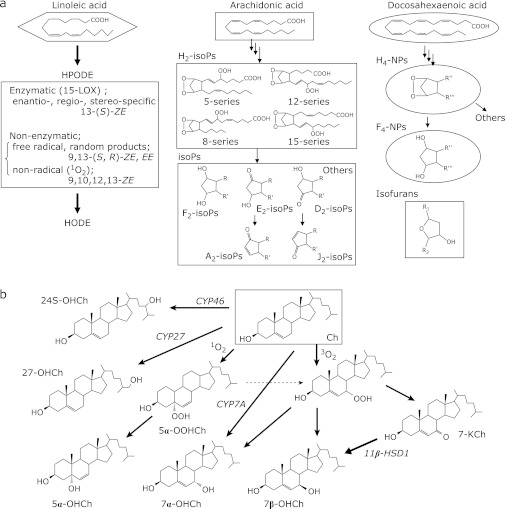
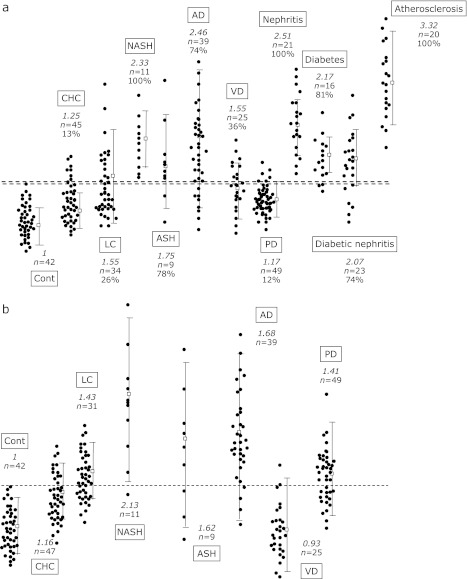
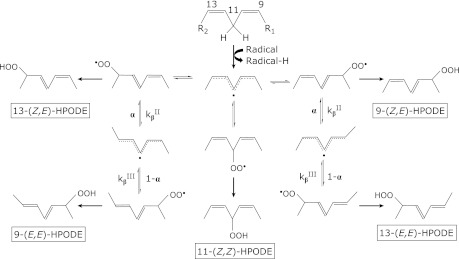
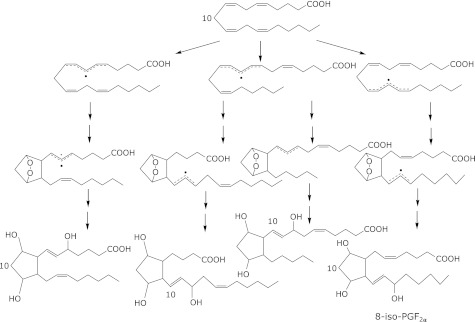
Recently, the biological roles of lipid peroxidation products have received a great deal of attention not only for elucidating pathological mechanisms but also for practical clinical applications as biomarkers. In the last 50 years, lipid peroxidation has been the subject of extensive studies from the viewpoints of mechanisms, dynamics, product analysis, involvement in diseases, inhibition, and biological signaling. Lipid hydroperoxides are formed as major primary products, but they are substrates for various enzymes and they also undergo various secondary reactions. During this decade, hydroxyoctadecadienoic acid from linoleates, F(2)-isoprostanes from arachidonates, and neuroprostanes from docosahexanoates have been proposed as biomarkers for evaluating oxidative stress in vivo and its related diseases. The implications of lipid peroxidation products in vivo will be briefly reviewed and their practical applications will be discussed.
近年来,脂质过氧化产物的生物学作用不仅在阐明病理机制方面受到了极大的关注,而且作为生物标志物在实际的临床应用中也受到了极大的关注。在过去的 50 年里,从机制、动力学、产物分析、疾病参与、抑制和生物信号等方面对脂质过氧化进行了广泛的研究。脂质氢过氧化物是主要的初级产物,但它们是各种酶的底物,也会发生各种次级反应。在这十年中,亚油酸的羟基十八碳二烯酸、花生四烯酸的 F(2)-类前列腺素和二十二碳六烯酸的神经前列腺素被提议作为评估体内氧化应激及其相关疾病的生物标志物。本文将简要综述脂质过氧化产物在体内的意义,并讨论其实际应用。