Integrated Department of Immunology, National Jewish Health and University of Colorado School of Medicine, Denver, Colorado, United States of America.
PLoS One. 2013;8(1):e53789. doi: 10.1371/journal.pone.0053789. Epub 2013 Jan 14.
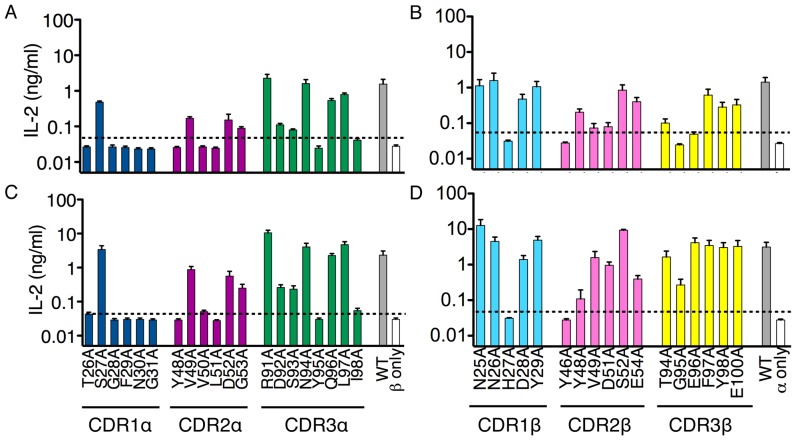
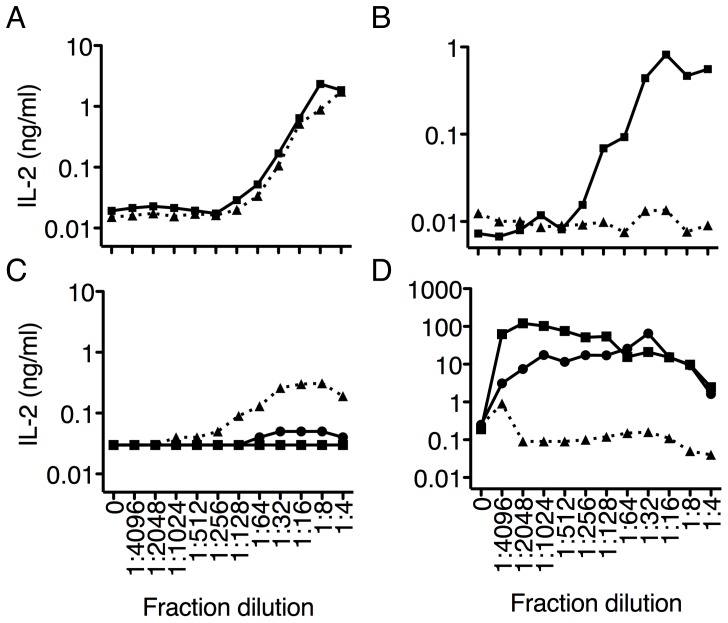
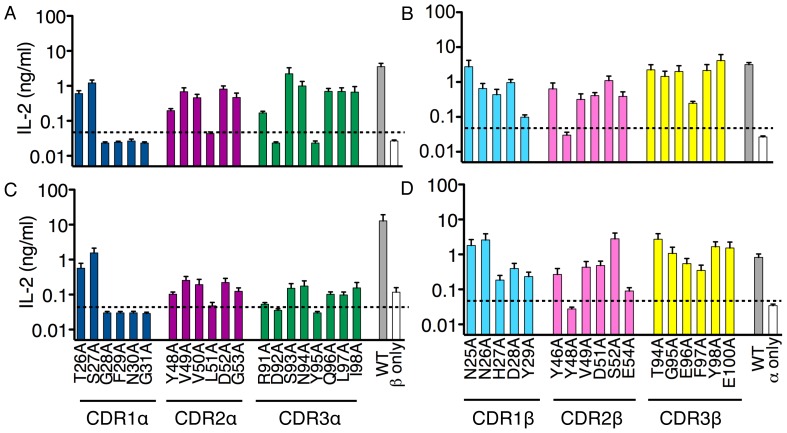
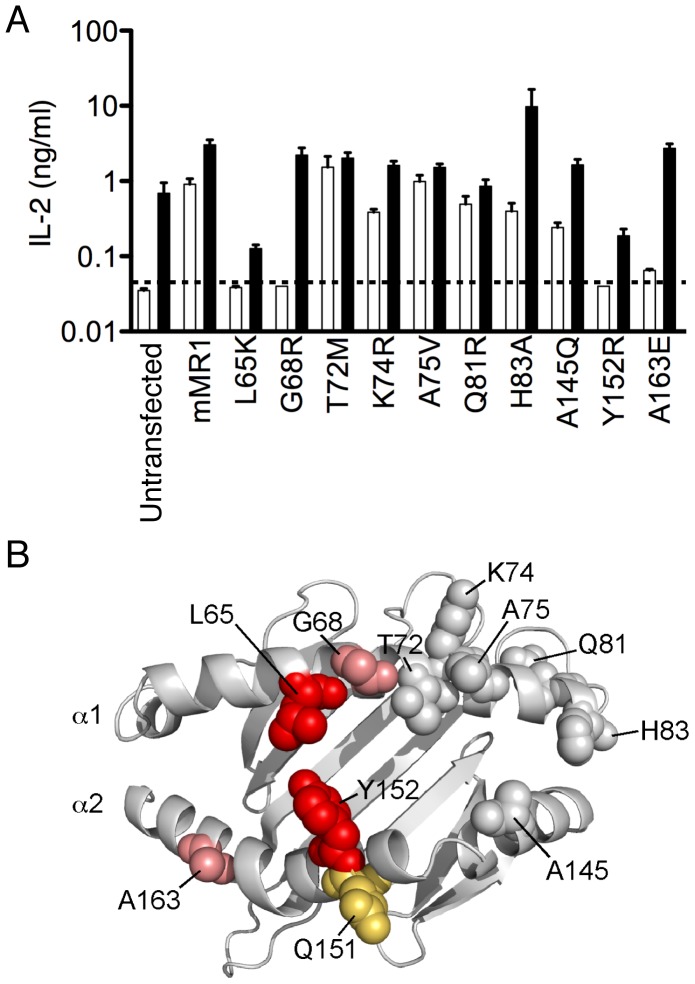
Mucosal-associated invariant T cells are a unique population of T cells that express a semi-invariant αβ TCR and are restricted by the MHC class I-related molecule MR1. MAIT cells recognize uncharacterized ligand(s) presented by MR1 through the cognate interaction between their TCR and MR1. To understand how the MAIT TCR recognizes MR1 at the surface of APCs cultured both with and without bacteria, we undertook extensive mutational analysis of both the MAIT TCR and MR1 molecule. We found differential contribution of particular amino acids to the MAIT TCR-MR1 interaction based upon the presence of bacteria, supporting the hypothesis that the structure of the MR1 molecules with the microbial-derived ligand(s) differs from the one with the endogenous ligand(s). Furthermore, we demonstrate that microbial-derived ligand(s) is resistant to proteinase K digestion and does not extract with common lipids, suggesting an unexpected class of antigen(s) might be recognized by this unique lymphocyte population.
黏膜相关恒定 T 细胞(MAIT 细胞)是一类独特的 T 细胞群体,其表达半不变的αβT 细胞受体(TCR),并受到 MHC Ⅰ类相关分子 MR1 的限制。MAIT 细胞通过其 TCR 与 MR1 的同源相互作用识别由 MR1 呈递的特征不明的配体。为了了解 MAIT TCR 如何在有菌和无菌培养的 APC 表面上识别 MR1,我们对 MAIT TCR 和 MR1 分子进行了广泛的突变分析。我们发现,基于细菌的存在,特定氨基酸对 MAIT TCR-MR1 相互作用的贡献存在差异,这支持了这样一种假说,即与微生物衍生的配体结合的 MR1 分子的结构与与内源性配体结合的 MR1 分子的结构不同。此外,我们证明微生物衍生的配体对蛋白酶 K 消化具有抗性,并且不会与常见脂质一起提取,这表明可能有一类意想不到的抗原被这种独特的淋巴细胞群体识别。