Division of Vaccine Discovery, La Jolla Institute for Allergy and Immunology, La Jolla, California, United States of America.
PLoS One. 2013;8(1):e54220. doi: 10.1371/journal.pone.0054220. Epub 2013 Jan 14.
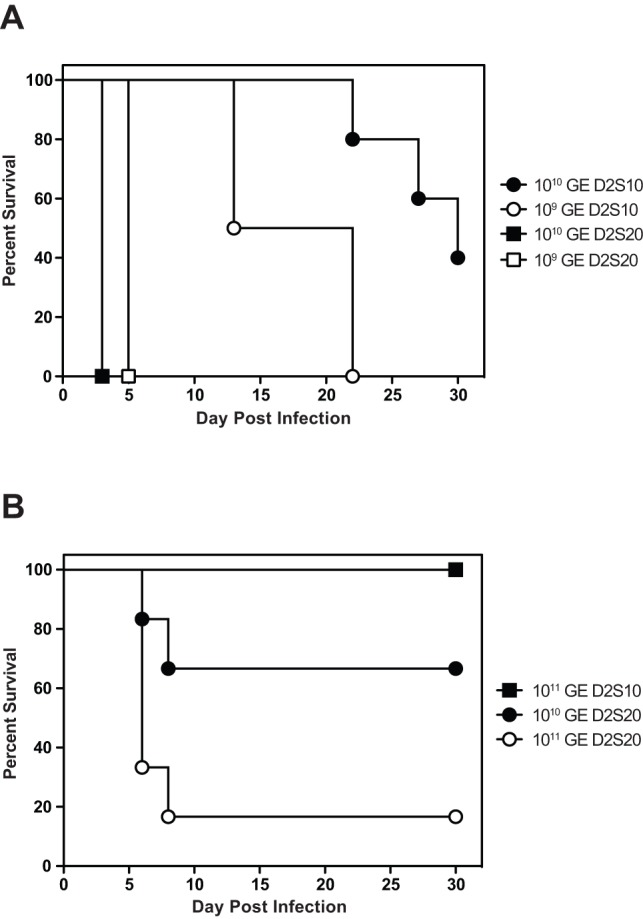
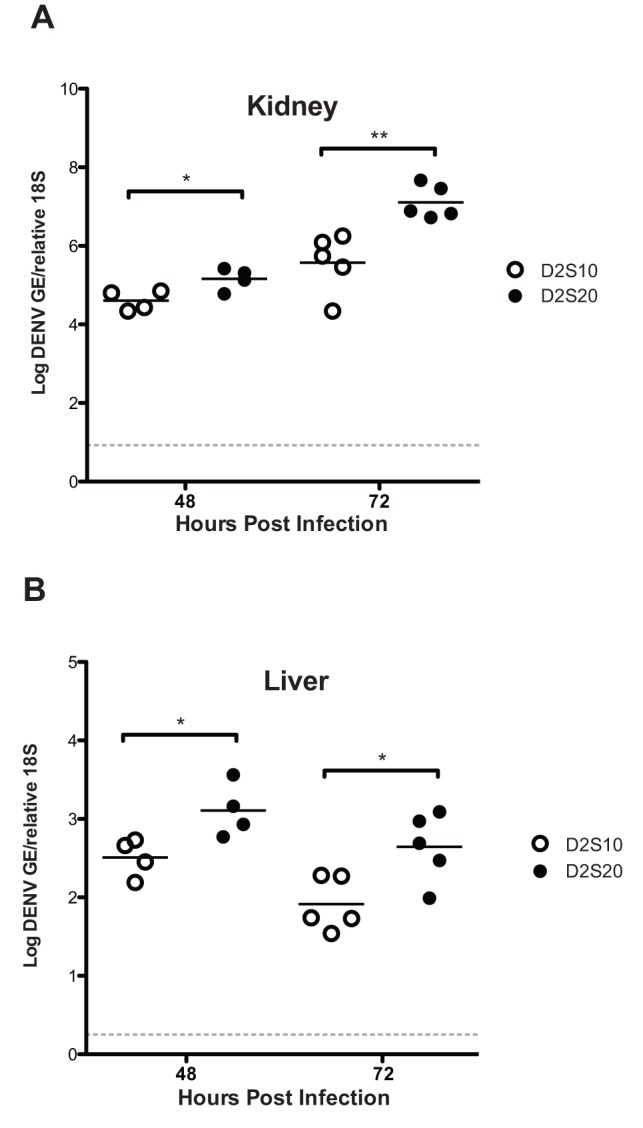
Dengue virus is the most prevalent mosquito-borne virus worldwide. In this study, we used pyrosequencing to analyze the whole viral genome of two mouse-adapted strains, D2S10 and D2S20, that induce a dengue hemorrhagic fever/dengue shock syndrome (DHF/DSS)-like lethal disease in mice lacking the type I and/or type II interferon receptors. Previous experiments with D2S10 indicated that N124D and K128E mutations in the envelope protein were responsible for the severe disease induced in mice compared to its parental strain PL046. Here we demonstrate that D2S20 is more virulent than D2S10 and captured the presence of five key amino acid mutations--T70I, N83D, and K122I in envelope (E), and A62T in nonstructural protein 2A (NS2A) and G605V in nonstructural protein 5 (NS5)--that may account for this. These findings set the foundation for further dissection of the viral determinants responsible for dengue disease manifestations in mouse models.
登革热病毒是全球最普遍的蚊媒病毒。在这项研究中,我们使用焦磷酸测序技术分析了两种适应小鼠的株系,D2S10 和 D2S20 的全病毒基因组,这两种株系在缺乏 I 型和/或 II 型干扰素受体的小鼠中诱导出类似于登革出血热/登革休克综合征(DHF/DSS)的致死性疾病。先前对 D2S10 的实验表明,与亲本株系 PL046 相比,包膜蛋白中的 N124D 和 K128E 突变导致了在小鼠中诱导的严重疾病。在这里,我们证明 D2S20 比 D2S10 更具毒力,并发现了包膜(E)中的五个关键氨基酸突变——T70I、N83D 和 K122I,以及非结构蛋白 2A(NS2A)中的 A62T 和非结构蛋白 5(NS5)中的 G605V——可能是导致这种情况的原因。这些发现为进一步剖析导致小鼠模型中登革热疾病表现的病毒决定因素奠定了基础。