Department of Molecular Microbiology and Immunology, School of Medicine, Saint Louis University, Saint Louis, Missouri, USA.
College for Public Health and Social Justice, Saint Louis University, Saint Louis, Missouri, USA.
J Virol. 2021 Jul 26;95(16):e0057321. doi: 10.1128/JVI.00573-21.
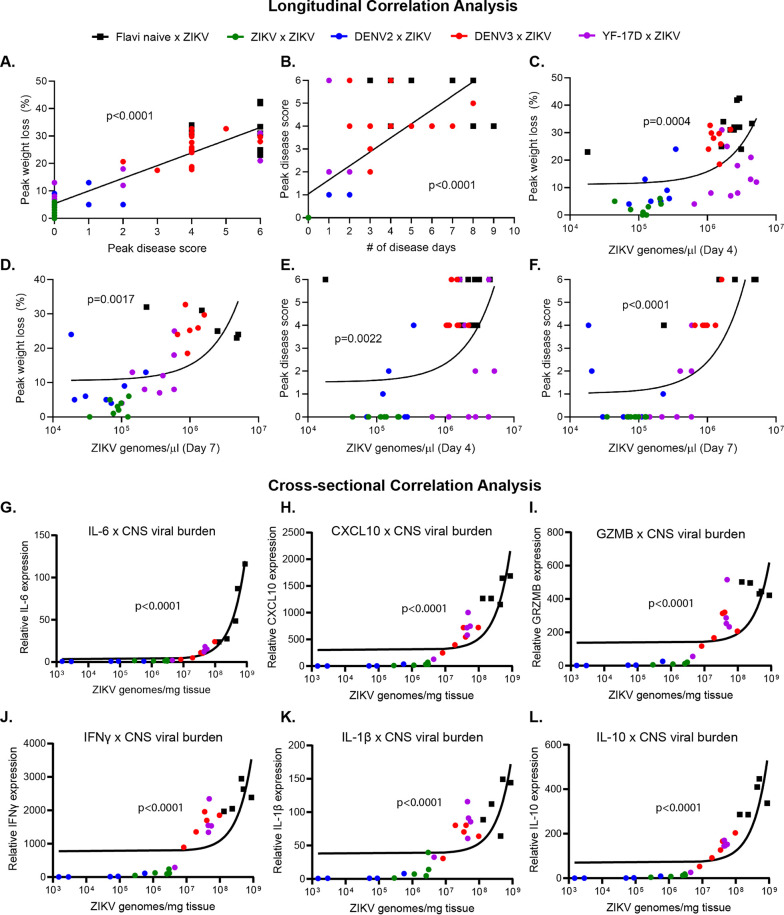
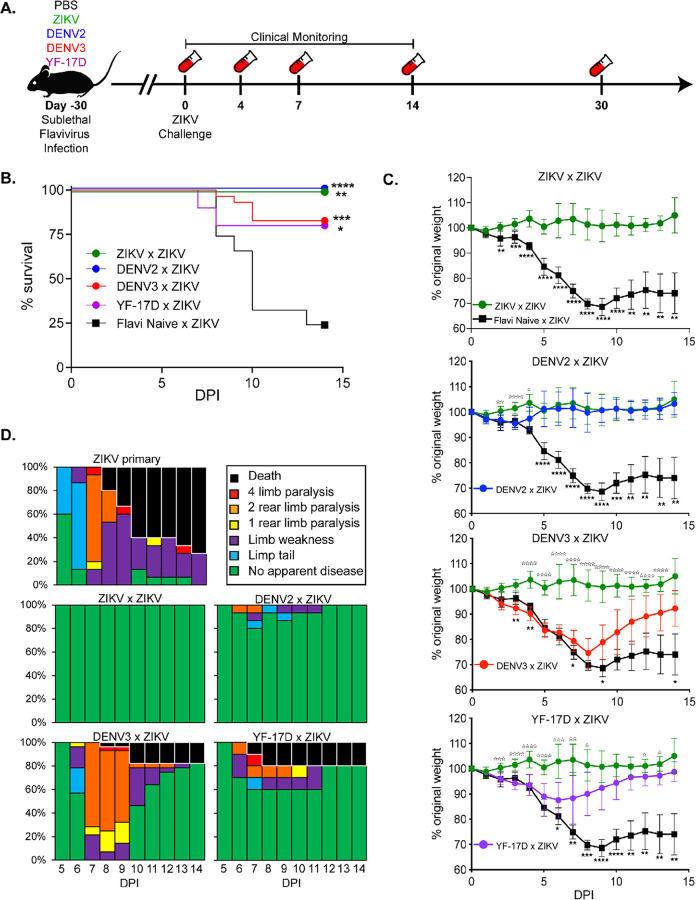
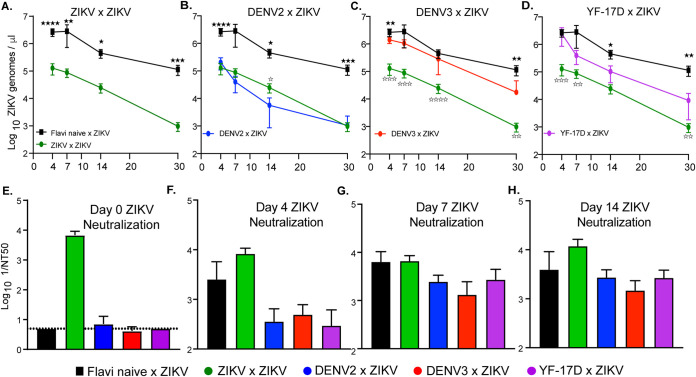
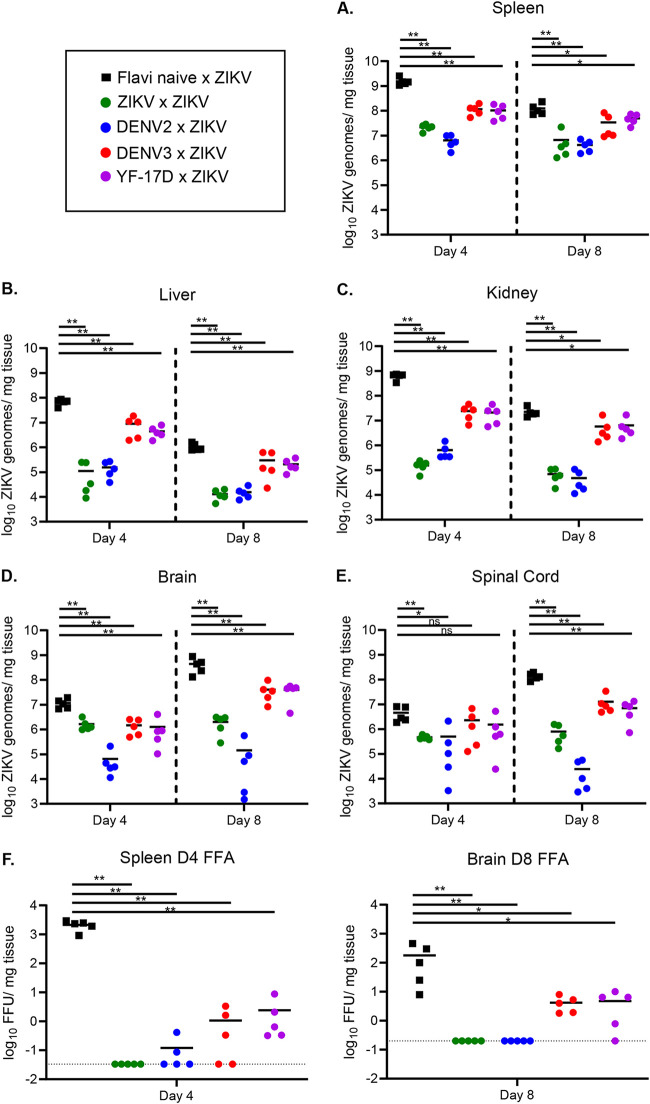
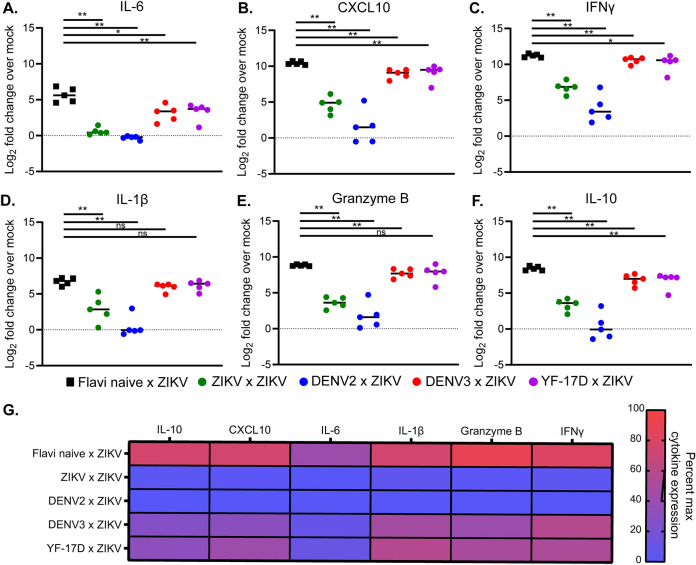
The 2015/2016 Zika virus epidemic in South and Central America left the scientific community urgently trying to understand the factors that contribute to Zika virus pathogenesis. Because multiple other flaviviruses are endemic in areas where Zika virus emerged, it is hypothesized that a key to understanding Zika virus disease severity is to study Zika virus infection in the context of prior flavivirus exposure. Human and animal studies have highlighted the idea that having been previously exposed to a different flavivirus may modulate the immune response to Zika virus. However, it is still unclear how prior flavivirus exposure impacts Zika viral burden and disease. In this murine study, we longitudinally examine multiple factors involved in Zika disease, linking viral burden with increased neurological disease severity, weight loss, and inflammation. We show that prior heterologous flavivirus exposure with dengue virus type 2 or 3 or the vaccine strain of yellow fever provides protection from mortality in a lethal Zika virus challenge. However, reduction in viral burden and Zika disease varies depending on the infecting primary flavivirus; with primary Zika virus infection being most protective from Zika virus challenge, followed by dengue virus 2, with yellow fever and dengue virus 3 protecting against mortality but showing more severe disease. This study demonstrates the variation in protective effects of prior flavivirus exposure on Zika virus pathogenesis and identifies distinct relationships between primary flavivirus infection and the potential for Zika virus disease. The emergence and reemergence of various vector-borne diseases in recent years highlights the need to understand the mechanisms of protection for each pathogen. In this study, we investigated the impact of prior exposure to Zika virus, dengue virus serotypes 2 or 3, or the vaccine strain of yellow fever on pathogenesis and disease outcomes in a mouse model of Zika virus infection. We found that prior exposure to a heterologous flavivirus was protective from mortality, and to varying degrees, prior flavivirus exposure was protective against neurological disease, weight loss, and severe viral burden during a lethal Zika challenge. Using a longitudinal and cross-sectional study design, we were able to link multiple disease parameters, including viral burden, with neurological disease severity, weight loss, and inflammatory response in the context of flavivirus infection. This study demonstrates a measurable but varied impact of prior flavivirus exposure in modulating flavivirus pathophysiology. Given the cyclic nature of most flavivirus outbreaks, this work will contribute to the forecasting of disease severity for future outbreaks.
2015/2016 年在中南美洲暴发的寨卡病毒疫情促使科学界急于了解导致寨卡病毒发病机制的因素。由于其他多种黄病毒在寨卡病毒出现的地区流行,因此假设理解寨卡病毒疾病严重程度的关键是在先前存在黄病毒感染的背景下研究寨卡病毒感染。人类和动物研究强调了这样一种观点,即先前感染过不同的黄病毒可能会调节对寨卡病毒的免疫反应。然而,先前的黄病毒暴露如何影响寨卡病毒的负担和疾病仍不清楚。在这项鼠类研究中,我们纵向研究了寨卡病的多个因素,将病毒载量与神经疾病严重程度增加、体重减轻和炎症联系起来。我们表明,先前用登革热病毒 2 型或 3 型或黄热病疫苗株感染异源黄病毒可提供针对致命寨卡病毒挑战的保护。然而,病毒载量和寨卡病的减少取决于主要感染的黄病毒;原发寨卡病毒感染对寨卡病毒挑战最具保护作用,其次是登革热病毒 2 型,黄热病和登革热病毒 3 型能预防死亡,但疾病更严重。这项研究表明了先前黄病毒暴露对寨卡病毒发病机制的保护作用存在差异,并确定了主要黄病毒感染与寨卡病毒病发生的潜力之间的关系。近年来,各种虫媒疾病的出现和再现凸显了了解每种病原体的保护机制的必要性。在这项研究中,我们调查了先前感染寨卡病毒、登革热病毒血清型 2 或 3 或黄热病疫苗株对寨卡病毒感染小鼠模型发病机制和疾病结果的影响。我们发现,先前接触异源黄病毒可预防死亡,并且在不同程度上,先前的黄病毒暴露可预防神经疾病、体重减轻和致命寨卡病毒挑战期间的严重病毒载量。使用纵向和横断面研究设计,我们能够将包括病毒载量在内的多个疾病参数与黄病毒感染背景下的神经疾病严重程度、体重减轻和炎症反应联系起来。这项研究表明,先前的黄病毒暴露在调节黄病毒病理生理学方面具有可衡量但不同的影响。鉴于大多数黄病毒暴发的周期性,这项工作将有助于预测未来暴发的疾病严重程度。