Laboratory of Virology, Division of Intramural Research, National Institute of Allergy and Infectious Diseases, National Institutes of Health, Rocky Mountain Laboratories, Hamilton, Montana, USA.
PLoS Negl Trop Dis. 2013;7(1):e2024. doi: 10.1371/journal.pntd.0002024. Epub 2013 Jan 17.
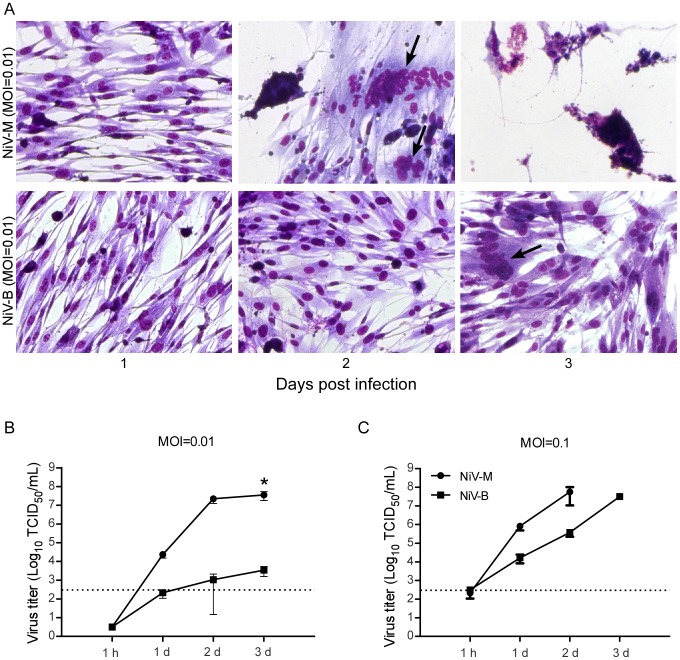
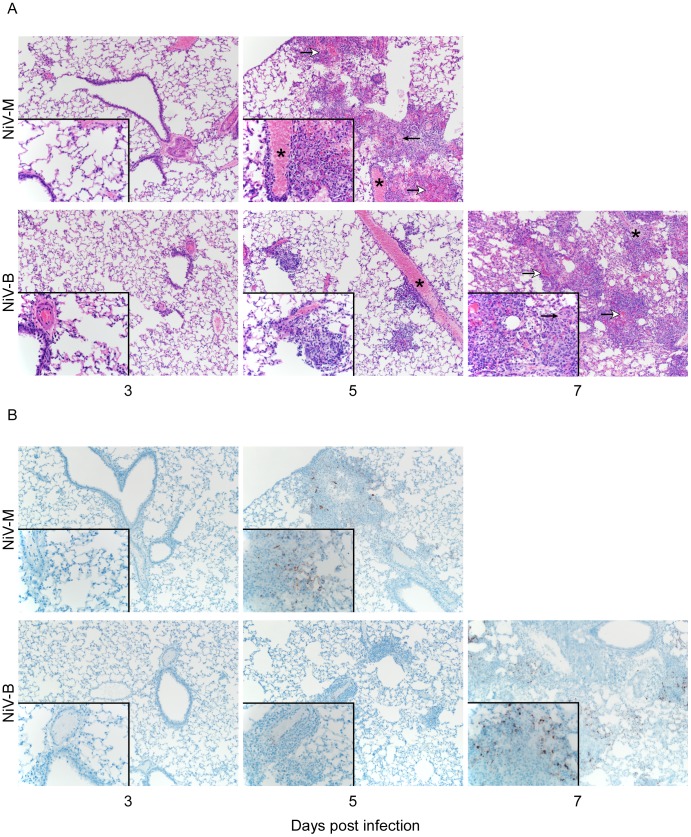
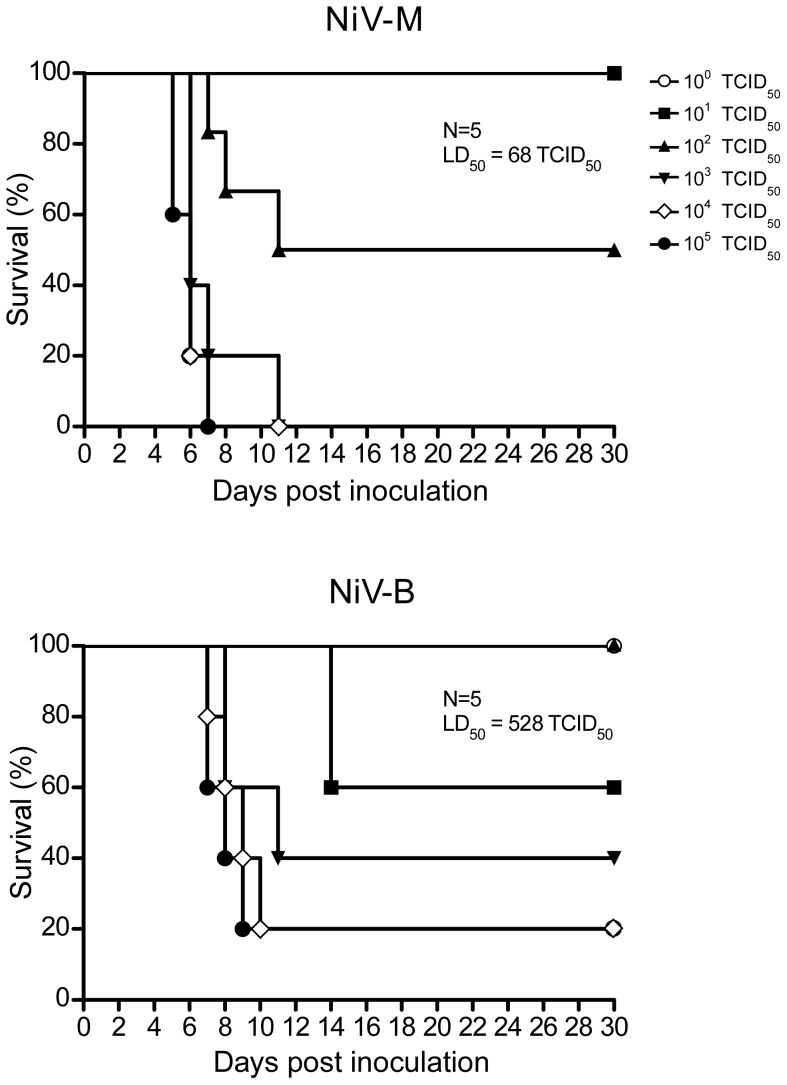
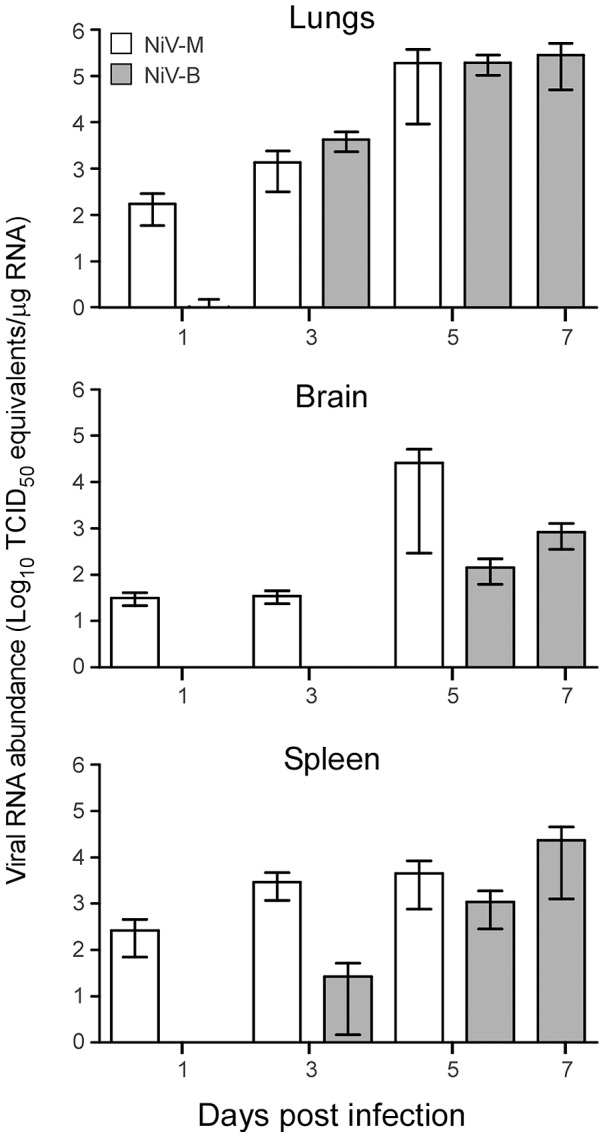
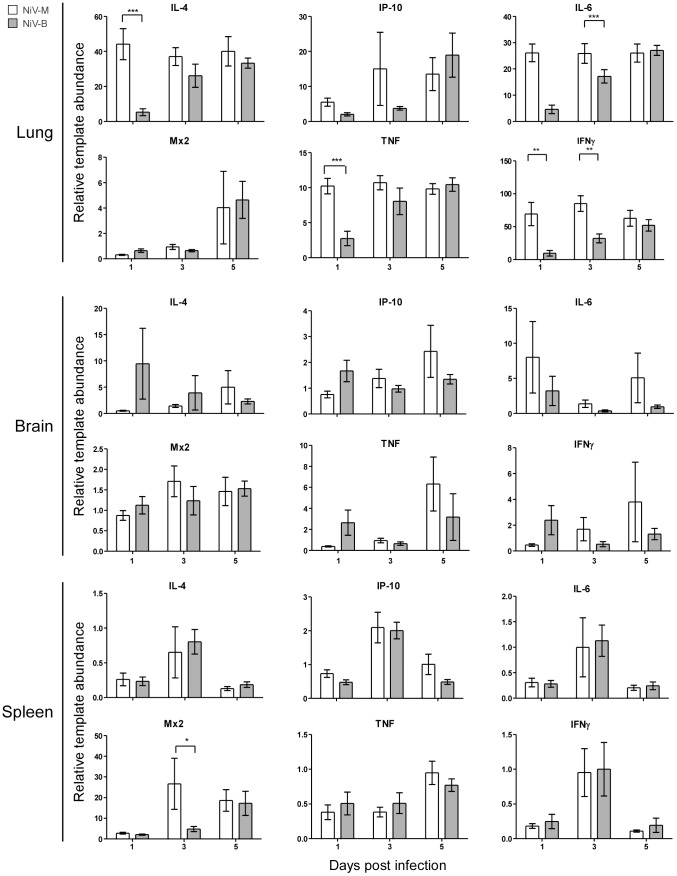
Nipah virus is a zoonotic pathogen that causes severe disease in humans. The mechanisms of pathogenesis are not well described. The first Nipah virus outbreak occurred in Malaysia, where human disease had a strong neurological component. Subsequent outbreaks have occurred in Bangladesh and India and transmission and disease processes in these outbreaks appear to be different from those of the Malaysian outbreak. Until this point, virtually all Nipah virus studies in vitro and in vivo, including vaccine and pathogenesis studies, have utilized a virus isolate from the original Malaysian outbreak (NiV-M). To investigate potential differences between NiV-M and a Nipah virus isolate from Bangladesh (NiV-B), we compared NiV-M and NiV-B infection in vitro and in vivo. In hamster kidney cells, NiV-M-infection resulted in extensive syncytia formation and cytopathic effects, whereas NiV-B-infection resulted in little to no morphological changes. In vivo, NiV-M-infected Syrian hamsters had accelerated virus replication, pathology and death when compared to NiV-B-infected animals. NiV-M infection also resulted in the activation of host immune response genes at an earlier time point. Pathogenicity was not only a result of direct effects of virus replication, but likely also had an immunopathogenic component. The differences observed between NiV-M and NiV-B pathogeneis in hamsters may relate to differences observed in human cases. Characterization of the hamster model for NiV-B infection allows for further research of the strain of Nipah virus responsible for the more recent outbreaks in humans. This model can be used to study NiV-B pathogenesis, transmission, and countermeasures that could be used to control outbreaks.
尼帕病毒是一种人畜共患病病原体,可导致人类严重疾病。发病机制尚未得到很好的描述。首例尼帕病毒疫情发生在马来西亚,人类疾病具有强烈的神经学成分。随后在孟加拉国和印度发生了疫情,这些疫情的传播和疾病过程似乎与马来西亚疫情不同。到目前为止,几乎所有尼帕病毒的体外和体内研究,包括疫苗和发病机制研究,都利用了源自马来西亚原始疫情的病毒分离株(NiV-M)。为了研究 NiV-M 与源自孟加拉国的尼帕病毒分离株(NiV-B)之间的潜在差异,我们比较了 NiV-M 和 NiV-B 在体外和体内的感染情况。在仓鼠肾细胞中,NiV-M 感染导致广泛的合胞体形成和细胞病变效应,而 NiV-B 感染则几乎没有形态变化。在体内,与 NiV-B 感染动物相比,NiV-M 感染的叙利亚仓鼠病毒复制、病理学和死亡速度加快。NiV-M 感染还导致宿主免疫反应基因更早被激活。致病性不仅是病毒复制的直接作用的结果,而且可能还具有免疫病理成分。在仓鼠中观察到的 NiV-M 和 NiV-B 之间的致病性差异可能与人类病例中观察到的差异有关。对 NiV-B 感染的仓鼠模型进行特征描述,可进一步研究导致近期人类疫情的尼帕病毒株。该模型可用于研究 NiV-B 的发病机制、传播以及可用于控制疫情的对策。