London School of Hygiene and Tropical Medicine, London, United Kingdom.
Int J Health Geogr. 2013 Jan 23;12:4. doi: 10.1186/1476-072X-12-4.
Estimating the size of forcibly displaced populations is key to documenting their plight and allocating sufficient resources to their assistance, but is often not done, particularly during the acute phase of displacement, due to methodological challenges and inaccessibility. In this study, we explored the potential use of very high resolution satellite imagery to remotely estimate forcibly displaced populations.
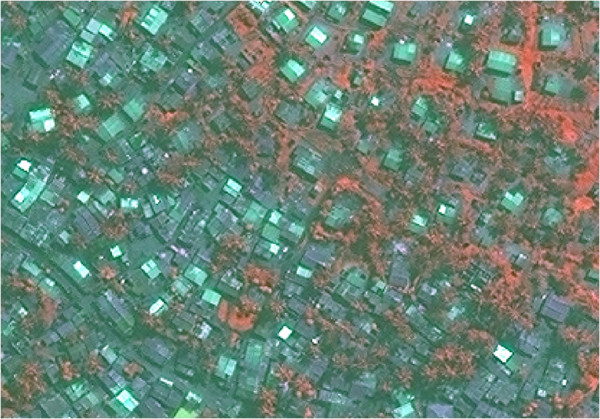
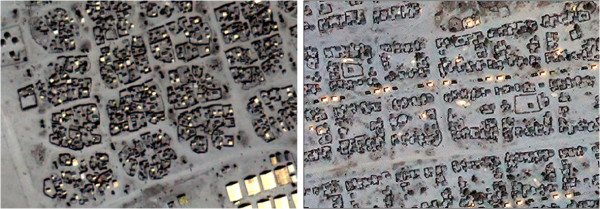
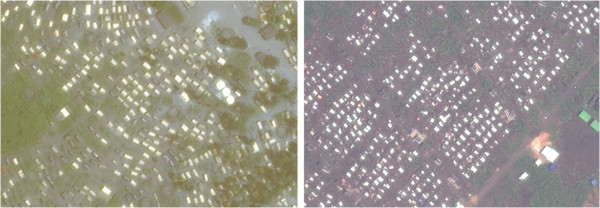
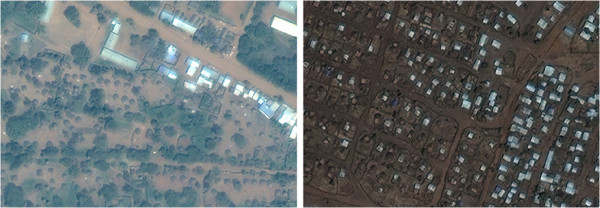
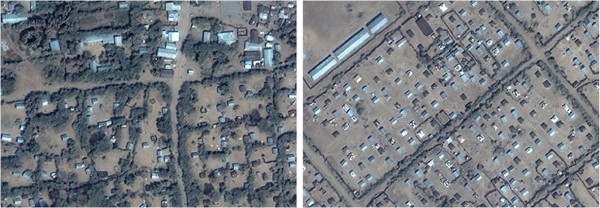
Our method consisted of multiplying (i) manual counts of assumed residential structures on a satellite image and (ii) estimates of the mean number of people per structure (structure occupancy) obtained from publicly available reports. We computed population estimates for 11 sites in Bangladesh, Chad, Democratic Republic of Congo, Ethiopia, Haiti, Kenya and Mozambique (six refugee camps, three internally displaced persons' camps and two urban neighbourhoods with a mixture of residents and displaced) ranging in population from 1,969 to 90,547, and compared these to "gold standard" reference population figures from census or other robust methods.
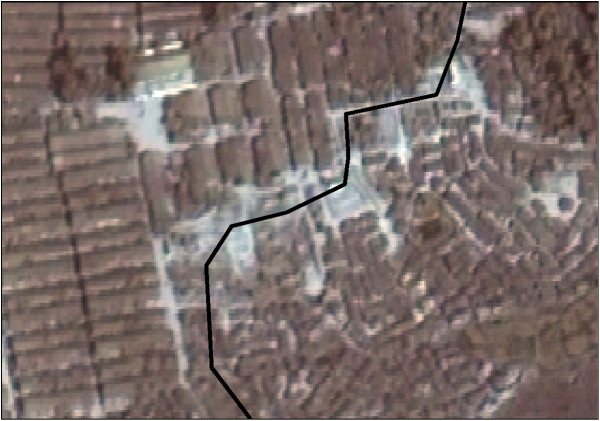
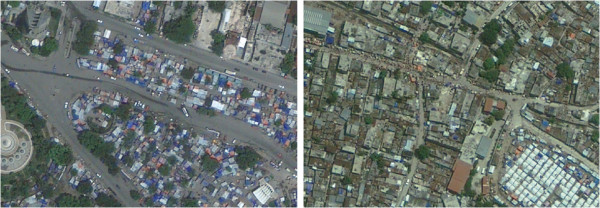
Structure counts by independent analysts were reasonably consistent. Between one and 11 occupancy reports were available per site and most of these reported people per household rather than per structure. The imagery-based method had a precision relative to reference population figures of <10% in four sites and 10-30% in three sites, but severely over-estimated the population in an Ethiopian camp with implausible occupancy data and two post-earthquake Haiti sites featuring dense and complex residential layout. For each site, estimates were produced in 2-5 working person-days.
In settings with clearly distinguishable individual structures, the remote, imagery-based method had reasonable accuracy for the purposes of rapid estimation, was simple and quick to implement, and would likely perform better in more current application. However, it may have insurmountable limitations in settings featuring connected buildings or shelters, a complex pattern of roofs and multi-level buildings. Based on these results, we discuss possible ways forward for the method's development.
估算被迫流离失所人口的规模是记录他们的困境并为他们的援助分配足够资源的关键,但由于方法上的挑战和无法进入,往往无法做到这一点,尤其是在流离失所的急性期。在这项研究中,我们探讨了利用超高分辨率卫星图像远程估算被迫流离失所人口的潜力。
我们的方法包括(i)对卫星图像上假定的居住结构进行人工计数,以及(ii)根据公开报告获得的每个结构的平均人数(结构入住率)的估计。我们计算了孟加拉国、乍得、刚果民主共和国、埃塞俄比亚、海地、肯尼亚和莫桑比克 11 个地点的人口估计数,这些地点的人口从 1969 到 90547 人不等,包括六个难民营、三个国内流离失所者营地和两个混合了居民和流离失所者的城市社区,并将这些估计数与人口普查或其他可靠方法的“黄金标准”参考人口数据进行了比较。
独立分析师的结构计数相当一致。每个地点都有 1 到 11 份入住率报告,其中大多数报告的是每户而不是每个结构的人数。基于图像的方法相对于参考人口数据的精度在四个地点为<10%,在三个地点为 10-30%,但对一个埃塞俄比亚难民营和两个海地地震后地点的人口估计严重过高,这些地点的入住率数据不可信,且居住布局密集复杂。对于每个地点,估计结果在 2-5 个工作日内产生。
在可以清楚区分单个结构的环境中,基于远程图像的方法对于快速估计具有合理的准确性,简单且易于实施,并且在更现代的应用中可能表现更好。然而,在具有连接建筑物或避难所、复杂屋顶和多层建筑物的环境中,它可能存在不可逾越的局限性。基于这些结果,我们讨论了该方法发展的可能途径。