Institute of Acupuncture and Moxibustion, China Academy of Chinese Medical Sciences, 16 Nanxiaojie Street, Dongzhimen Nei, Beijing 100700, China.
Evid Based Complement Alternat Med. 2012;2012:627023. doi: 10.1155/2012/627023. Epub 2012 Dec 29.
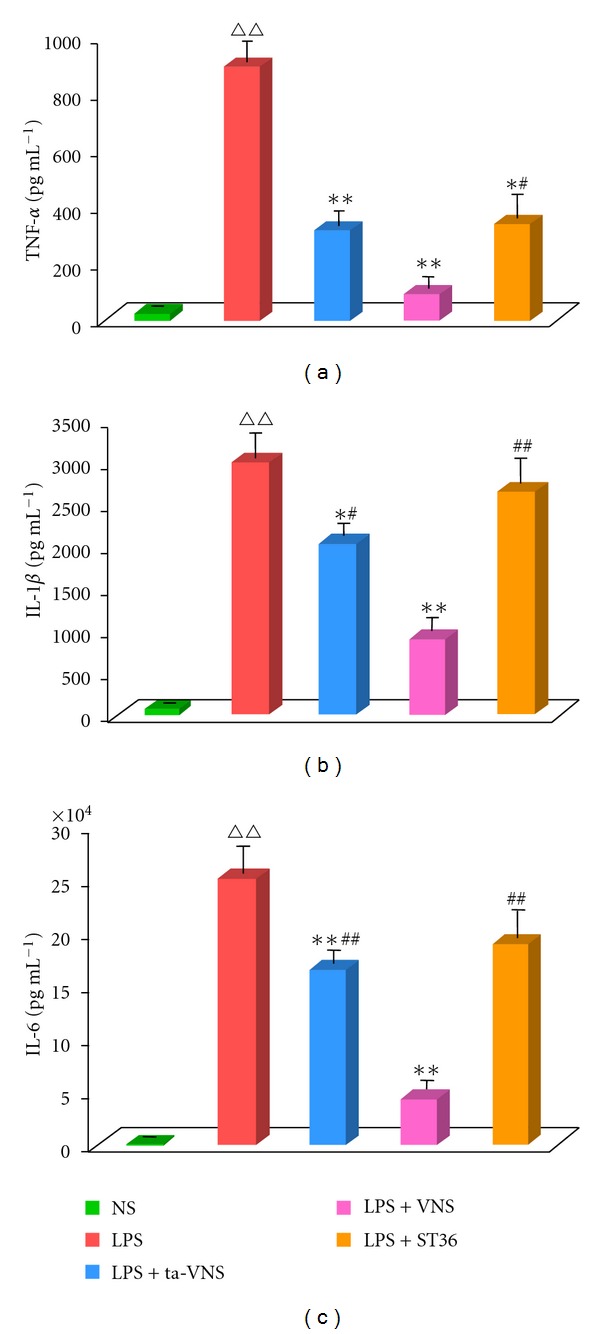
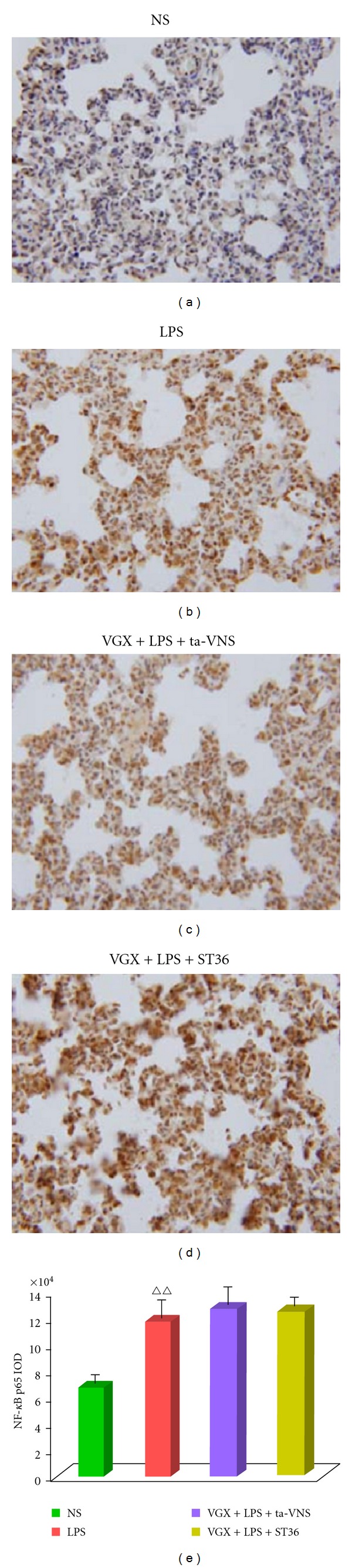
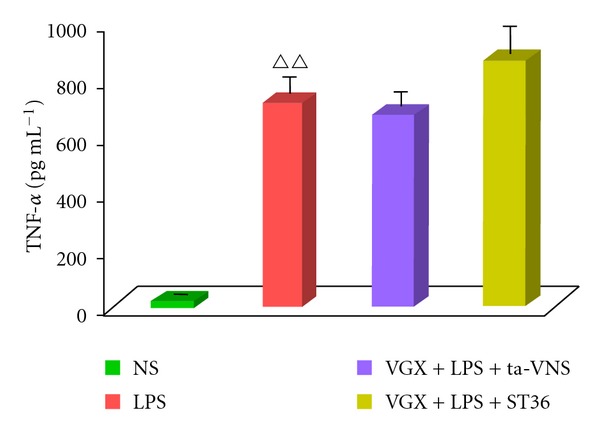
Background. Transcutaneous auricular vagus nerve stimulation (ta-VNS) could evoke parasympathetic activities via activating the brainstem autonomic nuclei, similar to the effects that are produced after vagus nerve stimulation (VNS). VNS modulates immune function through activating the cholinergic anti-inflammatory pathway. Methods. VNS, ta-VNS, or transcutaneous electrical acupoint stimulation (TEAS) on ST36 was performed to modulate the inflammatory response. The concentration of serum proinflammatory cytokines and tissue NF-kappa B p65 (NF-κB p65) were detected in endotoxaemia affected anesthetized rats. Results. Similar to the effect of VNS, ta-VNS suppressed the serum proinflammatory cytokines levels, such as tumour necrosis factor-alpha (TNF-α), interleukin-1 beta (IL-1β), and interleukin-6 (IL-6) as well as NF-kappa B p65 expressions of lung tissues. ST36 stimulation also decreases LPS-induced high TNF-α level and NF-κB signal, but it did not restrain proinflammatory cytokine IL-1β and IL-6. Neither ta-VNS nor ST36 stimulation could suppress LPS-induced TNF-α and NF-κB after vagotomy or with α7nAChR antagonist injection. Conclusions. The present paper demonstrated that ta-VNS could be utilized to suppress LPS-induced inflammatory responses via α7nAChR-mediated cholinergic anti-inflammatory pathway.
经皮耳迷走神经刺激(ta-VNS)可通过激活脑干自主神经核来诱发副交感神经活动,类似于迷走神经刺激(VNS)产生的效果。VNS 通过激活胆碱能抗炎途径来调节免疫功能。方法:通过 VNS、ta-VNS 或 ST36 经皮电穴位刺激(TEAS)来调节炎症反应。检测内毒素血症麻醉大鼠血清促炎细胞因子和组织 NF-κB p65(NF-κB p65)的浓度。结果:与 VNS 的作用相似,ta-VNS 抑制了血清促炎细胞因子水平,如肿瘤坏死因子-α(TNF-α)、白细胞介素-1β(IL-1β)和白细胞介素-6(IL-6)以及肺组织中的 NF-κB p65 表达。ST36 刺激也可降低 LPS 诱导的 TNF-α水平和 NF-κB 信号,但不能抑制促炎细胞因子 IL-1β和 IL-6。迷走神经切断术或α7nAChR 拮抗剂注射后,ta-VNS 或 ST36 刺激均不能抑制 LPS 诱导的 TNF-α和 NF-κB。结论:本研究表明,ta-VNS 可通过 α7nAChR 介导的胆碱能抗炎途径用于抑制 LPS 诱导的炎症反应。