Unité mixte de recherche MIVEGEC (IRD 224- CNRS 5290-UM1-UM2), Institut de Recherche pour le Développement, Montpellier, France.
PLoS One. 2013;8(1):e54820. doi: 10.1371/journal.pone.0054820. Epub 2013 Jan 22.
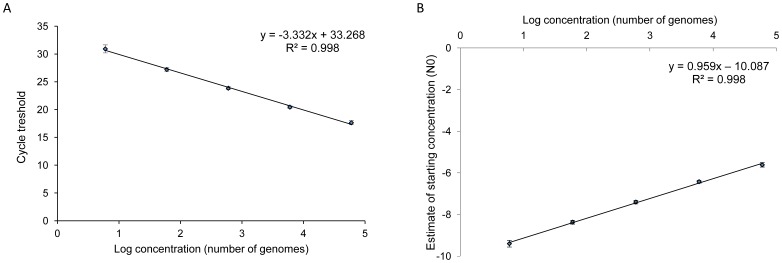
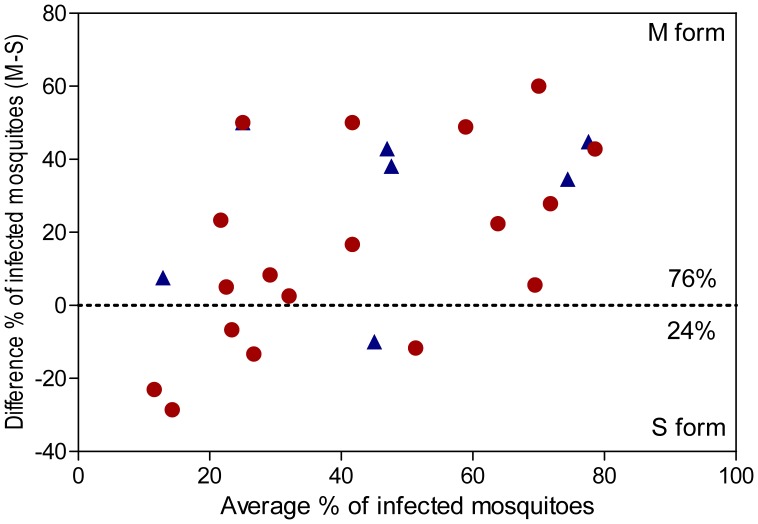
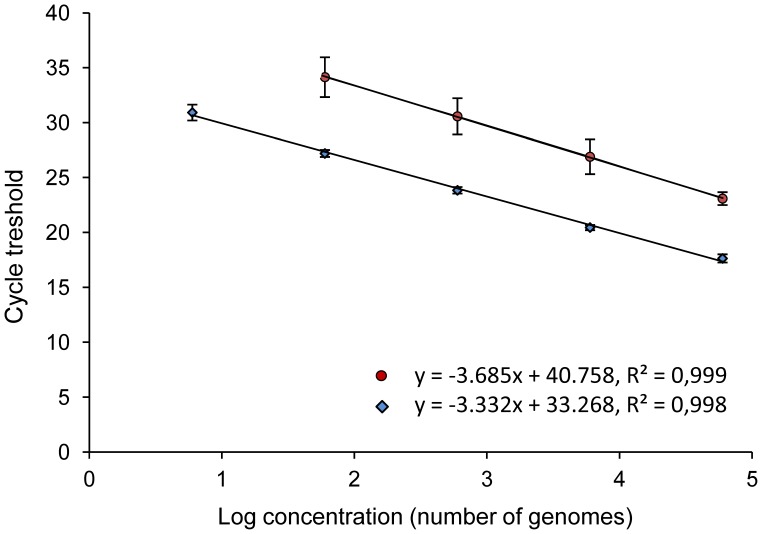
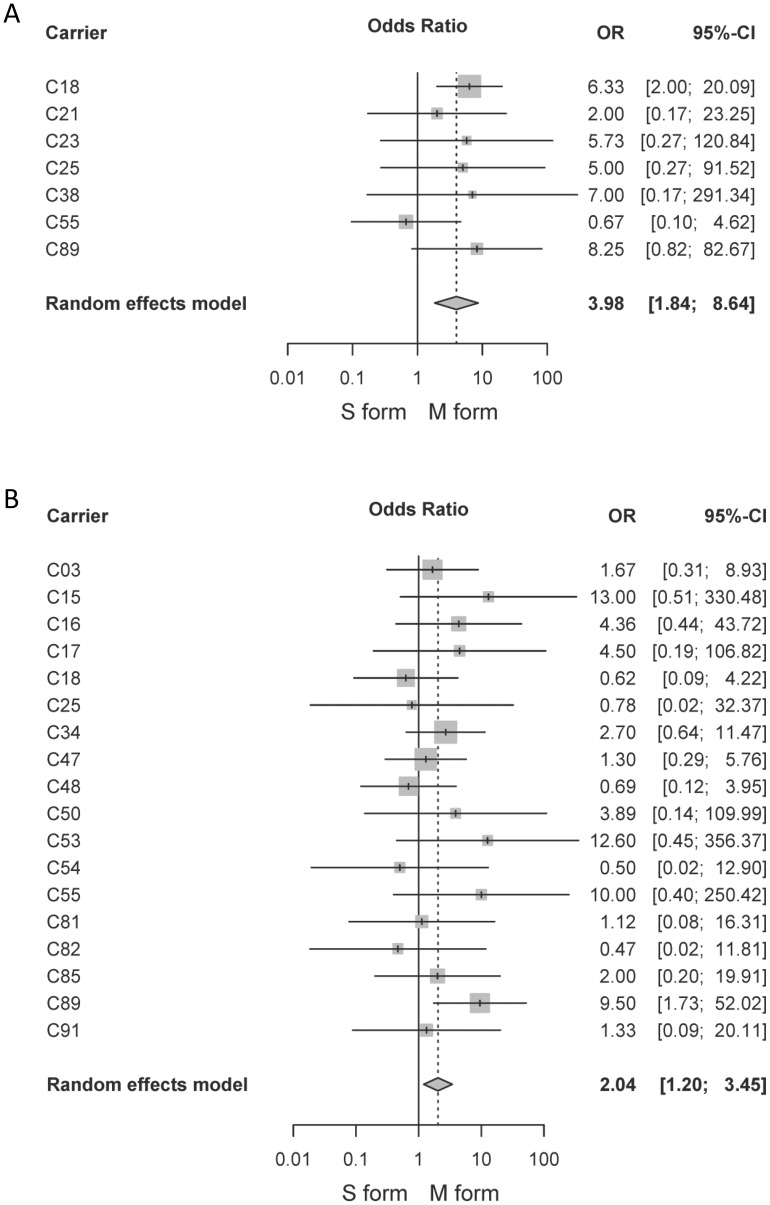
Plasmodium falciparum is the causative agent of malaria, a disease that kills almost one million persons each year, mainly in sub-Saharan Africa. P. falciparum is transmitted to the human host by the bite of an Anopheles female mosquito, and Anopheles gambiae sensus stricto is the most tremendous malaria vector in Africa, widespread throughout the afro-tropical belt. An. gambiae s.s. is subdivided into two distinct molecular forms, namely M and S forms. The two molecular forms are morphologically identical but they are distinct genetically, and differ by their distribution and their ecological preferences. The epidemiological importance of the two molecular forms in malaria transmission has been poorly investigated so far and gave distinct results in different areas. We have developed a real-time quantitative PCR (qPCR) assay, and used it to detect P. falciparum at the oocyst stage in wild An. gambiae s.s. mosquitoes experimentally infected with natural isolates of parasites. Mosquitoes were collected at immature stages in sympatric and allopatric breeding sites and further infected at the adult stage. We next measured the infection prevalence and intensity in female mosquitoes using the qPCR assay and correlated the infection success with the mosquito molecular forms. Our results revealed different prevalence of infection between the M and S molecular forms of An. gambiae s.s. in Cameroon, for both sympatric and allopatric populations of mosquitoes. However, no difference in the infection intensity was observed. Thus, the distribution of the molecular forms of An. gambiae s.s. may impact on the malaria epidemiology, and it will be important to monitor the efficiency of malaria control interventions on the two M and S forms.
恶性疟原虫是疟疾的病原体,这种疾病每年导致近 100 万人死亡,主要发生在撒哈拉以南非洲地区。恶性疟原虫通过雌性疟蚊的叮咬传播给人类宿主,冈比亚按蚊是非洲最主要的疟疾传播媒介,广泛分布于整个热带非洲地区。冈比亚按蚊可细分为两种截然不同的分子形式,即 M 型和 S 型。这两种分子形式在形态上是相同的,但在遗传上是不同的,它们在分布和生态偏好上存在差异。这两种分子形式在疟疾传播中的流行病学重要性迄今为止研究甚少,并且在不同地区得出了不同的结果。我们开发了一种实时定量 PCR(qPCR)检测方法,并用其检测在自然寄生虫分离株感染的野生冈比亚按蚊 s.s. 卵囊阶段的恶性疟原虫。在同域和异域繁殖地收集未成熟阶段的蚊子,并在成虫阶段进一步感染。然后,我们使用 qPCR 检测方法测量雌性蚊子的感染率和强度,并将感染成功率与蚊子的分子形式相关联。我们的结果表明,在喀麦隆,冈比亚按蚊 s.s.的 M 和 S 两种分子形式的感染率存在差异,无论是同域还是异域蚊子种群均如此。然而,感染强度没有差异。因此,冈比亚按蚊 s.s.的分子形式分布可能会影响疟疾的流行病学,监测两种 M 和 S 形式的疟疾控制干预措施的效率非常重要。