Department of Medicine, Beth Israel Deaconess Medical Center, Division of Matrix Biology, Boston, Massachusetts, USA.
Nat Med. 2013 Feb;19(2):227-31. doi: 10.1038/nm.2989. Epub 2013 Jan 27.
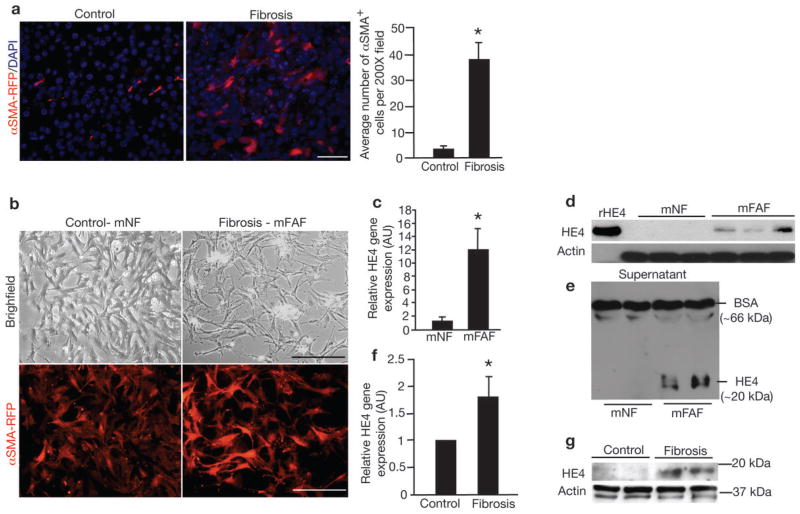
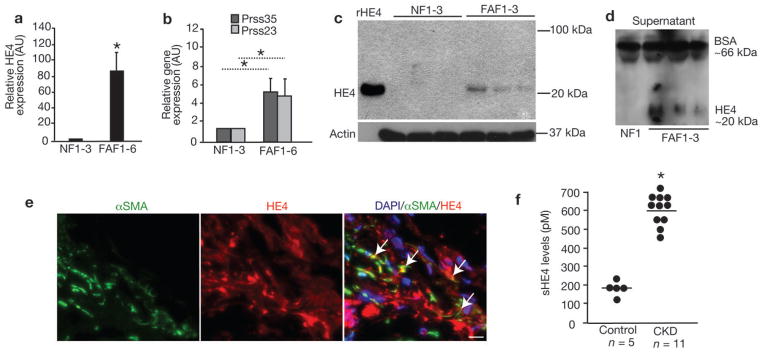
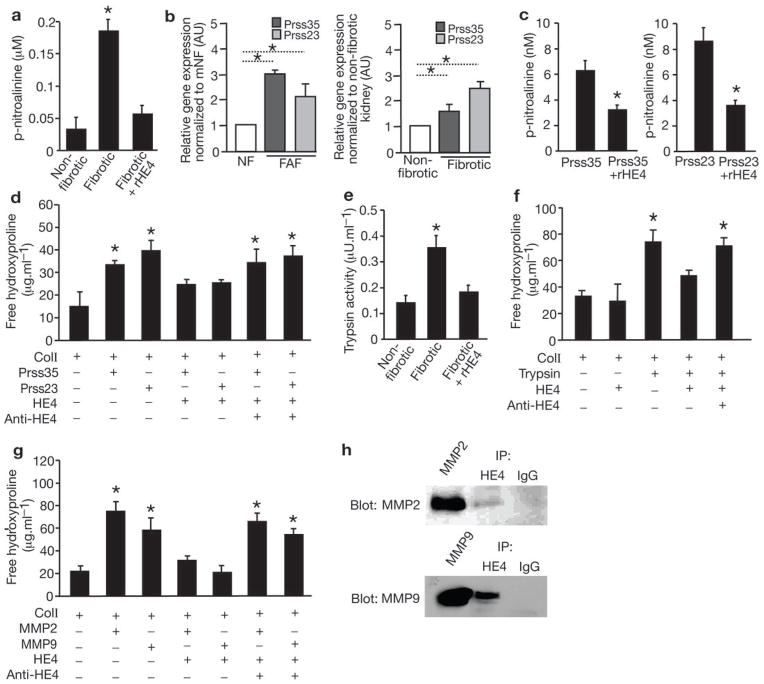
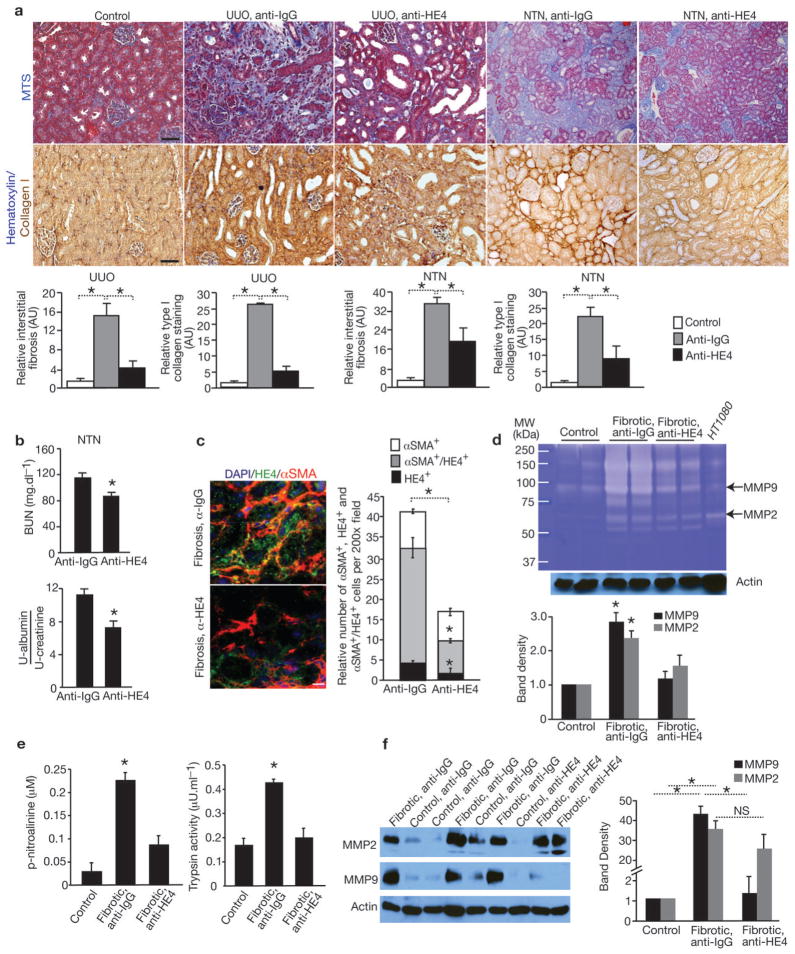
The functional contribution of myofibroblasts in fibrosis is not well understood. Using a new genetic mouse model to track and isolate myofibroblasts, we performed gene expression profiling followed by biological validation to identify HE4 (encoding human epididymis protein 4, also known as WAP 4-disulfide core domain-2 or Wfdc2) as the most upregulated gene in fibrosis-associated myofibroblasts. The HE4 gene encodes for a putative serine protease inhibitor that is upregulated in human and mouse fibrotic kidneys and is elevated in the serum of patients with kidney fibrosis. HE4 suppresses the activity of multiple proteases, including serine proteases and matrix metalloproteinases, and specifically inhibits their capacity to degrade type I collagen. In particular, we identified two serine proteases, Prss35 and Prss23, as HE4 targets with functional relevance in kidney fibrosis. Administration of HE4-neutralizing antibodies accelerated collagen I degradation and inhibited fibrosis in three different mouse models of renal disease. Collectively these studies suggest that HE4 is a potential biomarker of renal fibrosis and a new therapeutic target.
成纤维细胞中肌成纤维细胞的功能贡献尚不清楚。我们使用一种新的遗传小鼠模型来跟踪和分离肌成纤维细胞,进行基因表达谱分析,然后进行生物学验证,确定 HE4(编码人附睾蛋白 4,也称为 WAP4-二硫键核心域-2 或 Wfdc2)为纤维化相关肌成纤维细胞中上调最明显的基因。HE4 基因编码一种假定的丝氨酸蛋白酶抑制剂,在人类和小鼠纤维化肾脏中上调,并在肾纤维化患者的血清中升高。HE4 抑制多种蛋白酶的活性,包括丝氨酸蛋白酶和基质金属蛋白酶,并特异性抑制其降解 I 型胶原的能力。特别是,我们确定了两种丝氨酸蛋白酶,Prss35 和 Prss23,作为与肾脏纤维化中具有功能相关性的 HE4 靶标。施用 HE4 中和抗体可加速胶原 I 的降解,并抑制三种不同的肾脏疾病小鼠模型中的纤维化。综上所述,这些研究表明 HE4 是肾脏纤维化的潜在生物标志物和新的治疗靶点。