Schuermans Art, Pournamdari Ashley B, Lee Jiwoo, Bhukar Rohan, Ganesh Shriienidhie, Darosa Nicholas, Small Aeron M, Yu Zhi, Hornsby Whitney, Koyama Satoshi, Kooperberg Charles, Reiner Alexander P, Januzzi James L, Honigberg Michael C, Natarajan Pradeep
Program in Medical and Population Genetics and Cardiovascular Disease Initiative, Broad Institute of Harvard and MIT, Cambridge, MA, USA.
Cardiovascular Research Center and Center for Genomic Medicine, Massachusetts General Hospital, Boston, MA, USA.
Nat Cardiovasc Res. 2024 Dec;3(12):1516-1530. doi: 10.1038/s44161-024-00567-0. Epub 2024 Nov 21.
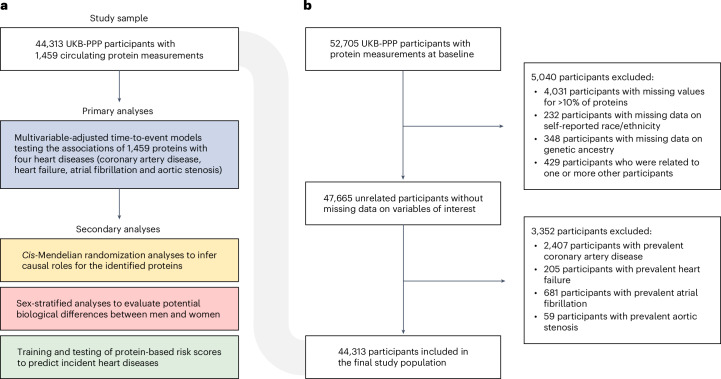
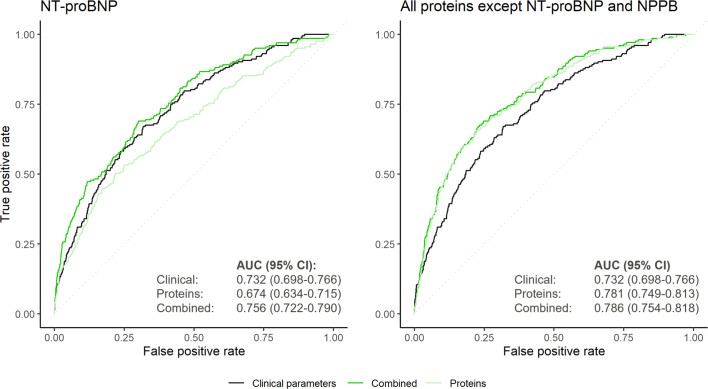
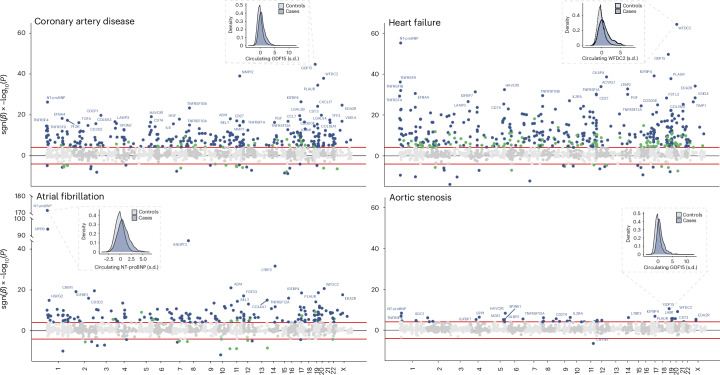
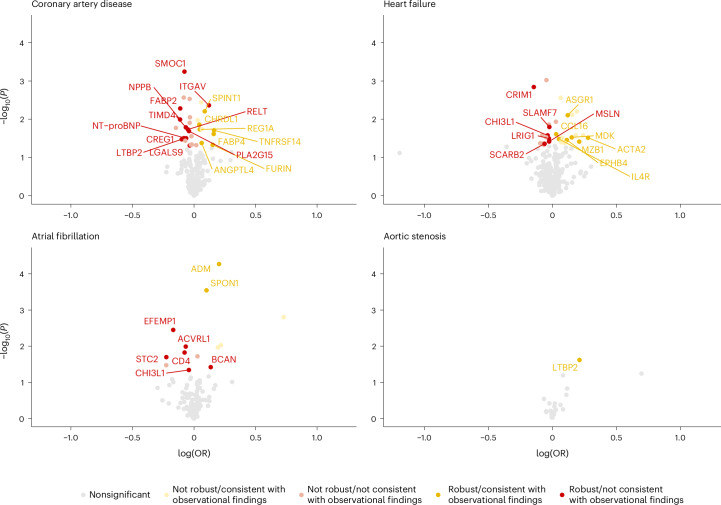
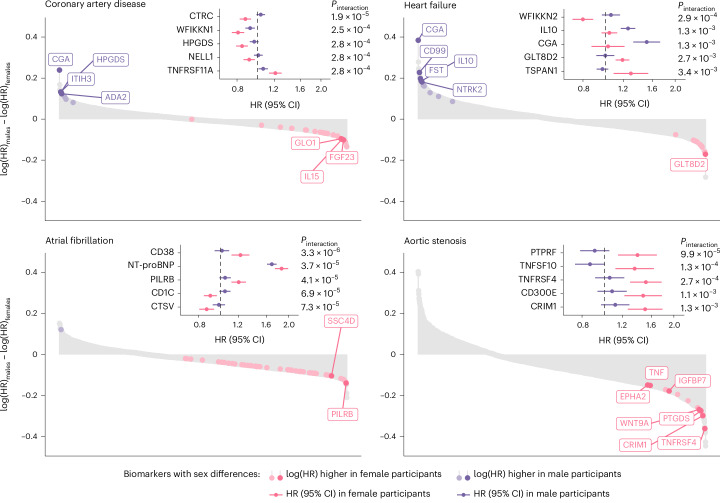
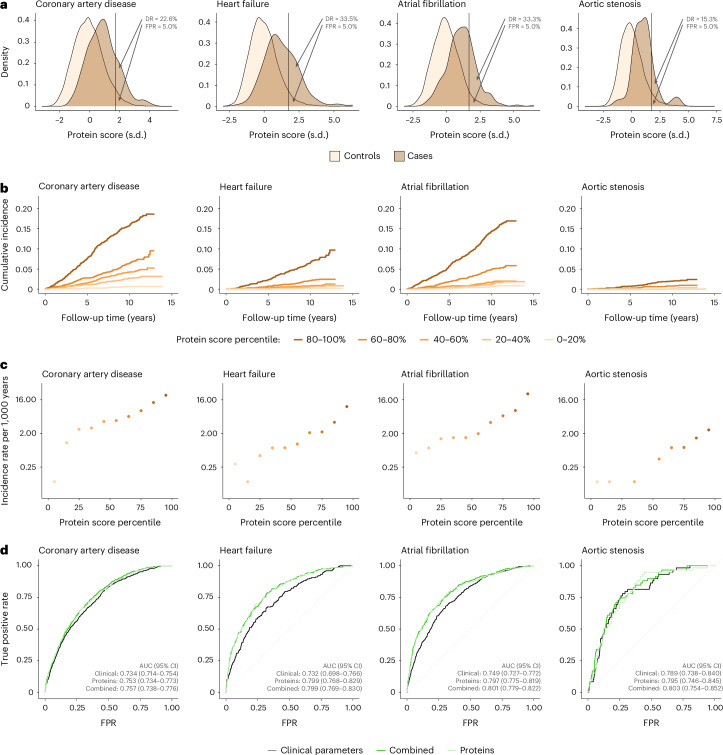
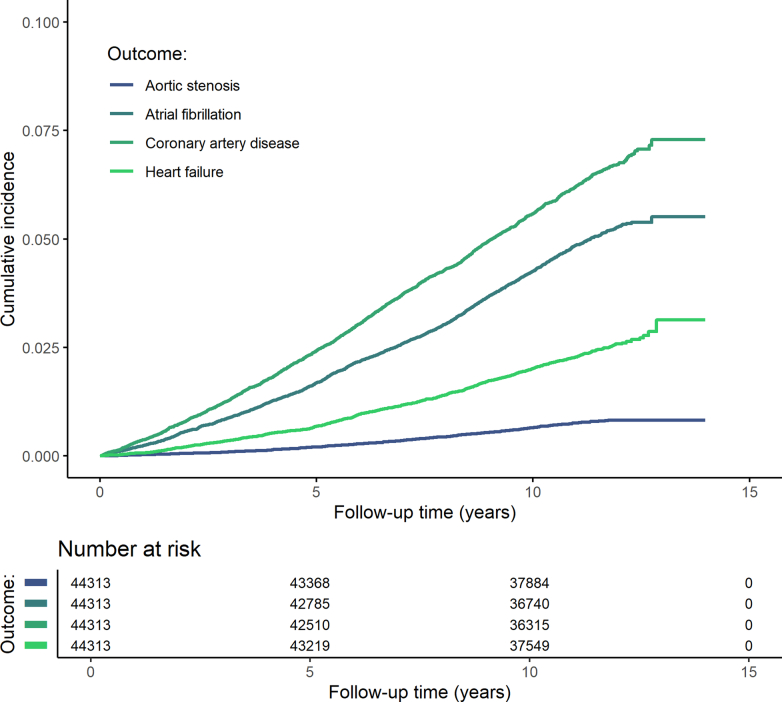
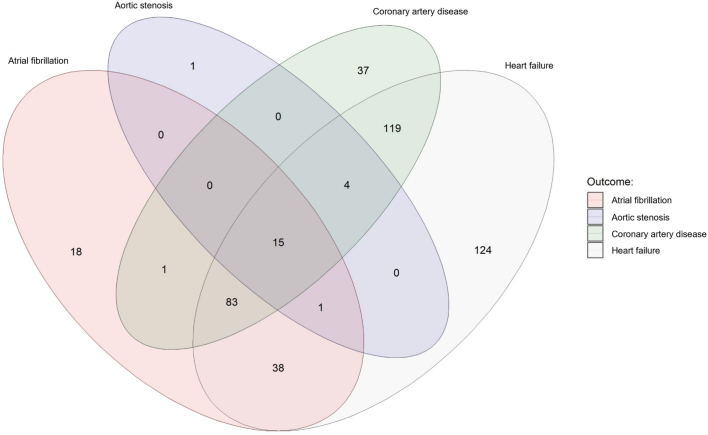
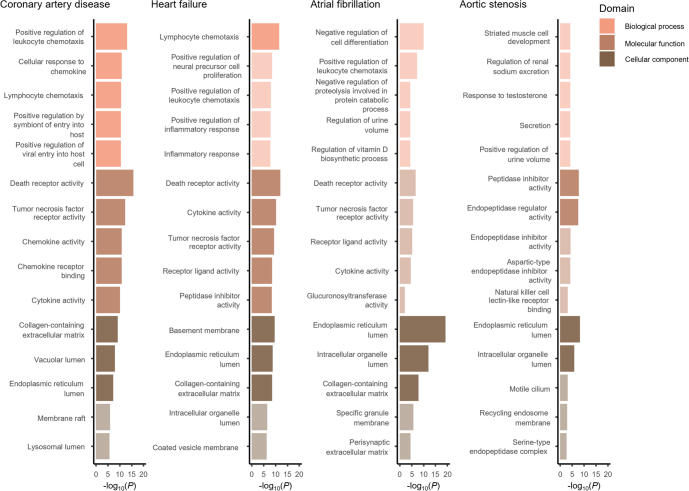
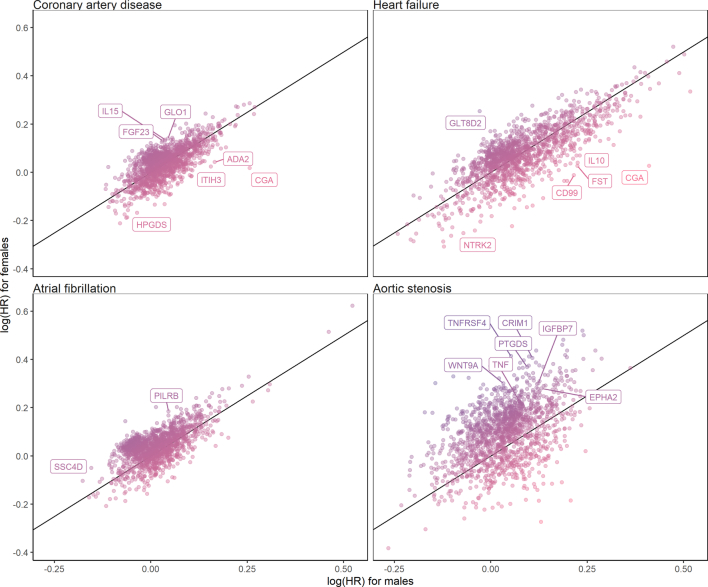
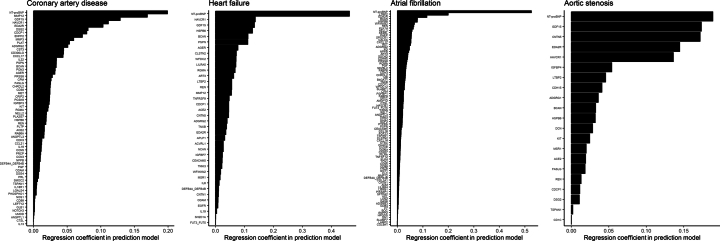
Cardiac diseases represent common highly morbid conditions for which molecular mechanisms remain incompletely understood. Here we report the analysis of 1,459 protein measurements in 44,313 UK Biobank participants to characterize the circulating proteome associated with incident coronary artery disease, heart failure, atrial fibrillation and aortic stenosis. Multivariable-adjusted Cox regression identified 820 protein-disease associations-including 441 proteins-at Bonferroni-adjusted P < 8.6 × 10. Cis-Mendelian randomization suggested causal roles aligning with epidemiological findings for 4% of proteins identified in primary analyses, prioritizing therapeutic targets across cardiac diseases (for example, spondin-1 for atrial fibrillation and the Kunitz-type protease inhibitor 1 for coronary artery disease). Interaction analyses identified seven protein-disease associations that differed Bonferroni-significantly by sex. Models incorporating proteomic data (versus clinical risk factors alone) improved prediction for coronary artery disease, heart failure and atrial fibrillation. These results lay a foundation for future investigations to uncover disease mechanisms and assess the utility of protein-based prevention strategies for cardiac diseases.
心脏疾病是常见的高发病症,但其分子机制仍未完全明晰。在此,我们报告了对英国生物银行44313名参与者进行的1459项蛋白质测量分析,以表征与冠心病、心力衰竭、心房颤动和主动脉瓣狭窄相关的循环蛋白质组。多变量调整后的Cox回归确定了820种蛋白质与疾病的关联,其中包括441种蛋白质,经Bonferroni校正后P值<8.6×10⁻⁵。顺式孟德尔随机化表明,在初步分析中确定的4%的蛋白质的因果作用与流行病学研究结果一致,从而确定了各类心脏疾病的治疗靶点(例如,心房颤动的spondin-1和冠心病的Kunitz型蛋白酶抑制剂1)。相互作用分析确定了7种蛋白质与疾病的关联在性别上存在显著的Bonferroni差异。纳入蛋白质组学数据的模型(相对于仅使用临床风险因素)改善了对冠心病、心力衰竭和心房颤动的预测。这些结果为未来揭示疾病机制以及评估基于蛋白质的心脏疾病预防策略的效用奠定了基础。