Novozymes North America, Franklinton, NC, 27525, USA.
Biotechnol Biofuels. 2013 Jan 28;6(1):8. doi: 10.1186/1754-6834-6-8.
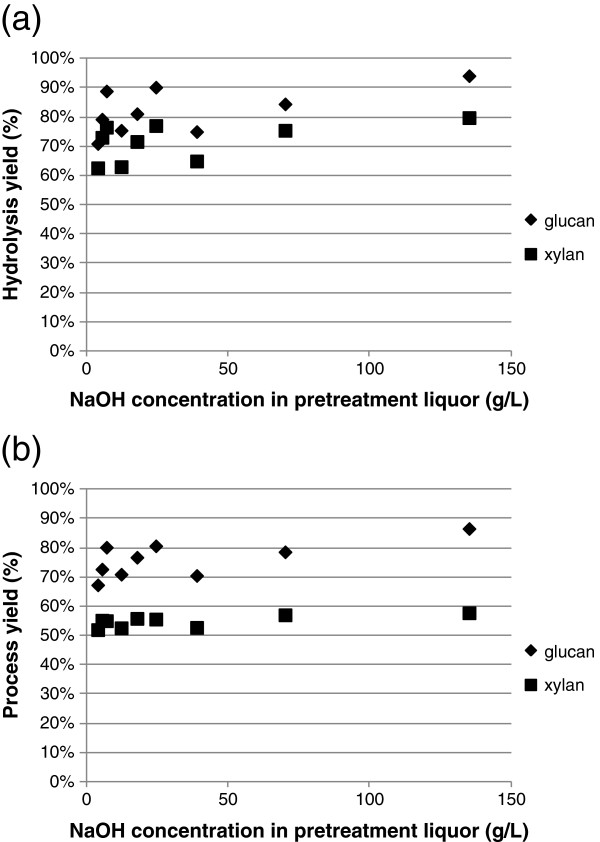
Previous research on alkaline pretreatment has mainly focused on optimization of the process parameters to improve substrate digestibility. To achieve satisfactory sugar yield, extremely high chemical loading and enzyme dosages were typically used. Relatively little attention has been paid to reduction of chemical consumption and process waste management, which has proven to be an indispensable component of the bio-refineries. To indicate alkali strength, both alkali concentration in pretreatment solution (g alkali/g pretreatment liquor or g alkali/L pretreatment liquor) and alkali loading based on biomass solids (g alkali/g dry biomass) have been widely used. The dual approaches make it difficult to compare the chemical consumption in different process scenarios while evaluating the cost effectiveness of this pretreatment technology. The current work addresses these issues through pretreatment of corn stover at various combinations of pretreatment conditions. Enzymatic hydrolysis with different enzyme blends was subsequently performed to identify the effects of pretreatment parameters on substrate digestibility as well as process operational and capital costs.
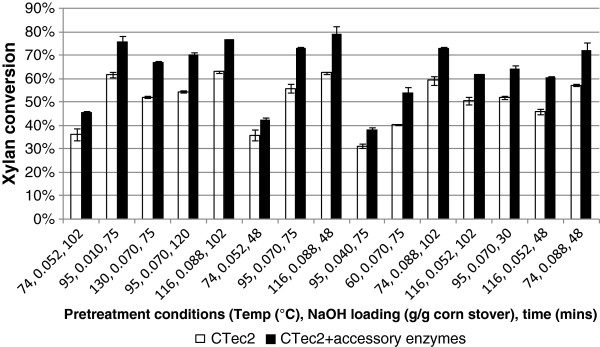
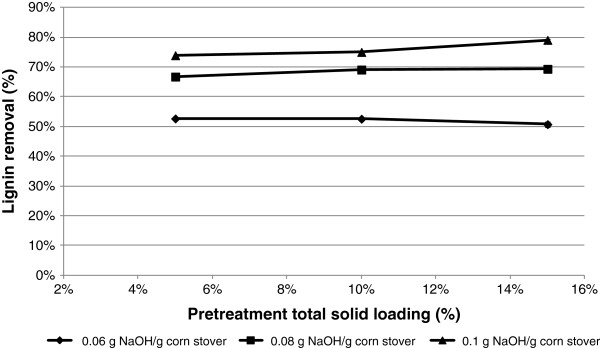
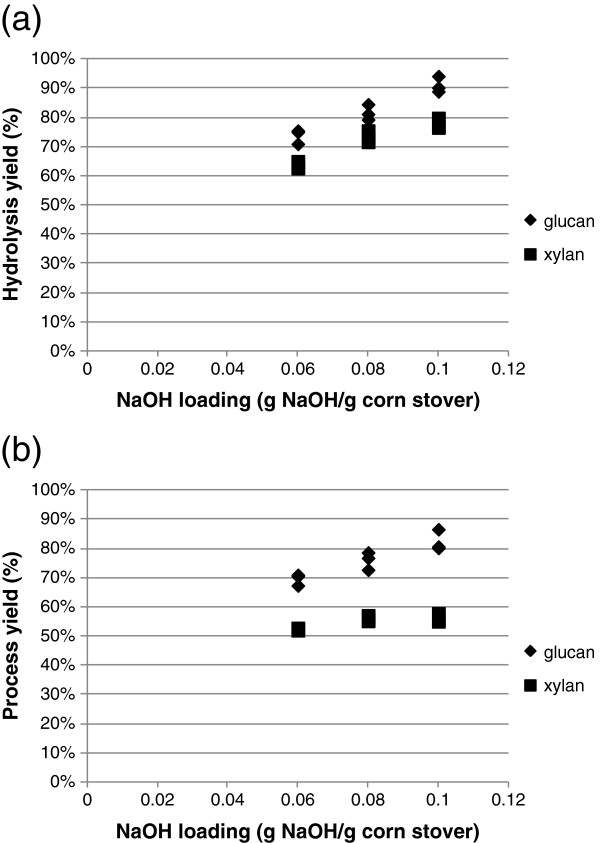
The results showed that sodium hydroxide loading is the most dominant variable for enzymatic digestibility. To reach 70% glucan conversion while avoiding extensive degradation of hemicellulose, approximately 0.08 g NaOH/g corn stover was required. It was also concluded that alkali loading based on total solids (g NaOH/g dry biomass) governs the pretreatment efficiency. Supplementing cellulase with accessory enzymes such as α-arabinofuranosidase and β-xylosidase significantly improved the conversion of the hemicellulose by 6-17%.
The current work presents the impact of alkaline pretreatment parameters on the enzymatic hydrolysis of corn stover as well as the process operational and capital investment costs. The high chemical consumption for alkaline pretreatment technology indicates that the main challenge for commercialization is chemical recovery. However, repurposing or co-locating a biorefinery with a paper mill would be advantageous from an economic point of view.
先前的碱性预处理研究主要集中在优化工艺参数以提高底物的消化率。为了达到令人满意的糖产量,通常需要使用极高的化学负荷和酶剂量。相对较少关注化学消耗的减少和工艺废物管理,这已被证明是生物精炼厂不可或缺的组成部分。为了表示碱强度,预处理溶液中的碱浓度(预处理液中的碱量/ g 或预处理液中的碱量/ L)和基于生物质固体的碱负荷(每克干生物质的碱量/ g)都被广泛使用。这两种方法使得在评估这种预处理技术的成本效益时,很难比较不同工艺方案中的化学消耗。本研究通过在不同预处理条件下处理玉米秸秆来解决这些问题。随后进行了不同酶混合物的酶解,以确定预处理参数对底物消化率以及工艺操作和资本成本的影响。
结果表明,氢氧化钠负荷是酶解的最主要变量。为了在避免半纤维素大量降解的情况下达到 70%的纤维素转化率,大约需要 0.08 g NaOH/g 玉米秸秆。还得出结论,基于总固体的碱负荷(每克干生物质的 NaOH 量/ g)控制着预处理效率。用辅助酶如α-阿拉伯呋喃糖苷酶和β-木糖苷酶补充纤维素酶可显著提高半纤维素的转化率 6-17%。
本研究介绍了碱性预处理参数对玉米秸秆酶解的影响,以及工艺操作和资本投资成本。碱性预处理技术的高化学消耗表明,商业化的主要挑战是化学回收。然而,从经济角度来看,将生物精炼厂与造纸厂重新定位或并置是有利的。