Fernandez-Robredo Patricia, Recalde Sergio, Moreno-Orduña Maite, García-García Laura, Zarranz-Ventura Javier, García-Layana Alfredo
Experimental Ophthalmology Laboratory, Universidad de Navarra, Pamplona Navarra, Spain.
Mol Vis. 2013;19:153-65. Epub 2013 Jan 28.
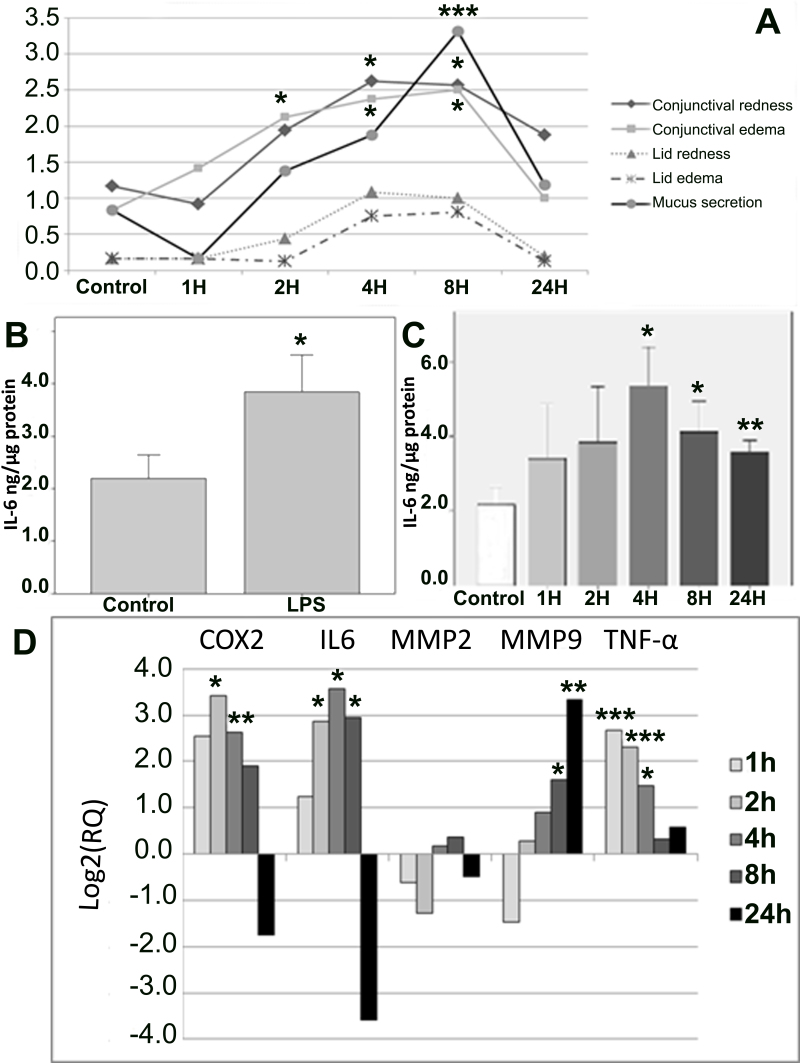
Macrolide antibiotics are known to have various anti-inflammatory effects in addition to their antimicrobial activity, but the mechanisms are still unclear. The effect of azithromycin on inflammatory molecules in the lipopolysaccharide-induced rat conjunctivitis model was investigated.
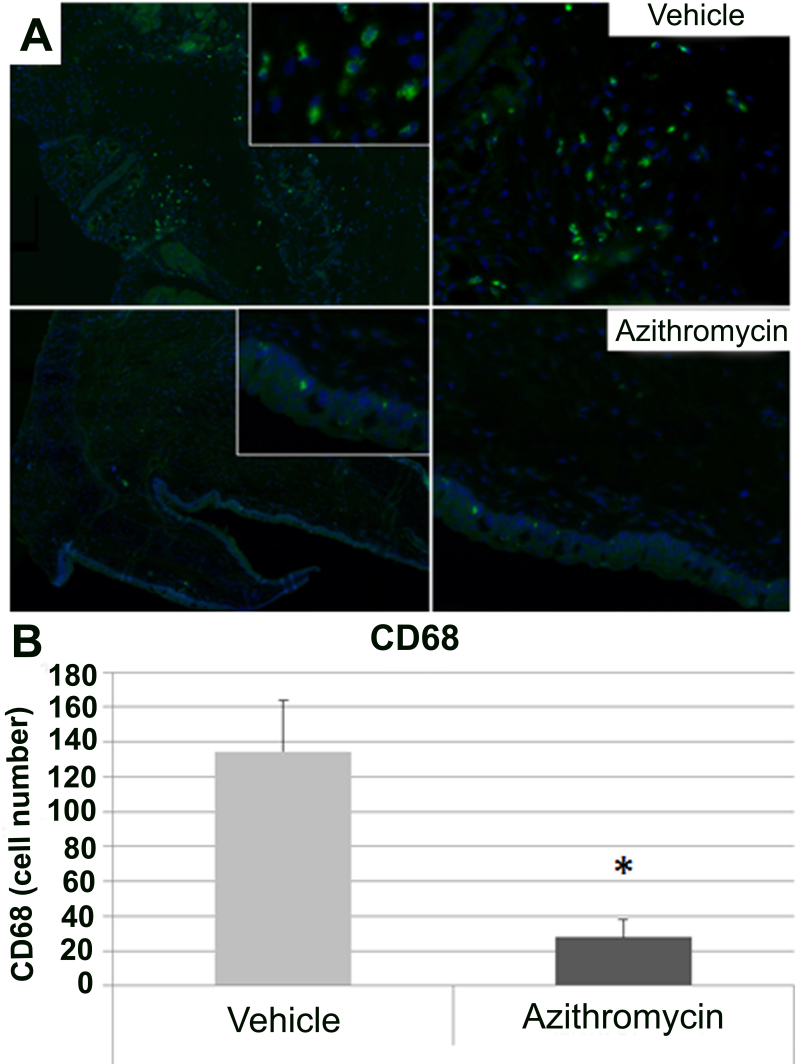
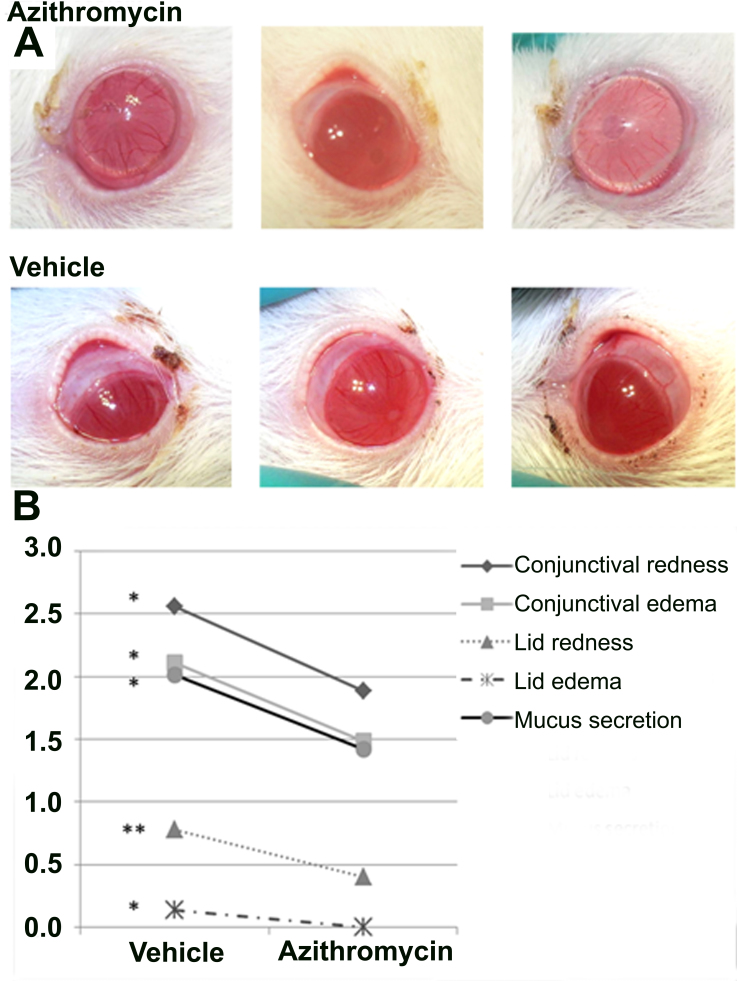
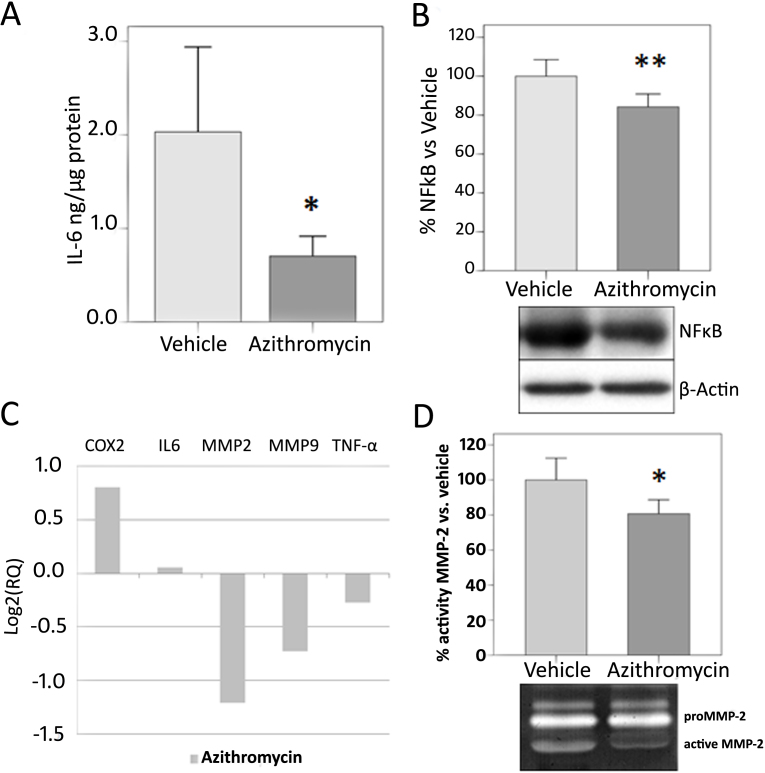
Twenty-four Wistar rats were divided into two groups receiving topical ocular azithromycin (15 mg/g) or vehicle. In total, six doses (25 µl) were administered as one dose twice a day for three days before subconjunctival lipopolysaccharide injection (3 mg/ml). Before the rats were euthanized, mucus secretion, conjunctival and palpebral edema and redness were evaluated. Real-time polymerase chain reaction was used to determine gene expression for interleukin-6, cyclooxygenase-2, tumor necrosis factor-α, matrix metalloproteinase (MMP)-2, and MMP-9. Interleukin-6 was determined with enzyme-linked immunosorbent assay, nuclear factor-kappa B with western blot, and MMP-2 activity with gelatin zymogram. Four eyes per group were processed for histology and subsequent periodic acid-Schiff staining and CD68 for immunofluorescence. The Student t test or the Wilcoxon test for independent samples was applied (SPSS v.15.0).
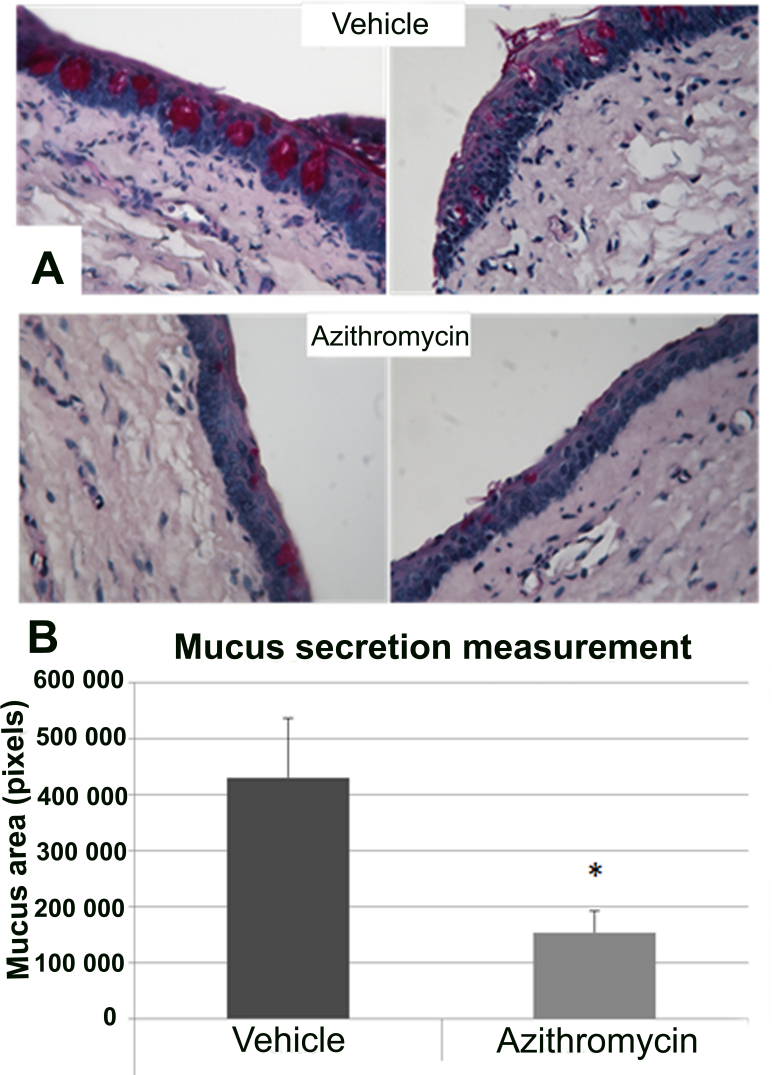
Azithromycin-treated animals showed a significant reduction in all clinical signs (p<0.05) compared to controls. Interleukin-6 (p<0.05), nuclear factor-kappa B protein expression (p<0.01), and MMP-2 activity (p<0.05) in conjunctival homogenates were significantly reduced compared with the control animals. MMP-2 gene expression showed a tendency to decrease in the azithromycin group (p=0.063). Mucus secretion by goblet cells and the macrophage count in conjunctival tissue were also decreased in the azithromycin group (p<0.05).
These results suggest that azithromycin administration ameliorates induced inflammation effects in a rat model of acute conjunctivitis.
已知大环内酯类抗生素除具有抗菌活性外,还具有多种抗炎作用,但其机制仍不清楚。本研究调查了阿奇霉素对脂多糖诱导的大鼠结膜炎模型中炎症分子的影响。
将24只Wistar大鼠分为两组,分别接受局部眼部阿奇霉素(15mg/g)或赋形剂。在结膜下注射脂多糖(3mg/ml)前三天,每天两次,每次一剂(25μl),共给予六剂。在大鼠安乐死后,评估黏液分泌、结膜和睑水肿及发红情况。采用实时聚合酶链反应测定白细胞介素-6、环氧化酶-2、肿瘤坏死因子-α、基质金属蛋白酶(MMP)-2和MMP-9的基因表达。采用酶联免疫吸附测定法测定白细胞介素-6,采用蛋白质印迹法测定核因子-κB,采用明胶酶谱法测定MMP-2活性。每组四只眼睛进行组织学检查,随后进行高碘酸-希夫染色和免疫荧光CD68检测。采用独立样本的Student t检验或Wilcoxon检验(SPSS v.15.0)。
与对照组相比,阿奇霉素治疗的动物所有临床体征均显著减轻(p<0.05)。与对照动物相比,结膜匀浆中白细胞介素-6(p<0.05)、核因子-κB蛋白表达(p<0.01)和MMP-2活性(p<0.05)显著降低。阿奇霉素组MMP-2基因表达有下降趋势(p=0.063)。阿奇霉素组杯状细胞黏液分泌和结膜组织中巨噬细胞计数也减少(p<0.05)。
这些结果表明,在大鼠急性结膜炎模型中,给予阿奇霉素可改善诱导的炎症效应。