Centers for Disease Control and Prevention, National Center for Chronic Disease Prevention and Health Promotion, Division of Cancer Prevention and Control, Epidemiology and Applied Research Branch, Atlanta, GA, USA.
Prev Med. 2013 Nov;57(5):426-33. doi: 10.1016/j.ypmed.2013.01.020. Epub 2013 Feb 8.
Declines in cervical cancer incidence and mortality in Canada and in the United States have been widely attributed to the introduction of the Papanicolaou (Pap) test. This article reviews changes in screening and introduction of HPV vaccination.
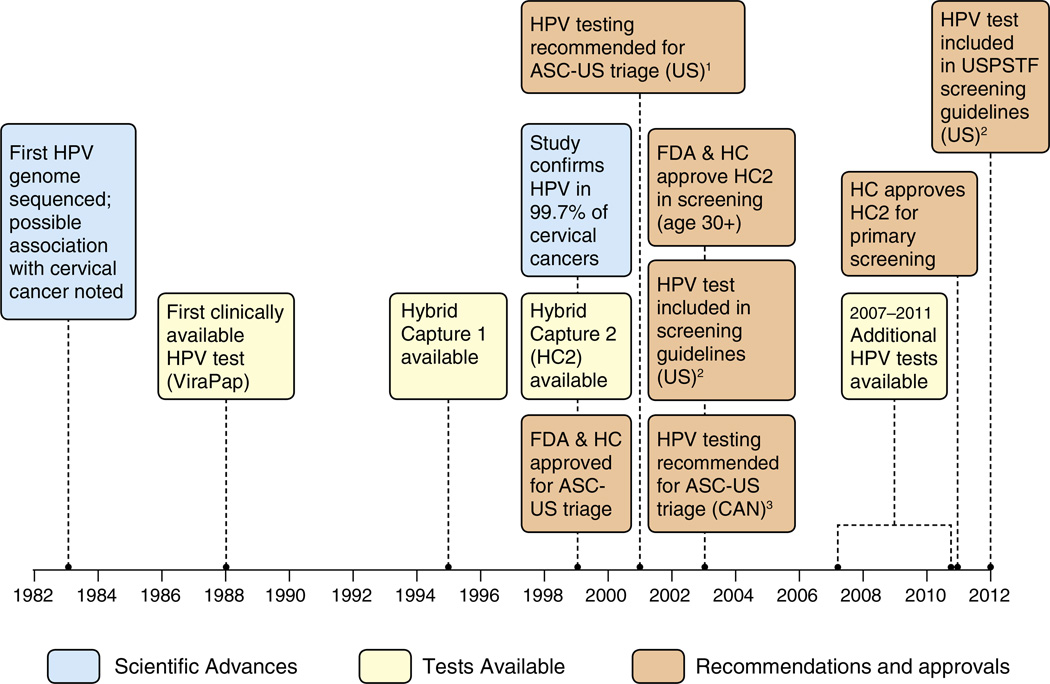
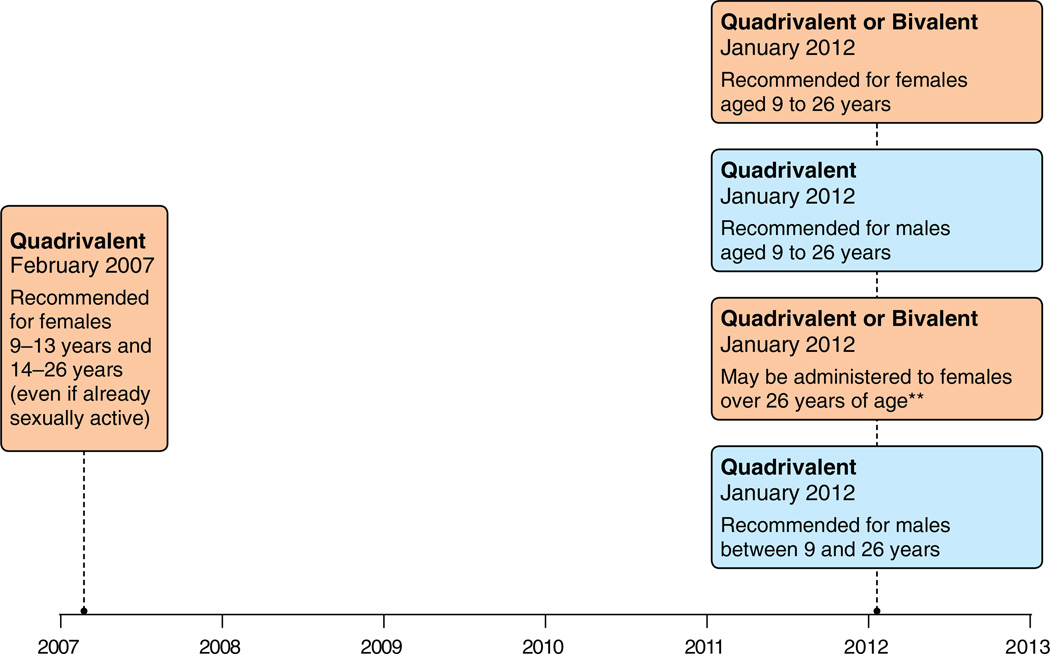
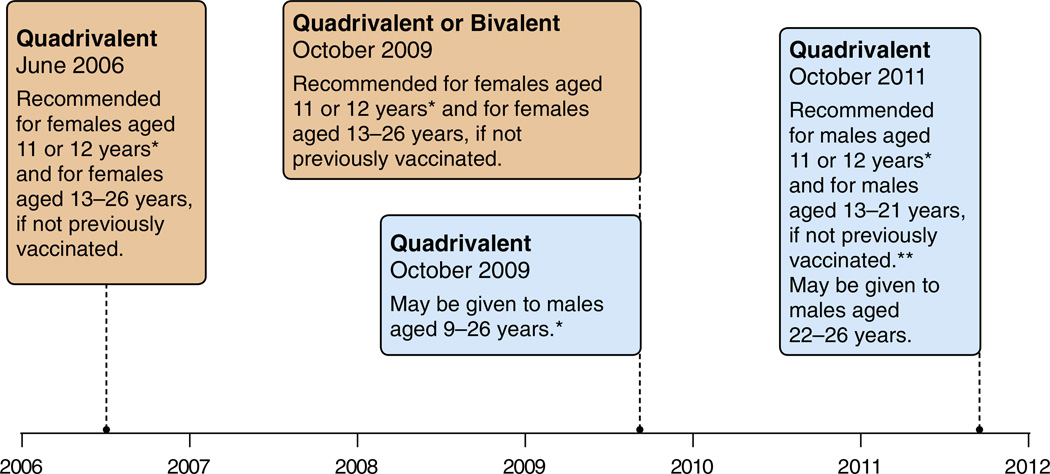
Sentinel events in cervical cancer screening and primary prevention through HPV vaccination in the US and Canada are described.
Despite commonalities, cervical cancer screening and prevention differ between the two countries. Canada has a combination of opportunistic and organized programs at the provincial and territorial level, while the US has opportunistic screening and vaccination systems. In the US, the HPV test along with the Pap test (co-testing) is part of national recommendations for routine cervical cancer screening for women age 30 and older. Co-testing is not being considered anywhere in Canada, but primary HPV testing is currently recommended (but not implemented) in one province in Canada.
Many prevention strategies are available for cervical cancer. Continued public health efforts should focus on increasing vaccine coverage in the target age groups and cervical cancer screening for women at appropriate intervals. Ongoing evaluation will be needed to ensure appropriate use of health resources, as vaccinated women become eligible for screening.
加拿大和美国宫颈癌发病率和死亡率的下降,很大程度上归因于巴氏涂片(Pap)检测的引入。本文回顾了宫颈癌筛查和 HPV 疫苗接种的变化。
描述了美国和加拿大宫颈癌筛查和初级预防中的重要事件。
尽管存在相似之处,但两国的宫颈癌筛查和预防措施有所不同。加拿大在省级和地区层面上结合了机会性和组织性的项目,而美国则有机会性的筛查和疫苗接种系统。在美国,HPV 检测与 Pap 检测(联合检测)是针对 30 岁及以上女性常规宫颈癌筛查的国家建议的一部分。在加拿大,没有考虑联合检测,但在一个省份,目前推荐(但尚未实施)进行原发性 HPV 检测。
有许多宫颈癌预防策略。持续的公共卫生努力应集中在增加目标年龄组的疫苗接种率和在适当间隔对女性进行宫颈癌筛查上。需要进行持续评估,以确保在接种疫苗的女性符合条件时,适当利用卫生资源。