Lee Kyung-Eun, Shin Ji-Ae, Hong In-Sun, Cho Nam-Pyo, Cho Sung-Dae
Department of Oral Medicine, Chonbuk National University; Jeonju 561-756;
Exp Ther Med. 2013 Mar;5(3):789-792. doi: 10.3892/etm.2012.871. Epub 2012 Dec 21.
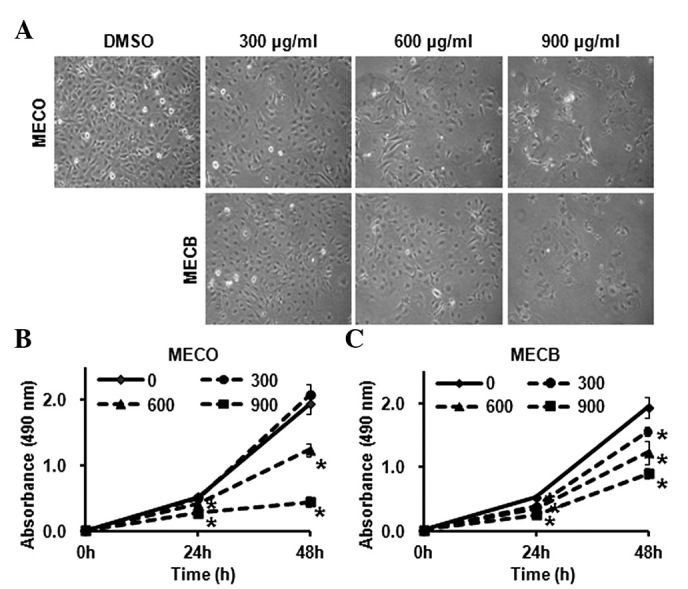
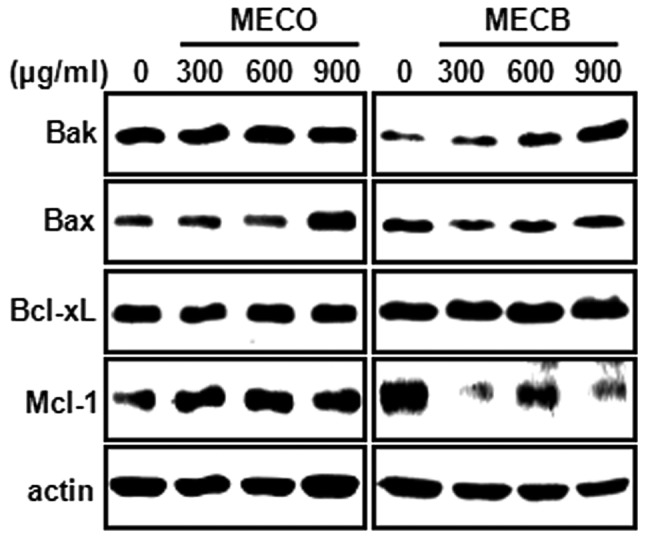
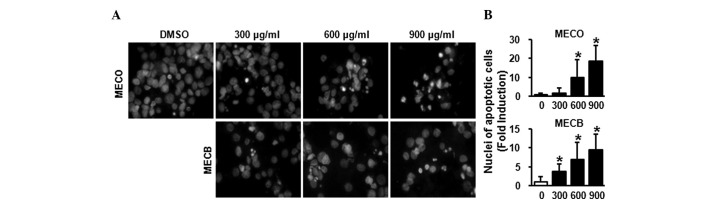
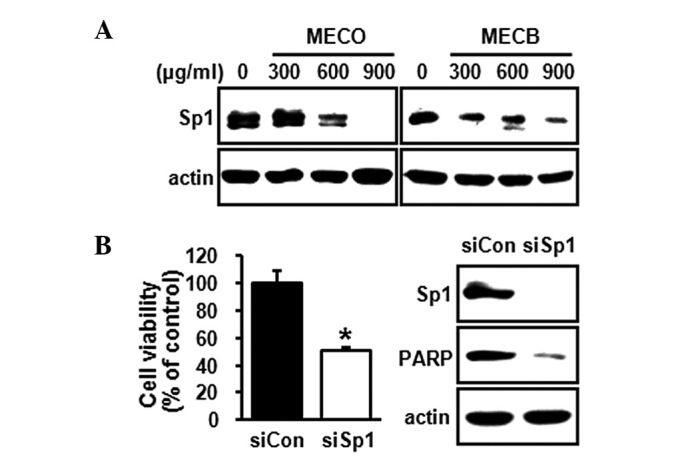
Cnidium officinale Makino and Capsella bursa-pastoris are used as traditional herbs with diverse medicinal effects, including the inhibition of inflammation, reduction of blood pressure and as diuretics, however, the anti-cancer effects of C. officinale Makino and C. bursa-pastoris are poorly defined. The aims of this study were to evaluate the effects of methanol extracts of C. officinale Makino (MECO) and methanol extracts of C. bursa-pastoris (MECB) on the cell growth and apoptosis of HSC-2 human oral cancer cells. MECO and MECB caused growth inhibition and the induction of apoptosis in a concentration-dependent manner in HSC-2 cells. A marked reduction in specificity protein 1 (Sp1) expression following treatment with MECO or MECB was also observed. The downregulation of Sp1 by siRNA resulted in growth inhibition and a reduction of total poly (ADP-ribose) polymerase (PARP) expression. In addition, MECO significantly increased Bax expression levels and MECB increased Bak expression levels and decreased Mcl-1 expression levels. These results suggest that MECO and MECB inhibit cell growth and induce apoptosis via the Sp1 protein, indicating that MECO and MECB are useful bioactive materials and attractive drug candidates for oral cancer.
日本芎䓖和荠菜作为传统草药,具有多种药用功效,包括抗炎、降血压和利尿作用。然而,日本芎䓖和荠菜的抗癌作用尚不明确。本研究旨在评估日本芎䓖甲醇提取物(MECO)和荠菜甲醇提取物(MECB)对人HSC-2口腔癌细胞生长和凋亡的影响。MECO和MECB在HSC-2细胞中以浓度依赖性方式抑制细胞生长并诱导凋亡。在用MECO或MECB处理后,还观察到特异性蛋白1(Sp1)表达明显降低。通过小干扰RNA(siRNA)下调Sp1导致细胞生长抑制和总聚(ADP-核糖)聚合酶(PARP)表达降低。此外,MECO显著增加Bax表达水平,MECB增加Bak表达水平并降低Mcl-1表达水平。这些结果表明,MECO和MECB通过Sp1蛋白抑制细胞生长并诱导凋亡,表明MECO和MECB是有用的生物活性物质,是口腔癌有吸引力的候选药物。