Division of Nephrology, The Ohio State University, Columbus, Ohio 43210, USA.
Clin Interv Aging. 2013;8:111-22. doi: 10.2147/CIA.S27105. Epub 2013 Feb 4.
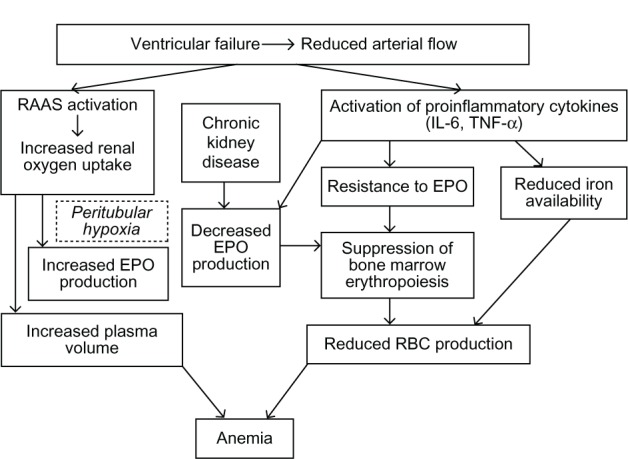
Anemia is a frequent comorbidity of heart failure and is associated with poor outcomes. Anemia in heart failure is considered to develop due to a complex interaction of iron deficiency, kidney disease, and cytokine production, although micronutrient insufficiency and blood loss may contribute. Currently, treatment of anemia of heart failure lacks clear targets and specific therapy is not defined. Intravenous iron use has been shown to benefit anemic as well as nonanemic patients with heart failure. Treatment with erythropoietin-stimulating agents has been considered alone or in combination with iron, but robust evidence to dictate clear guidelines is not currently available. Available and emerging new agents in the treatment of anemia of heart failure will need to be tested in randomized, controlled studies.
贫血是心力衰竭的常见合并症,与不良预后相关。心力衰竭相关贫血被认为是由于铁缺乏、肾脏疾病和细胞因子产生的复杂相互作用导致的,尽管微量营养素不足和失血也可能有影响。目前,心力衰竭相关贫血的治疗缺乏明确的靶点,也未确定具体的治疗方法。静脉铁剂的使用已被证明对贫血和非贫血心力衰竭患者均有益。促红细胞生成素刺激剂的单独或联合铁剂治疗已被考虑,但目前尚无明确指导方针的有力证据。需要在随机对照研究中测试心力衰竭相关贫血的现有和新出现的治疗药物。