Department of Biology, University of Rome Tor Vergata, Rome, Italy.
PLoS One. 2013;8(2):e55736. doi: 10.1371/journal.pone.0055736. Epub 2013 Feb 7.
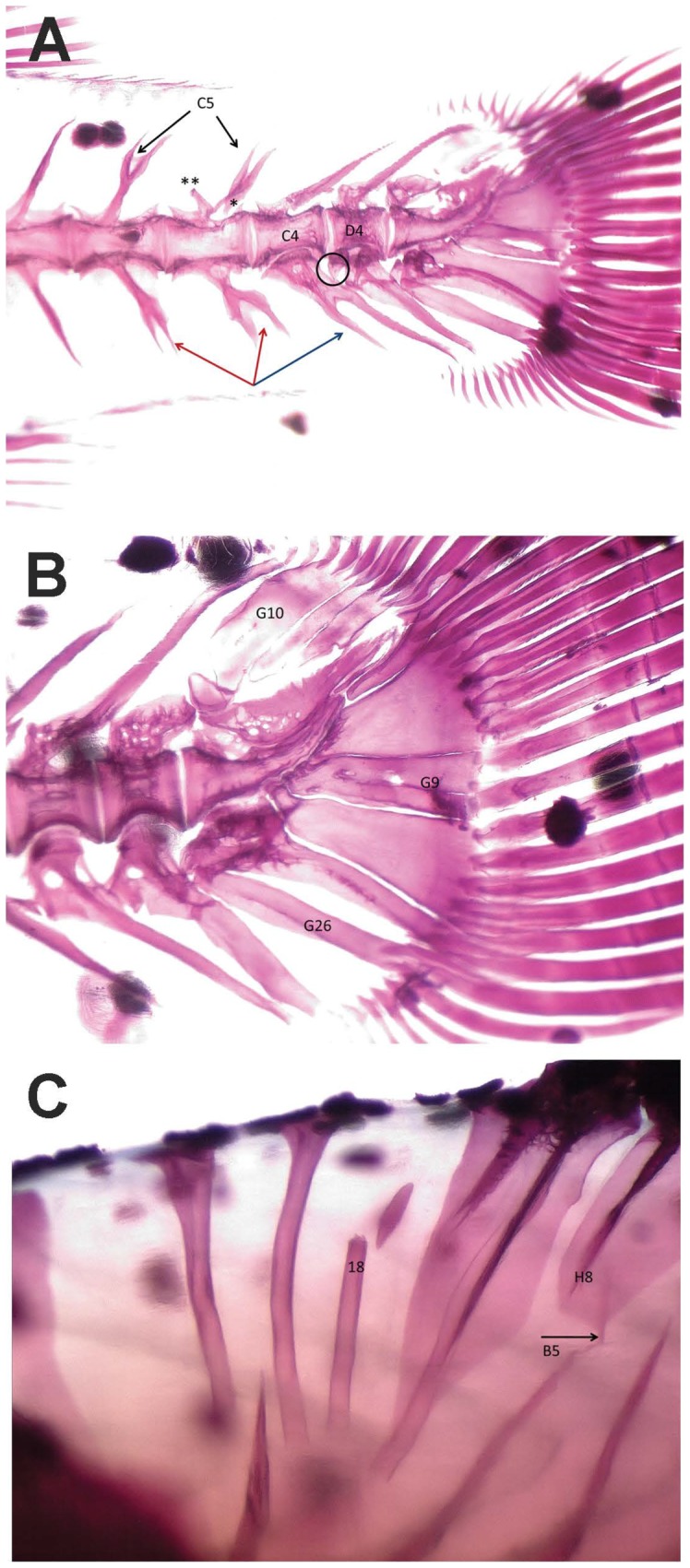
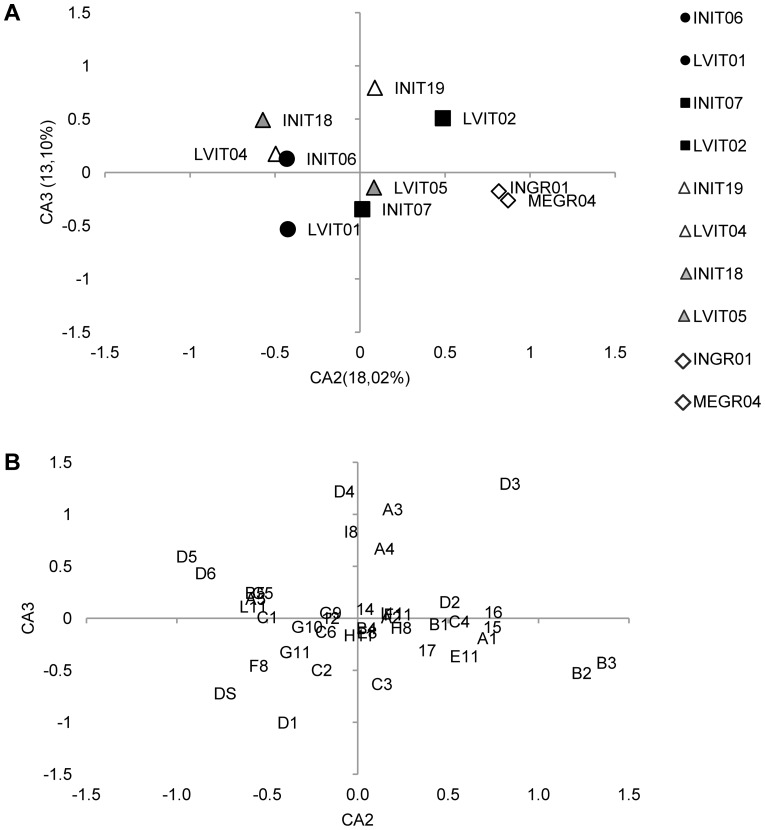
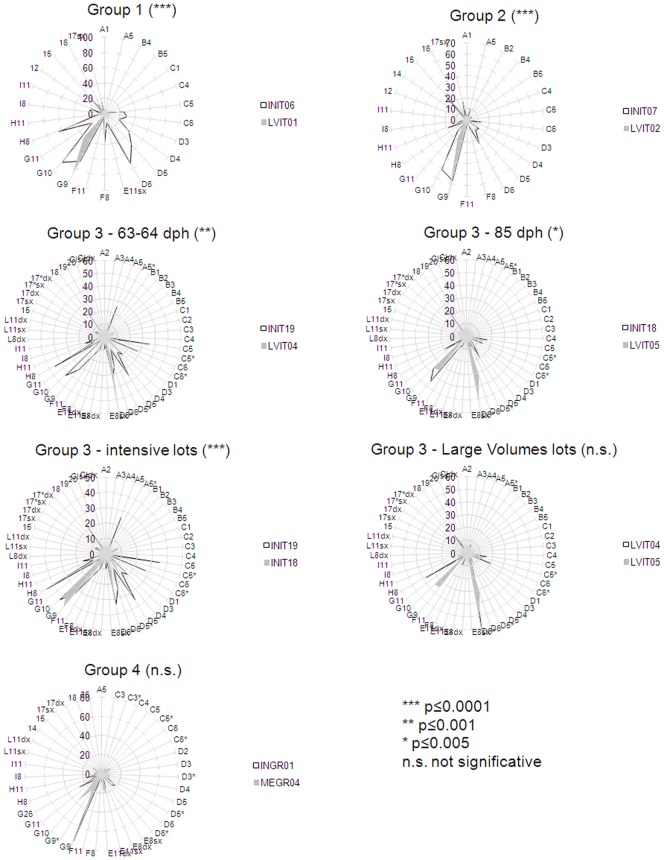
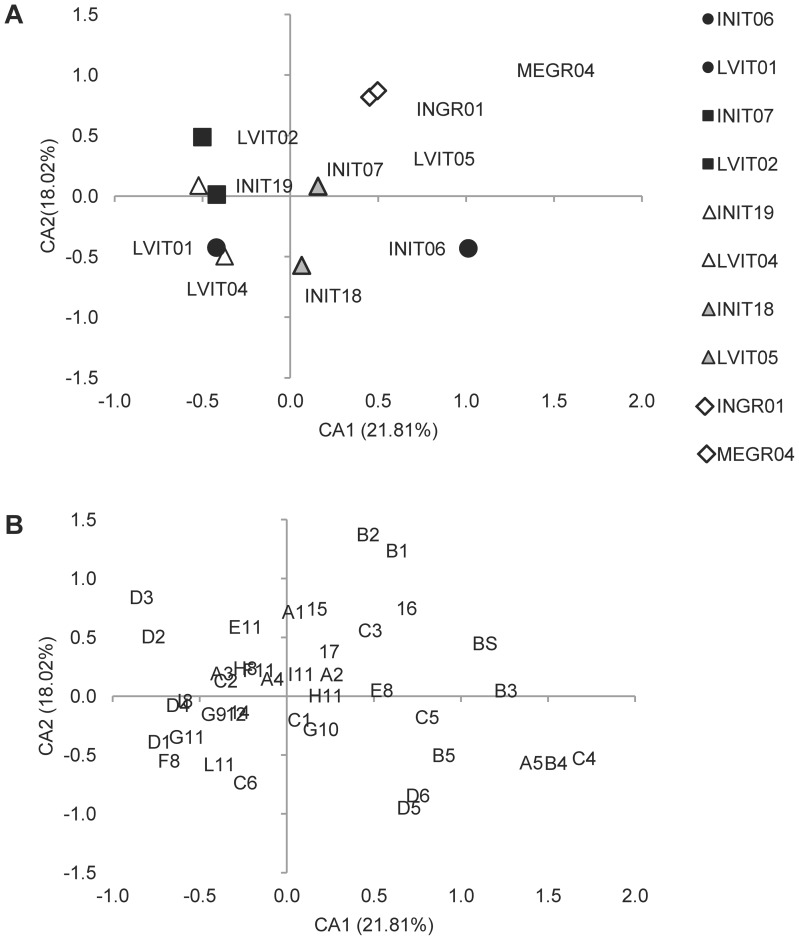
In this paper, 981 reared juveniles of gilthead seabream (Sparus aurata) were analysed, 721 of which were from a commercial hatchery located in Northern Italy (Venice, Italy) and 260 from the Hellenic Center for Marine Research (Crete, Greece). These individuals were from 4 different egg batches, for a total of 10 different lots. Each egg batch was split into two lots after hatching, and reared with two different methodologies: intensive and semi-intensive. All fish were subjected to processing for skeletal anomaly and meristic count analysis. The aims involved: (1) quantitatively and qualitatively analyzing whether differences in skeletal elements arise between siblings and, if so, what they are; (2) investigating if any skeletal bone tissue/ossification is specifically affected by changing environmental rearing conditions; and (3) contributing to the identification of the best practices for gilthead seabream larval rearing in order to lower the deformity rates, without selections. The results obtained in this study highlighted that: i) in all the semi-intensive lots, the bones having intramembranous ossification showed a consistently lower incidence of anomalies; ii) the same clear pattern was not observed in the skeletal elements whose ossification process requires a cartilaginous precursor. It is thus possible to ameliorate the morphological quality (by reducing the incidence of severe skeletal anomalies and the variability in meristic counts of dermal bones) of reared seabream juveniles by lowering the stocking densities (maximum 16 larvae/L) and increasing the volume of the hatchery rearing tanks (minimum 40 m(3)). Feeding larvae with a wide variety of live (wild) preys seems further to improve juvenile skeletal quality. Additionally, analysis of the morphological quality of juveniles reared under two different semi-intensive conditions, Mesocosm and Large Volumes, highlighted a somewhat greater capacity of Large Volumes to significantly augment the gap with siblings reared in intensive (conventional) modality.
本文分析了 981 尾养殖的真鲷(Sparus aurata)幼鱼,其中 721 尾来自意大利北部的一家商业孵化场(意大利威尼斯),260 尾来自希腊海洋研究中心(克里特岛,希腊)。这些个体来自 4 个不同的卵批,共有 10 个不同的批次。每个卵批孵化后分为两个批次,并采用两种不同的方法进行养殖:密集型和半密集型。所有的鱼都进行了骨骼异常和可数性状分析。目的是:(1)定量和定性分析兄弟姐妹之间的骨骼元素是否存在差异,如果存在,是什么;(2)研究骨骼组织/骨化是否受到环境养殖条件变化的影响;(3)有助于确定真鲷幼鱼养殖的最佳实践,以降低畸形率,而无需进行选择。本研究结果表明:i)在所有半密集型批次中,具有膜内骨化的骨骼异常发生率较低;ii)在骨骼元素中,其骨化过程需要软骨前体,没有观察到相同的清晰模式。因此,通过降低放养密度(最大 16 尾/升)和增加孵化场养殖水箱的体积(最小 40 立方米),可以改善养殖真鲷幼鱼的形态质量(通过降低严重骨骼异常的发生率和真皮骨可数性状的变异性)。用多种活(野生)饵料喂养幼鱼,似乎可以进一步提高幼鱼的骨骼质量。此外,在两种不同的半密集条件(中尺度和大体积)下对幼鱼的形态质量进行分析,表明大体积养殖的幼鱼与密集(常规)模式下养殖的幼鱼之间的差距更大。