Department of Cell Biology, National Institutes for Food and Drug Control, No 2 Tian Tan Xi Li, Beijing, China.
PLoS One. 2013;8(2):e56320. doi: 10.1371/journal.pone.0056320. Epub 2013 Feb 13.
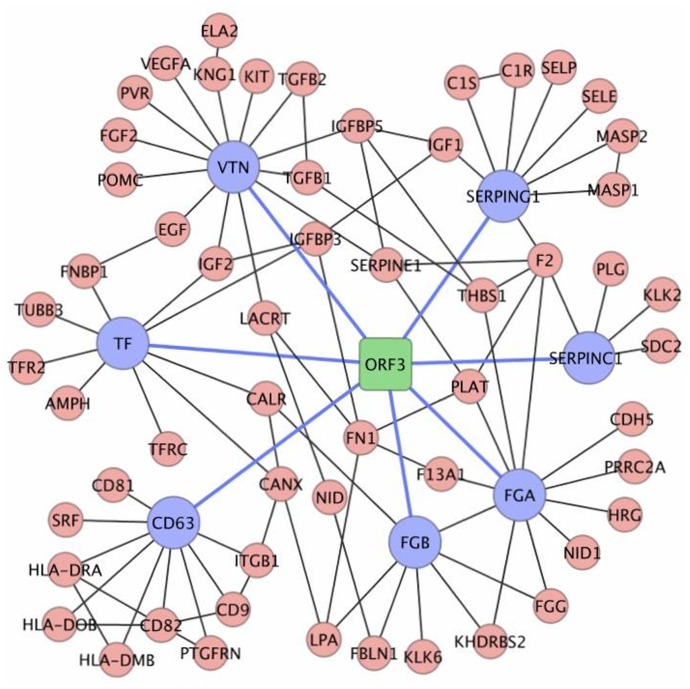
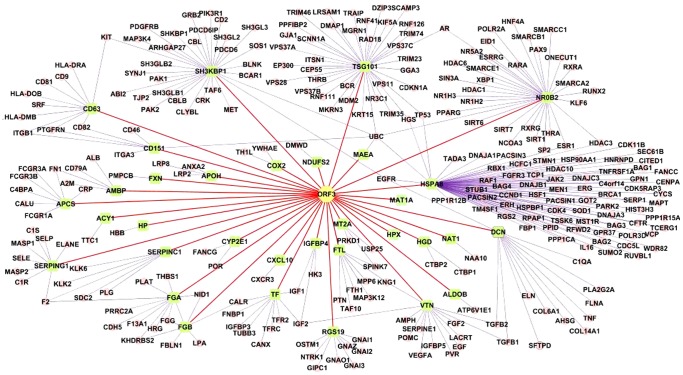
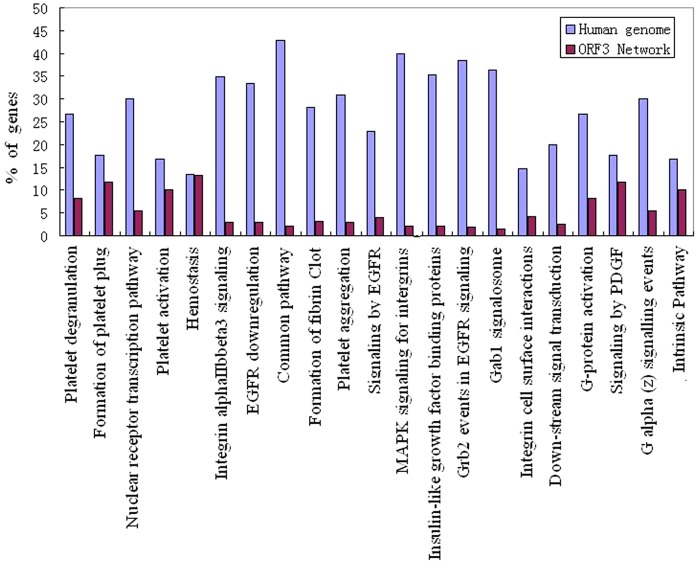
Hepatitis E virus (HEV) is endemic worldwide and a major cause of acute liver disease in developing countries. However, the molecular mechanisms of liver pathology and clinical disease are not well understood for HEV infection. Open reading frame 3 (ORF3) of HEV encodes a small phosphoprotein, which is assumed to be involved in liver pathology and clinical disease. In this study, the interactions between the HEV ORF3 protein and human proteins were investigated using a stringent, high-throughput yeast two-hybrid (Y2H) analysis. Thirty two proteins were shown to interact with genotype 1 ORF3, 28 of which have not been reported previously. These novel interactions were evaluated by coimmunoprecipitation of protein complexes from transfected cells. We found also that the ORF3 proteins of genotype 4 and rabbit HEV interacted with all of the human proteins identified by the genotype 1 ORF3 protein. However, the putative ORF3 protein derived from avian HEV did not interact with the majority of these human proteins. The identified proteins were used to infer an overall interaction map linking the ORF3 protein with components of the host cellular networks. Analysis of this interaction map, based on functional annotation with the Gene Ontology features and KEGG pathways, revealed an enrichment of host proteins involved in complement coagulation, cellular iron ion homeostasis and oxidative stress. Additional canonical pathway analysis highlighted the enriched biological pathways relevant to blood coagulation and hemostasis. Consideration of the clinical manifestations of hepatitis E reported previously and the results of biological analysis from this study suggests that the ORF3 protein is likely to lead to an imbalance of coagulation and fibrinolysis by interacting with host proteins and triggering the corresponding pathological processes. These results suggest critical approaches to further study of the pathogenesis of the HEV ORF3 protein.
戊型肝炎病毒(HEV)在全球范围内流行,是发展中国家急性肝疾病的主要病因。然而,HEV 感染导致肝病理和临床疾病的确切分子机制尚不清楚。HEV 的开放阅读框 3(ORF3)编码一个小的磷蛋白,假定该蛋白与肝病理和临床疾病有关。在这项研究中,我们使用严格的高通量酵母双杂交(Y2H)分析研究了 HEV ORF3 蛋白与人类蛋白之间的相互作用。结果显示,基因型 1 的 ORF3 与 32 种蛋白相互作用,其中 28 种以前没有报道过。通过转染细胞中蛋白复合物的共免疫沉淀来评估这些新的相互作用。我们还发现,基因型 4 和兔 HEV 的 ORF3 蛋白与基因型 1 ORF3 蛋白鉴定的所有人类蛋白相互作用。然而,来自禽 HEV 的推定 ORF3 蛋白与大多数这些人类蛋白不相互作用。所鉴定的蛋白用于推断一个整体的相互作用图谱,将 ORF3 蛋白与宿主细胞网络的成分连接起来。基于 Gene Ontology 特征和 KEGG 途径的功能注释对该相互作用图谱进行分析,发现宿主蛋白在补体凝血、细胞铁离子稳态和氧化应激中富集。额外的经典途径分析突出了与血液凝固和止血相关的丰富生物学途径。考虑到以前报道的戊型肝炎的临床表现和本研究的生物学分析结果,ORF3 蛋白可能通过与宿主蛋白相互作用并触发相应的病理过程,导致凝血和纤维蛋白溶解失衡。这些结果为进一步研究 HEV ORF3 蛋白的发病机制提供了关键方法。