Institute of Physiology, Siberian Branch of Russian Academy of Medical Sciences Novosibirsk, Russia.
Front Hum Neurosci. 2013 Jan 7;6:348. doi: 10.3389/fnhum.2012.00348. eCollection 2012.
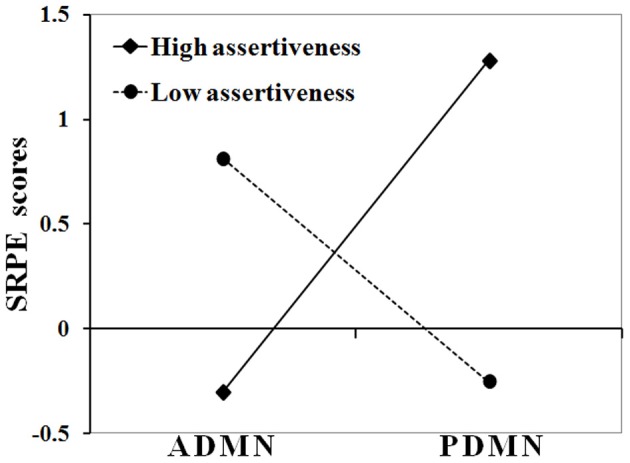
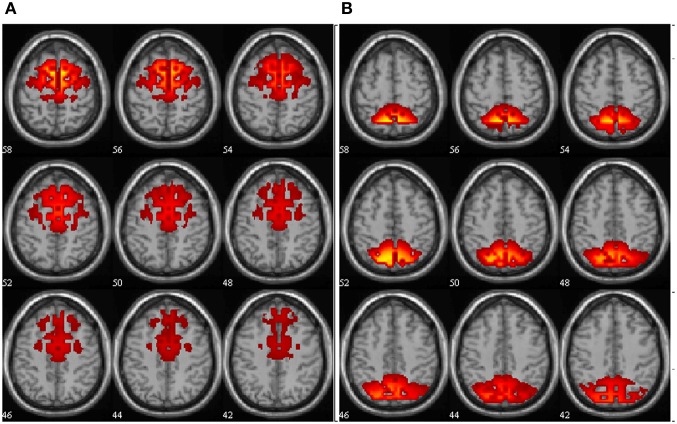
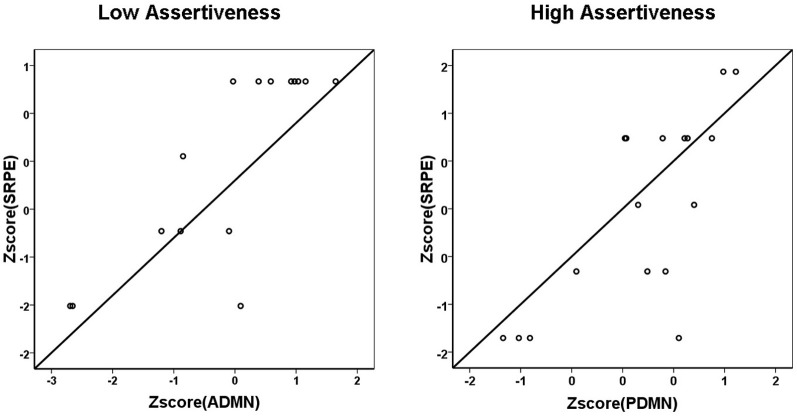
Recent studies show that fronto-posterior electroencephalogram (EEG) spectral power distribution is associated with personality. Specifically, extraversion is associated with an increase of spectral power in posterior cortical regions that overlap with the posterior default mode network (DMN) hub and a decrease of spectral power in anterior regions that overlap with the anterior DMN hub. Although there is evidence that dopaminergic neurotransmission may be involved, psychological processes that underlie these associations remain unclear. I hypothesize that these processes may have something to do with spontaneous self-referential thoughts. Specifically, I hypothesize that in extraverts self-referential thoughts may be associated with an increase of spectral power in the posterior DMN hub, whereas in introverts they may be associated with an increase of spectral power in the anterior DMN hub. After spontaneous EEG registration, participants were asked to fill in a questionnaire describing their thoughts during the registration. An item describing self-referential positive expectations (SRPE) was used to measure individual differences in the intensity of these processes. Source localization and independent component analyses were applied to EEG data to reveal oscillatory activity associated with the anterior and the posterior DMN hubs. Hierarchical regression analysis showed a significant interaction between extraversion scores and anterior vs. posterior DMN alpha activity in predicting individual differences in SRPE scores. In extraverts, high SRPE scores were associated with an increase of alpha power in the posterior DMN hub, whereas in introverts they were associated with an increase of alpha power in the anterior DMN hub. Results are discussed in terms of differential involvement of the two DMN hubs in self-related reward processes in extraverts and introverts.
最近的研究表明,额-顶脑电(EEG)频谱功率分布与个性有关。具体来说,外向型人格与后皮质区域的频谱功率增加有关,这些区域与后默认模式网络(DMN)枢纽重叠,与前皮质区域的频谱功率减少有关,这些区域与前 DMN 枢纽重叠。虽然有证据表明多巴胺能神经传递可能参与其中,但这些关联背后的心理过程尚不清楚。我假设这些过程可能与自发的自我参照思维有关。具体来说,我假设在外向者中,自我参照思维可能与后 DMN 枢纽的频谱功率增加有关,而在内向者中,自我参照思维可能与前 DMN 枢纽的频谱功率增加有关。在自发 EEG 记录后,参与者被要求填写一份描述他们在记录期间的想法的问卷。一个描述自我参照性积极预期(SRPE)的项目被用来衡量这些过程强度的个体差异。源定位和独立成分分析被应用于 EEG 数据,以揭示与前 DMN 枢纽和后 DMN 枢纽相关的振荡活动。分层回归分析显示,外向得分与前 DMN 枢纽和后 DMN 阿尔法活动之间的显著交互作用,预测了 SRPE 得分的个体差异。在外向者中,高 SRPE 得分与后 DMN 枢纽的阿尔法功率增加有关,而在内向者中,与前 DMN 枢纽的阿尔法功率增加有关。结果从外向者和内向者中两个 DMN 枢纽在自我相关奖励过程中的差异参与角度进行了讨论。