State Key Laboratory of ASIC and System, Department of Microelectronics, Fudan University, Shanghai 200433, China.
Nanoscale Res Lett. 2013 Feb 27;8(1):107. doi: 10.1186/1556-276X-8-107.
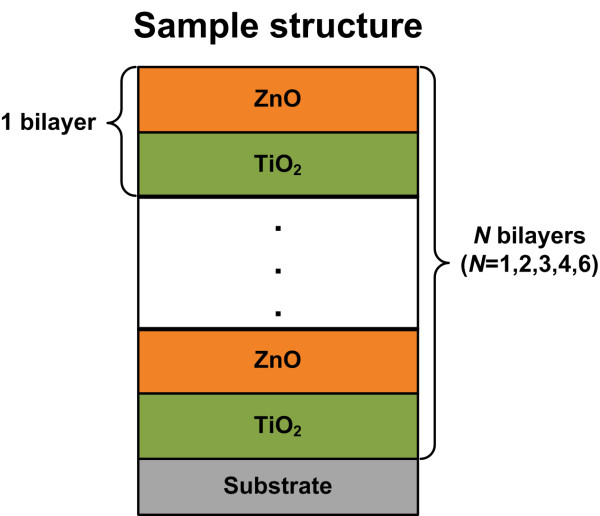
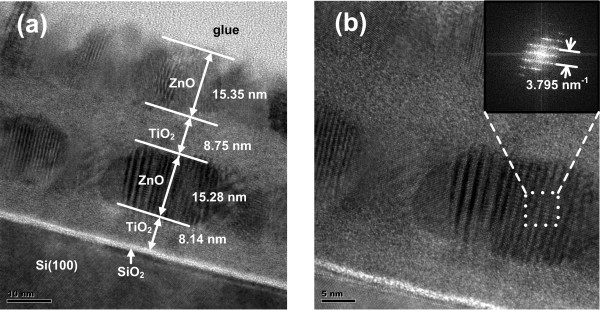
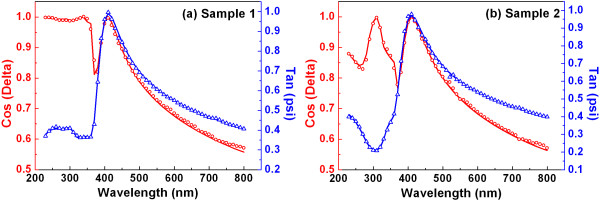
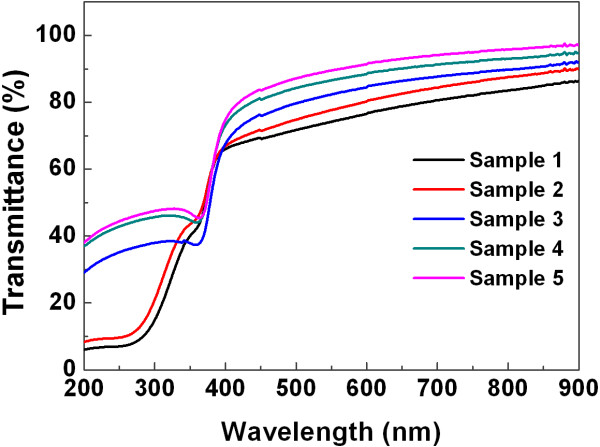
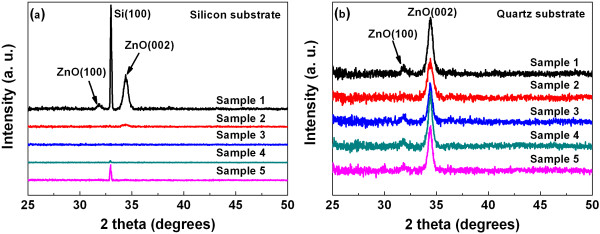
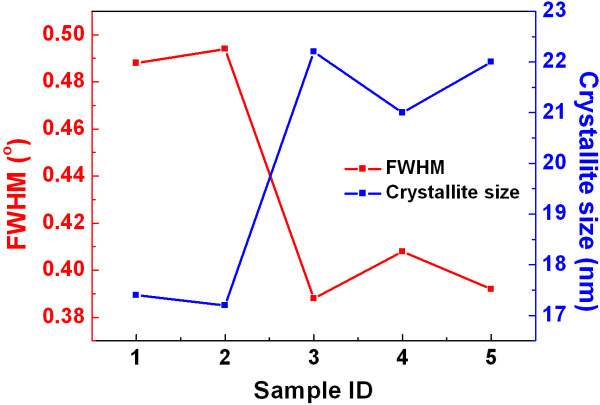
ZnO/TiO2 nanolaminates were grown on Si (100) and quartz substrates by atomic layer deposition at 200°C using diethylzinc, titanium isopropoxide, and deionized water as precursors. All prepared multilayers are nominally 50 nm thick with a varying number of alternating TiO2 and ZnO layers. Sample thickness and ellipsometric spectra were measured using a spectroscopic ellipsometer, and the parameters determined by computer simulation matched with the experimental results well. The effect of nanolaminate structure on the optical transmittance is investigated using an ultraviolet-visible-near-infrared spectrometer. The data from X-ray diffraction spectra suggest that layer growth appears to be substrate sensitive and film thickness also has an influence on the crystallization of films. High-resolution transmission electron microscopy images show clear lattice spacing of ZnO in nanolaminates, indicating that ZnO layers are polycrystalline with preferred (002) orientation while TiO2 layers are amorphous.
ZnO/TiO2 纳米叠层膜通过原子层沉积(ALD)在 200°C 下于 Si(100)和石英衬底上生长,使用二乙基锌、异丙醇钛和去离子水作为前驱体。所有制备的多层膜的名义厚度均为 50nm,具有不同数量的交替 TiO2 和 ZnO 层。使用光谱椭圆仪测量样品厚度和椭圆光谱,通过计算机模拟确定的参数与实验结果吻合良好。使用紫外-可见-近红外分光光度计研究了纳米叠层结构对光透射率的影响。X 射线衍射谱的数据表明,层生长似乎对衬底敏感,薄膜厚度也对薄膜的结晶有影响。高分辨率透射电子显微镜图像显示纳米叠层中 ZnO 的清晰晶格间距,表明 ZnO 层是多晶的,具有优先的(002)取向,而 TiO2 层是无定形的。