Neural Plasticity Lab, Institute for Neuroinformatics, Ruhr-University Bochum Bochum, Germany.
Front Aging Neurosci. 2013 Feb 26;5:5. doi: 10.3389/fnagi.2013.00005. eCollection 2013.
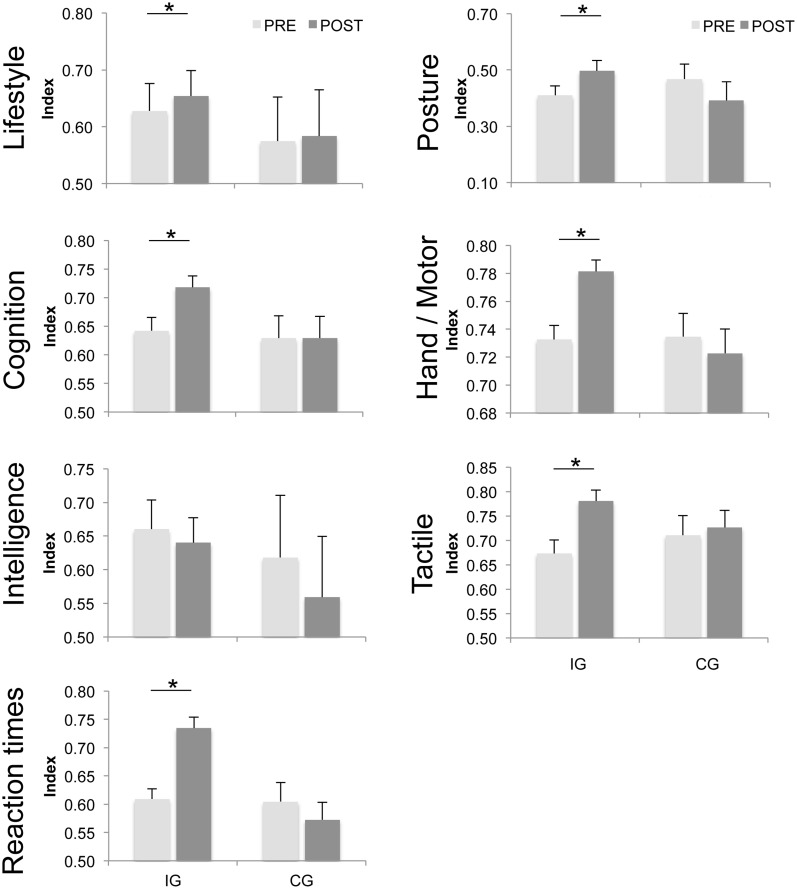
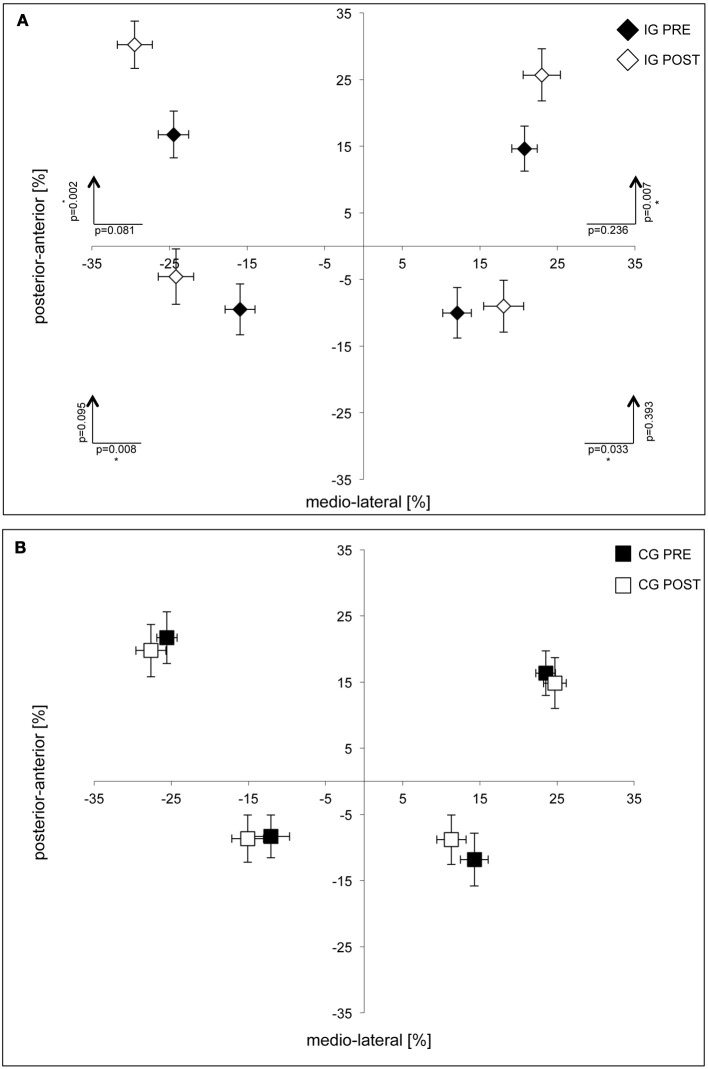
During aging, sensorimotor, cognitive and physical performance decline, but can improve by training and exercise indicating that age-related changes are treatable. Dancing is increasingly used as an intervention because it combines many diverse features making it a promising neuroplasticity-inducing tool. We here investigated the effects of a 6-month dance class (1 h/week) on a group of healthy elderly individuals compared to a matched control group (CG). We performed a broad assessment covering cognition, intelligence, attention, reaction time, motor, tactile, and postural performance, as well as subjective well-being and cardio-respiratory performance. After 6 months, in the CG no changes, or further degradation of performance was found. In the dance group, beneficial effects were found for dance-related parameters such as posture and reaction times, but also for cognitive, tactile, motor performance, and subjective well-being. These effects developed without alterations in the cardio-respiratory performance. Correlation of baseline performance with the improvement following intervention revealed that those individuals, who benefitted most from the intervention, were those who showed the lowest performance prior to the intervention. Our findings corroborate previous observations that dancing evokes widespread positive effects. The pre-post design used in the present study implies that the efficacy of dance is most likely not based on a selection bias of particularly gifted individuals. The lack of changes of cardio-respiratory fitness indicates that even moderate levels of physical activity can in combination with rich sensorimotor, cognitive, social, and emotional challenges act to ameliorate a wide spectrum of age-related decline.
随着年龄的增长,感觉运动、认知和身体表现会下降,但通过训练和锻炼可以得到改善,这表明与年龄相关的变化是可以治疗的。跳舞越来越多地被用作一种干预手段,因为它结合了许多不同的特征,使其成为一种有前途的神经可塑性诱导工具。我们在这里调查了 6 个月的舞蹈课程(每周 1 小时)对一组健康老年人的影响,与匹配的对照组(CG)进行了比较。我们进行了广泛的评估,涵盖了认知、智力、注意力、反应时间、运动、触觉和姿势表现,以及主观幸福感和心肺功能表现。6 个月后,在 CG 中没有发现变化,或者表现进一步恶化。在舞蹈组中,发现了与舞蹈相关的参数(如姿势和反应时间)的有益效果,但也发现了认知、触觉、运动表现和主观幸福感的有益效果。这些效果的发展并没有改变心肺功能表现。与干预后改善相关的基线表现的相关性表明,那些从干预中受益最大的人是那些在干预前表现最差的人。我们的发现证实了之前的观察结果,即跳舞会引起广泛的积极影响。本研究中使用的前后设计意味着舞蹈的疗效不太可能基于特别有天赋的个体的选择偏倚。心肺功能适应性的变化表明,即使是适度的身体活动水平,结合丰富的感觉运动、认知、社会和情感挑战,也可以改善与年龄相关的广泛下降。