Cancer Research UK Cancer Survival Group, London School of Hygiene and Tropical Medicine, London, UK.
Br J Cancer. 2013 Mar 19;108(5):1195-208. doi: 10.1038/bjc.2013.6. Epub 2013 Feb 28.
We investigate whether differences in breast cancer survival in six high-income countries can be explained by differences in stage at diagnosis using routine data from population-based cancer registries.
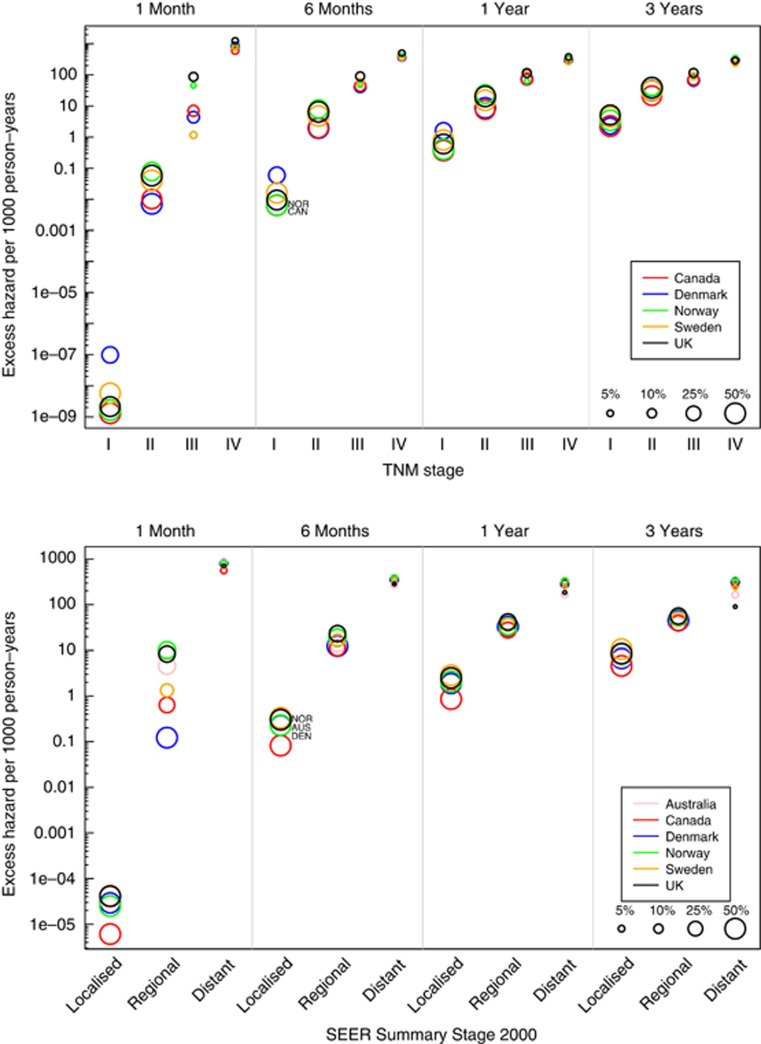
We analysed the data on 257,362 women diagnosed with breast cancer during 2000-7 and registered in 13 population-based cancer registries in Australia, Canada, Denmark, Norway, Sweden and the UK. Flexible parametric hazard models were used to estimate net survival and the excess hazard of dying from breast cancer up to 3 years after diagnosis.
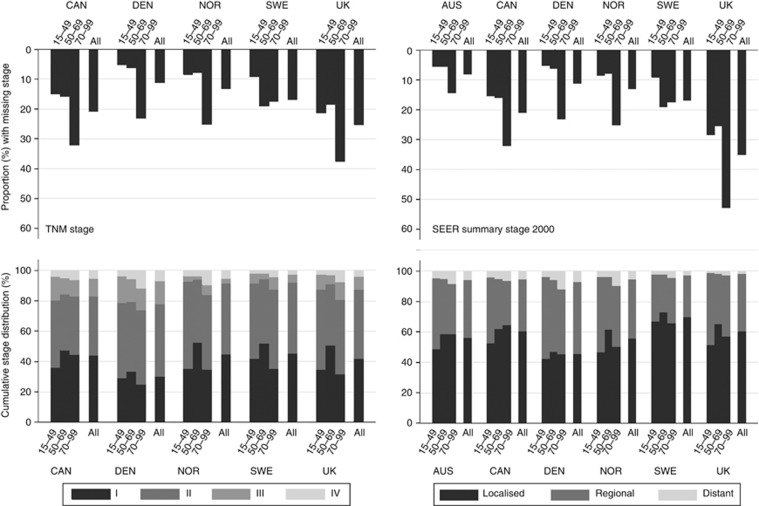
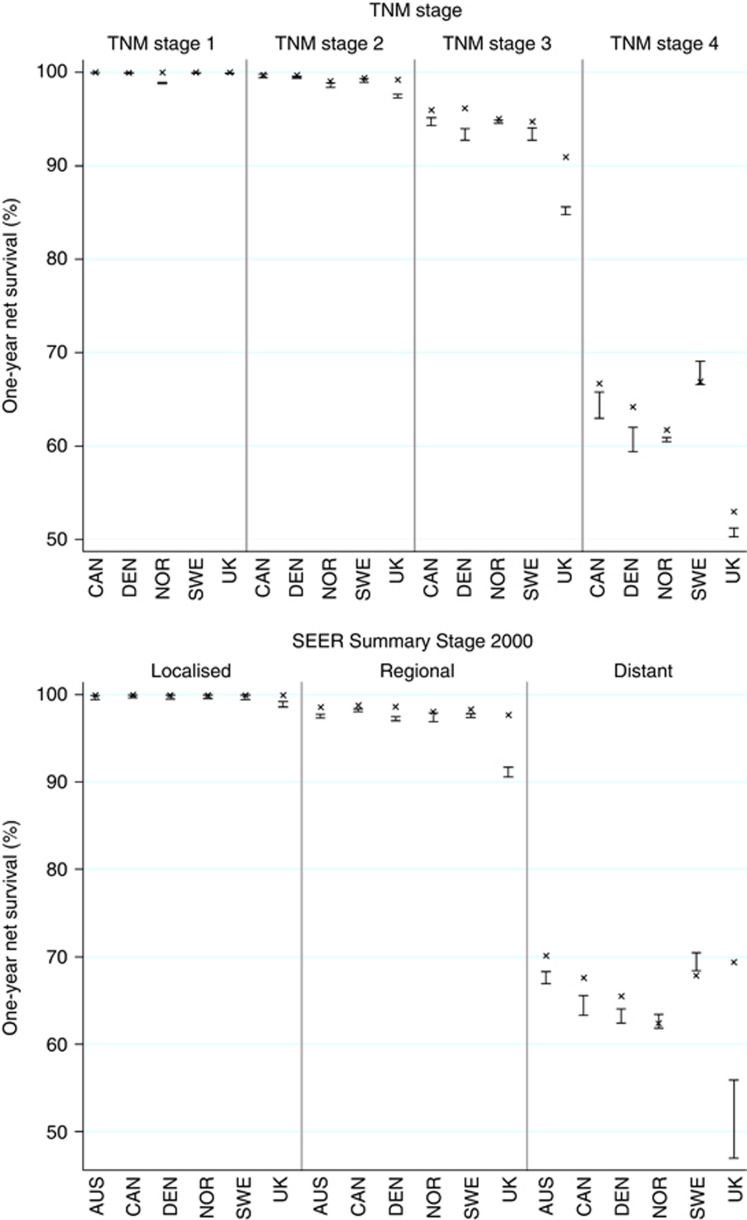
Age-standardised 3-year net survival was 87-89% in the UK and Denmark, and 91-94% in the other four countries. Stage at diagnosis was relatively advanced in Denmark: only 30% of women had Tumour, Nodes, Metastasis (TNM) stage I disease, compared with 42-45% elsewhere. Women in the UK had low survival for TNM stage III-IV disease compared with other countries.
International differences in breast cancer survival are partly explained by differences in stage at diagnosis, and partly by differences in stage-specific survival. Low overall survival arises if the stage distribution is adverse (e.g. Denmark) but stage-specific survival is normal; or if the stage distribution is typical but stage-specific survival is low (e.g. UK). International differences in staging diagnostics and stage-specific cancer therapies should be investigated.
我们通过使用来自澳大利亚、加拿大、丹麦、挪威、瑞典和英国的 13 个基于人群的癌症登记处的常规数据,调查了六个高收入国家之间乳腺癌生存率的差异是否可以用诊断时的分期差异来解释。
我们分析了 2000-2007 年间在澳大利亚、加拿大、丹麦、挪威、瑞典和英国的 13 个基于人群的癌症登记处登记的 257362 名乳腺癌确诊女性的数据。使用灵活的参数风险模型来估计诊断后 3 年内的净生存率和死于乳腺癌的超额风险。
英国和丹麦的 3 年标准化净生存率为 87-89%,其他四个国家为 91-94%。丹麦的诊断时分期相对较晚:仅有 30%的女性患有肿瘤、淋巴结、转移(TNM)I 期疾病,而其他地方的比例为 42-45%。与其他国家相比,英国的 TNM Ⅲ-Ⅳ期疾病的生存率较低。
乳腺癌生存率的国际差异部分是由诊断时的分期差异解释的,部分是由特定分期的生存率差异解释的。如果分期分布不利(如丹麦)但特定分期的生存率正常,则会出现总体生存率较低的情况;或者如果分期分布典型但特定分期的生存率较低(如英国),也会出现总体生存率较低的情况。应调查国际间在分期诊断和特定阶段癌症治疗方面的差异。