Department of Life Science, National Dong Hwa University, Hualien, 974, Taiwan.
Molecules. 2013 Mar 4;18(3):2924-33. doi: 10.3390/molecules18032924.
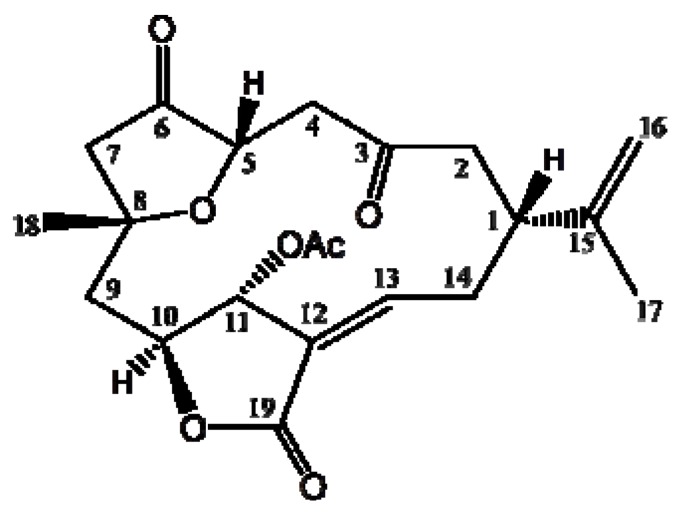
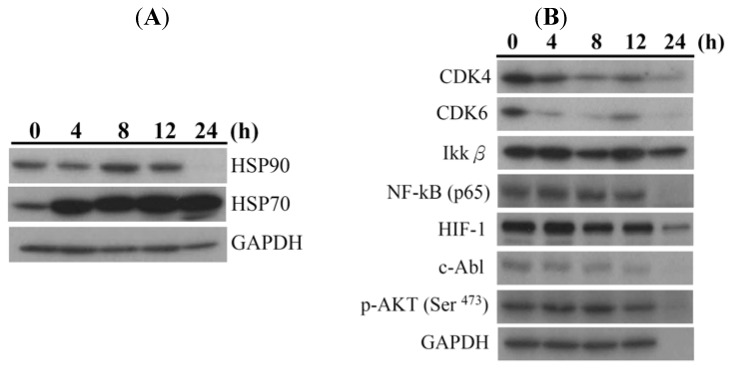
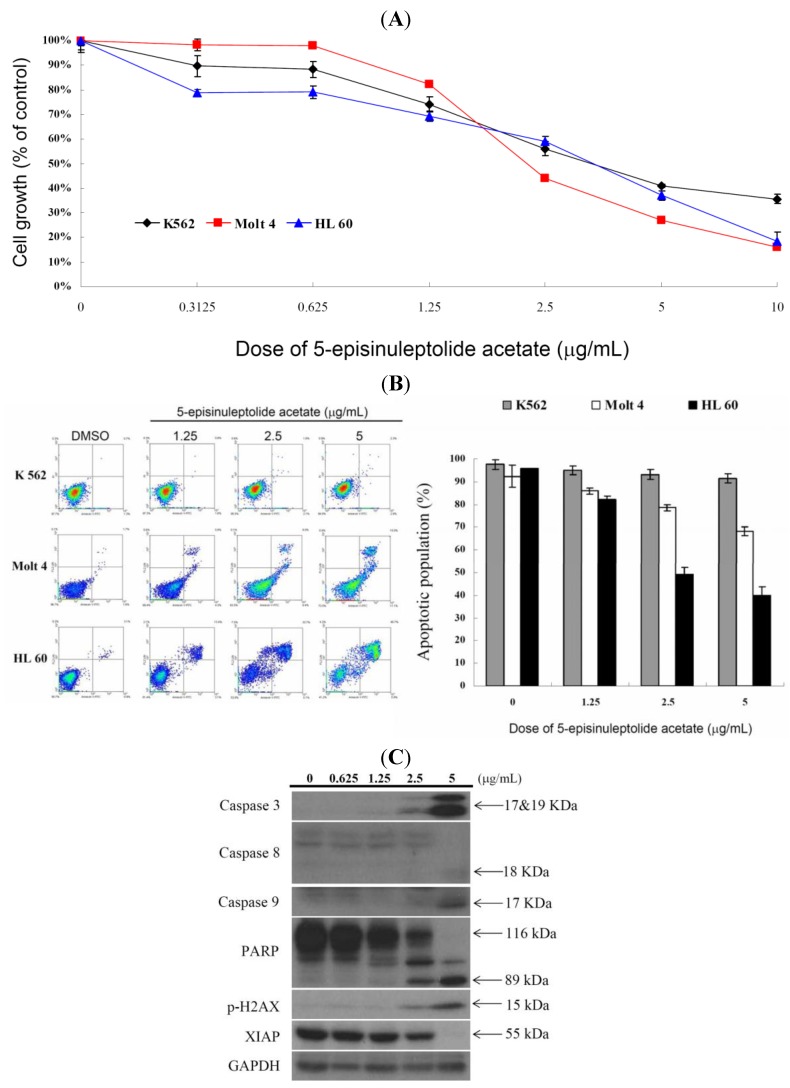
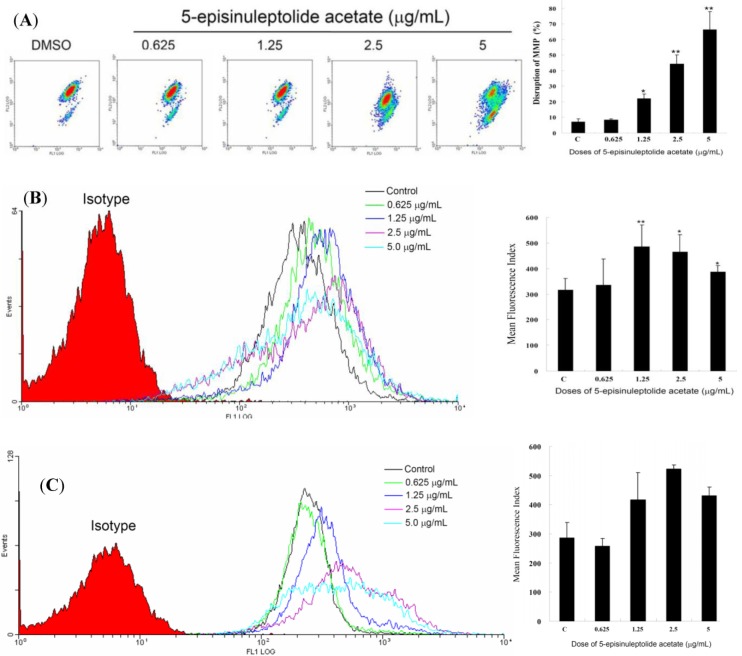
5-Episinuleptolide acetate (5EPA), a cytotoxic norcembranoidal diterpene recently identified from the Formosan soft coral Sinularia sp., exhibited potent activity against the K562, Molt 4 and HL 60 cancer cell lines. The antiproliferative assay, as well as the annexin V-FITC/propidium iodide (PI) apoptotic assay, indicated that the HL 60 cell line is the most sensitive one towards 5EPA. This diterpenoid led to caspases -3, -8, and -9 activation as well as PARP cleavage. It also induced ROS generation, calcium accumulation and disruption of mitochondrial membrane potential. Additionally, the expression levels of Hsp90 protein and several client proteins were downregulated in response to 5EPA treatment. These results suggest that 5EPA's cytotoxic effect on HL 60 cells may be attributed to the inhibition of Hsp90 as well as the induction of mitochondrial stress which finally results in apoptotic cell death.
5-表升麻环氧内酯醋酸酯(5EPA),一种从台湾软珊瑚 Sinularia sp. 中分离得到的具有细胞毒性的 norcembranoidal 二萜,对 K562、Molt 4 和 HL60 癌细胞系表现出很强的活性。增殖抑制试验以及 Annexin V-FITC/碘化丙啶(PI)凋亡试验表明,HL60 细胞系对 5EPA 最为敏感。这种二萜类化合物导致 caspase-3、-8 和 -9 的激活以及 PARP 的切割。它还诱导 ROS 的产生、钙的积累和线粒体膜电位的破坏。此外,Hsp90 蛋白和几种客户蛋白的表达水平在受到 5EPA 处理后下调。这些结果表明,5EPA 对 HL60 细胞的细胞毒性作用可能归因于 Hsp90 的抑制以及线粒体应激的诱导,最终导致细胞凋亡死亡。