Department of Animal Sciences, Washington State University, Pullman, WA 99164-6351, USA.
Int J Biol Sci. 2013;9(2):200-8. doi: 10.7150/ijbs.5613. Epub 2013 Feb 11.
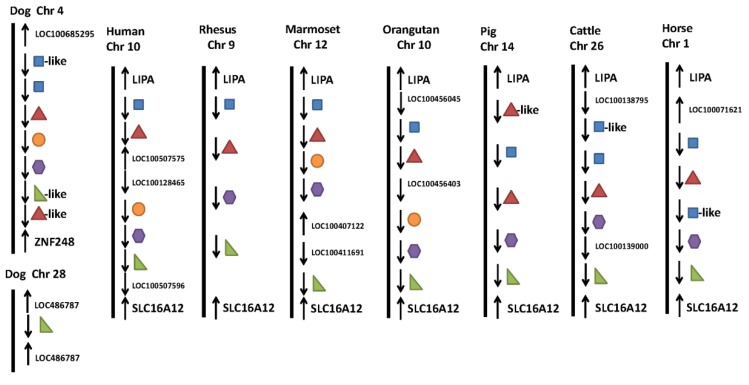
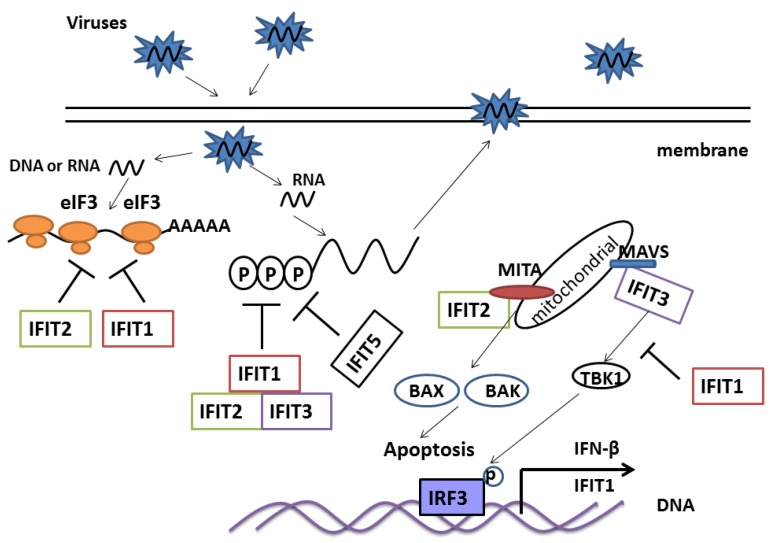
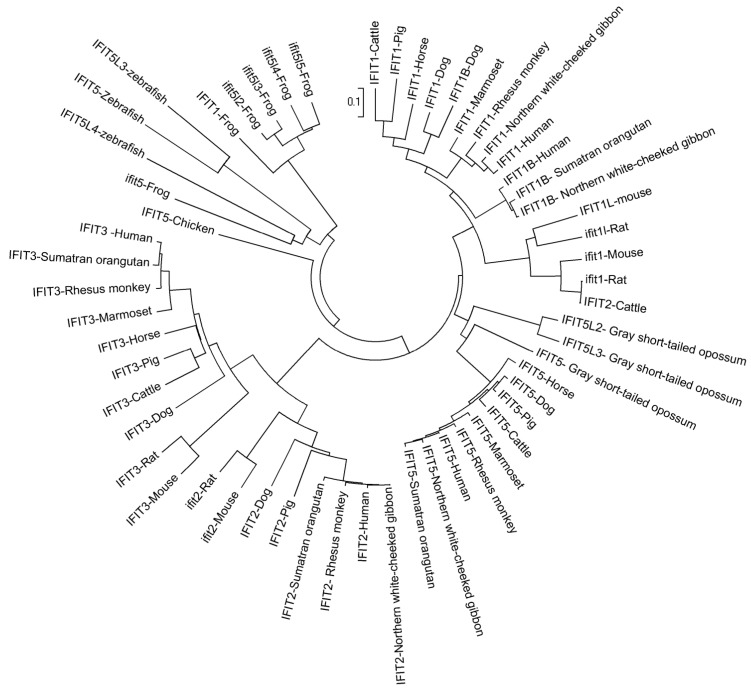
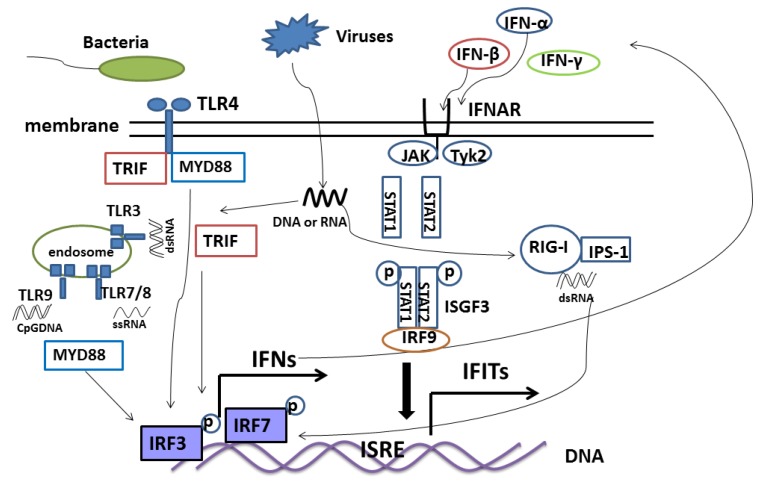
Secretion of interferons (IFNs) from virus-infected cells is a hallmark of host antiviral immunity and in fact, IFNs exert their antiviral activities through the induction of antiviral proteins. The IFN-induced protein with tetratricopeptide repeats (IFITs) family is among hundreds of IFN-stimulated genes. This family contains a cluster of duplicated loci. Most mammals have IFIT1, IFIT2, IFIT3 and IFIT5; however, bird, marsupial, frog and fish have only IFIT5. Regardless of species, IFIT5 is always adjacent to SLC16A12. IFIT family genes are predominantly induced by type I and type III interferons and are regulated by the pattern recognition and the JAK-STAT signaling pathway. IFIT family proteins are involved in many processes in response to viral infection. However, some viruses can escape the antiviral functions of the IFIT family by suppressing IFIT family genes expression or methylation of 5' cap of viral molecules. In addition, the variants of IFIT family genes could significantly influence the outcome of hepatitis C virus (HCV) therapy. We believe that our current review provides a comprehensive picture for the community to understand the structure and function of IFIT family genes in response to pathogens in human, as well as in animals.
病毒感染细胞分泌干扰素 (IFNs) 是宿主抗病毒免疫的标志,事实上,IFNs 通过诱导抗病毒蛋白发挥其抗病毒活性。干扰素诱导的具有四肽重复的蛋白 (IFITs) 家族是数百种 IFN 刺激基因之一。该家族包含一簇重复的基因座。大多数哺乳动物具有 IFIT1、IFIT2、IFIT3 和 IFIT5;然而,鸟类、有袋动物、青蛙和鱼类只有 IFIT5。无论物种如何,IFIT5 总是与 SLC16A12 相邻。IFIT 家族基因主要由 I 型和 III 型干扰素诱导,并受模式识别和 JAK-STAT 信号通路调节。IFIT 家族蛋白参与病毒感染后的许多过程。然而,一些病毒可以通过抑制 IFIT 家族基因的表达或病毒分子 5' 帽的甲基化来逃避 IFIT 家族的抗病毒功能。此外,IFIT 家族基因的变体可显著影响丙型肝炎病毒 (HCV) 治疗的结果。我们相信,我们目前的综述为科学界提供了一个全面的画面,以了解 IFIT 家族基因在人类和动物中对病原体的反应的结构和功能。