Chemical Biology Program, Broad Institute, 7 Cambridge Center, Cambridge, MA 02142, USA.
ACS Chem Biol. 2013 May 17;8(5):923-9. doi: 10.1021/cb300653v. Epub 2013 Mar 25.
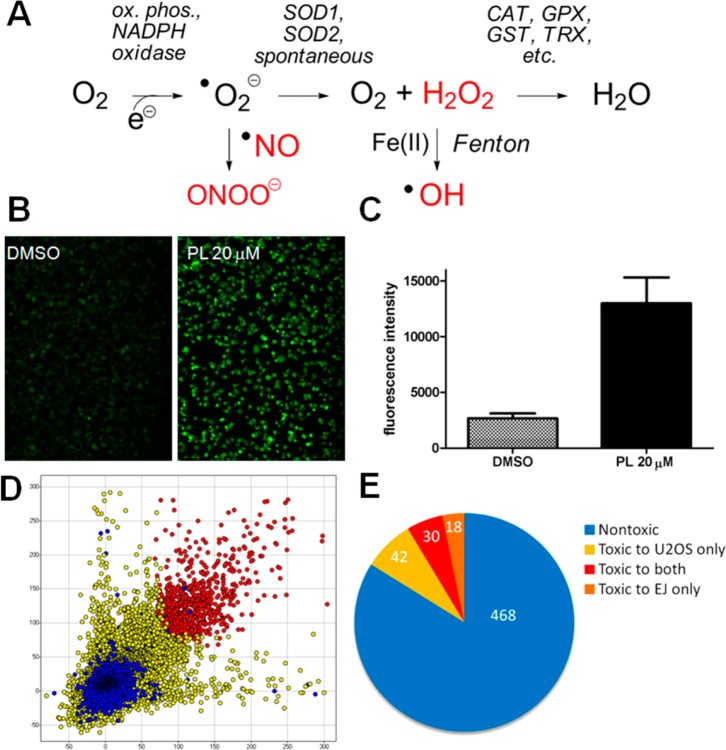
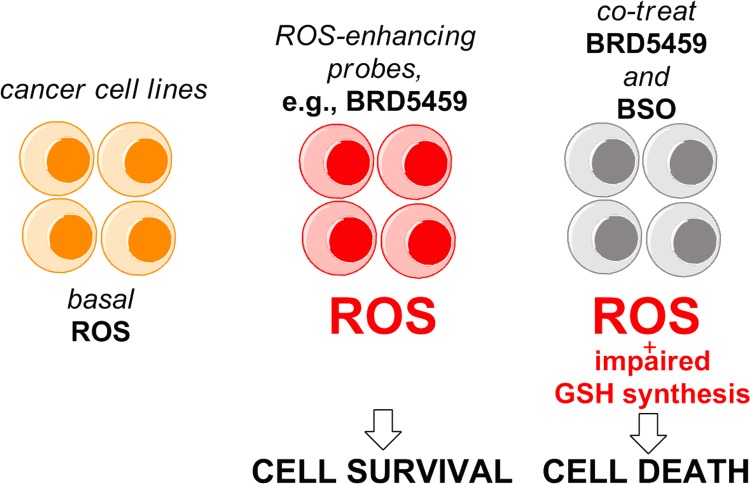
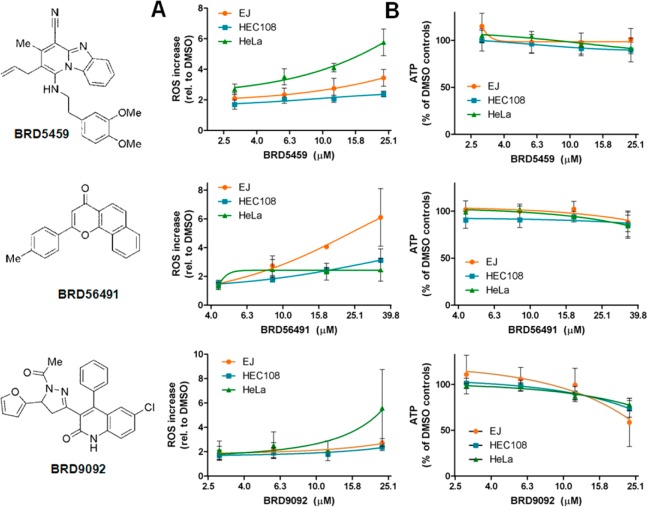
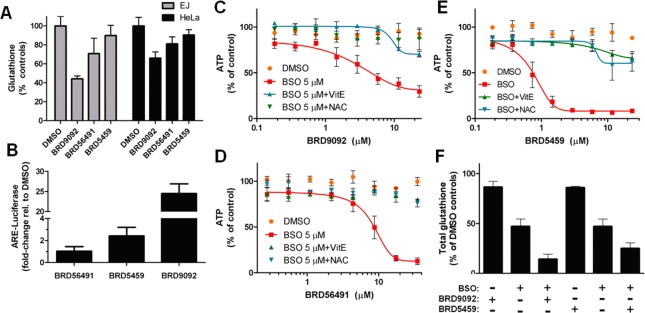
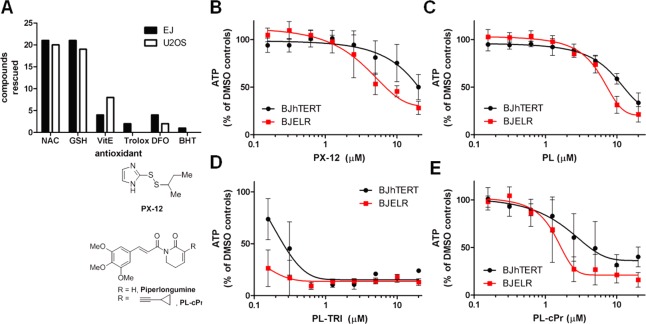
Elevation of reactive oxygen species (ROS) levels has been observed in many cancer cells relative to nontransformed cells, and recent reports have suggested that small-molecule enhancers of ROS may selectively kill cancer cells in various in vitro and in vivo models. We used a high-throughput screening approach to identify several hundred small-molecule enhancers of ROS in a human osteosarcoma cell line. A minority of these compounds diminished the viability of cancer cell lines, indicating that ROS elevation by small molecules is insufficient to induce death of cancer cell lines. Three chemical probes (BRD5459, BRD56491, BRD9092) are highlighted that most strongly elevate markers of oxidative stress without causing cell death and may be of use in a variety of cellular settings. For example, combining nontoxic ROS-enhancing probes with nontoxic doses of L-buthionine sulfoximine, an inhibitor of glutathione synthesis previously studied in cancer patients, led to potent cell death in more than 20 cases, suggesting that even nontoxic ROS-enhancing treatments may warrant exploration in combination strategies. Additionally, a few ROS-enhancing compounds that contain sites of electrophilicity, including piperlongumine, show selective toxicity for transformed cells over nontransformed cells in an engineered cell-line model of tumorigenesis. These studies suggest that cancer cell lines are more resilient to chemically induced increases in ROS levels than previously thought and highlight electrophilicity as a property that may be more closely associated with cancer-selective cell death than ROS elevation.
活性氧(ROS)水平的升高已在许多癌细胞中相对于非转化细胞观察到,最近的报告表明,ROS 的小分子增强剂可能在各种体外和体内模型中选择性地杀死癌细胞。我们使用高通量筛选方法在人骨肉瘤细胞系中鉴定了数百种 ROS 的小分子增强剂。这些化合物中的少数减少了癌细胞系的活力,表明小分子引起的 ROS 升高不足以诱导癌细胞系死亡。突出显示了三种化学探针(BRD5459、BRD56491、BRD9092),它们最强烈地增加氧化应激标志物而不会引起细胞死亡,并且可能在各种细胞环境中有用。例如,将无毒的 ROS 增强探针与无毒剂量的 L-丁硫氨酸亚砜亚胺(先前在癌症患者中研究过的谷胱甘肽合成抑制剂)结合使用,导致超过 20 例细胞死亡,表明即使是无毒的 ROS 增强治疗也可能需要在联合策略中进行探索。此外,一些包含亲电性部位的 ROS 增强化合物,包括胡椒碱,在肿瘤发生的工程细胞系模型中显示出对转化细胞的选择性毒性,而对非转化细胞的毒性较低。这些研究表明,癌细胞系对化学诱导的 ROS 水平升高的抵抗力比以前认为的要强,并且突出了亲电性作为与癌症选择性细胞死亡比 ROS 升高更密切相关的特性。