Department of Animal Science, University of Tennessee Knoxville, TN, USA ; Obesity Research Center, University of Tennessee Knoxville, TN, USA.
Front Endocrinol (Lausanne). 2013 Mar 11;4:10. doi: 10.3389/fendo.2013.00010. eCollection 2013.
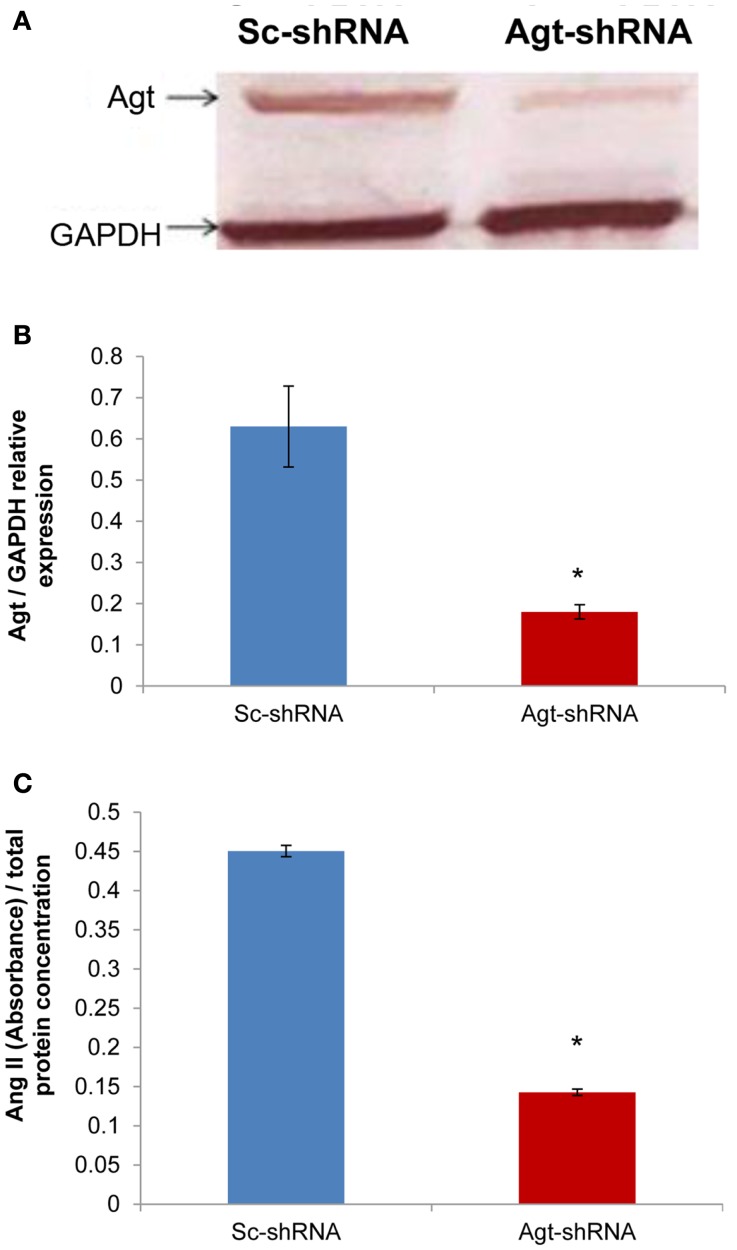
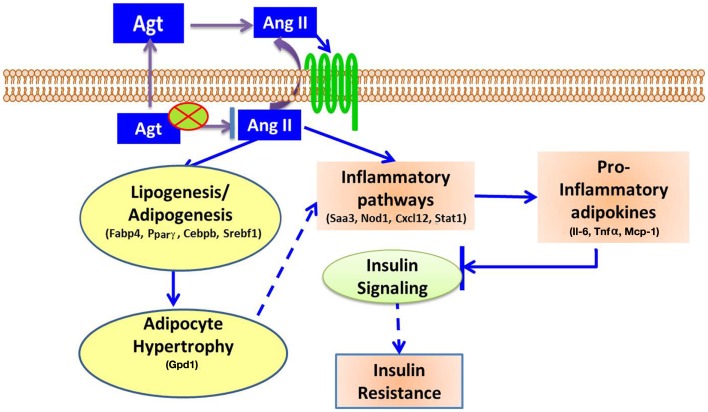
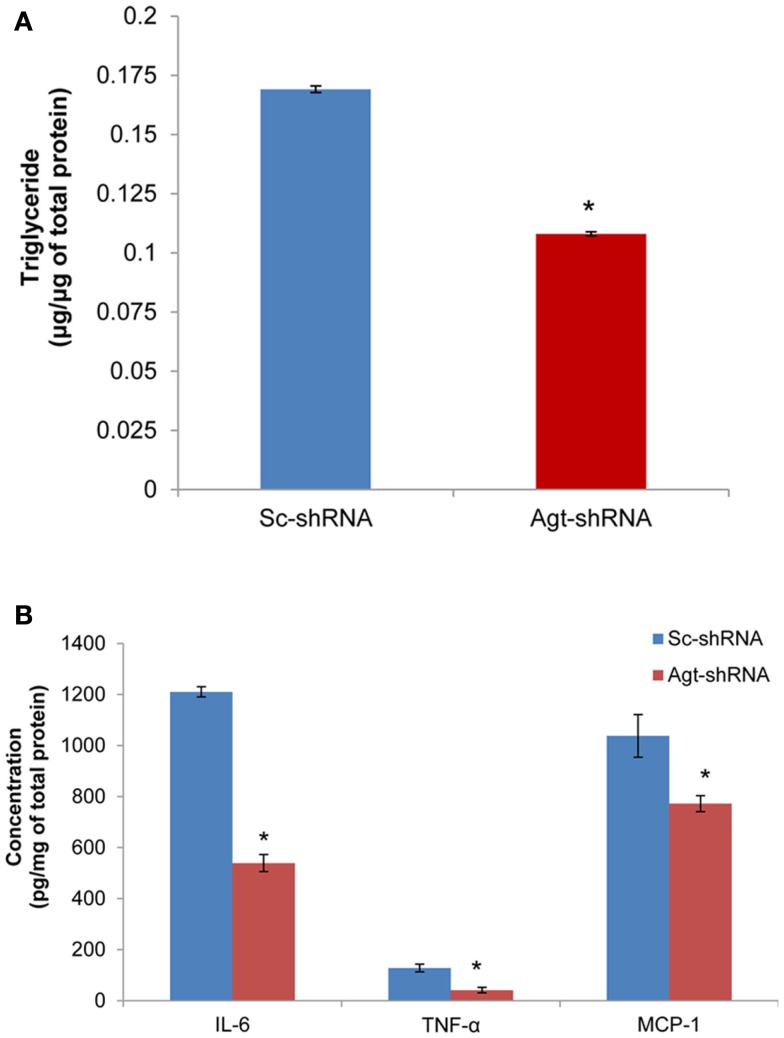
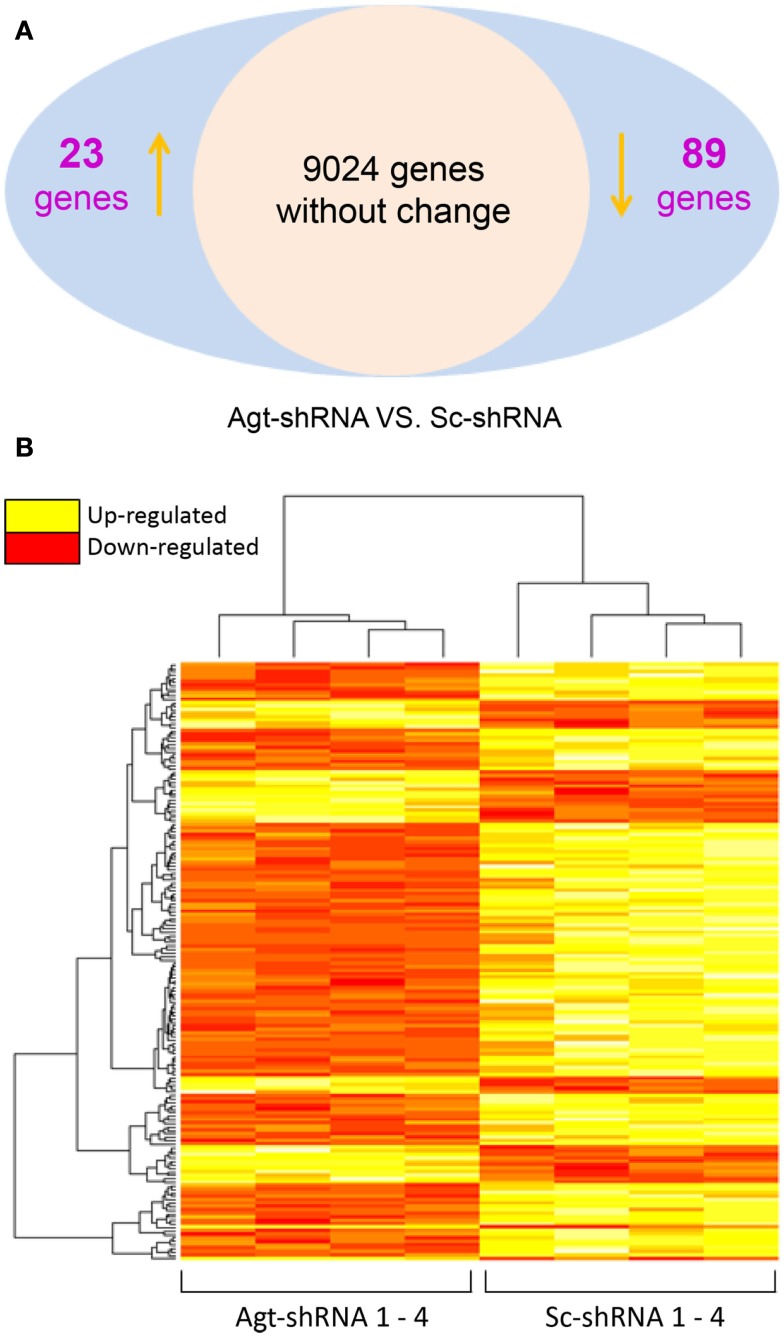
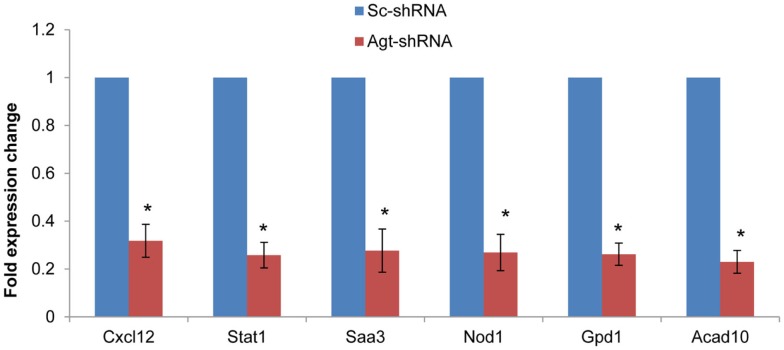
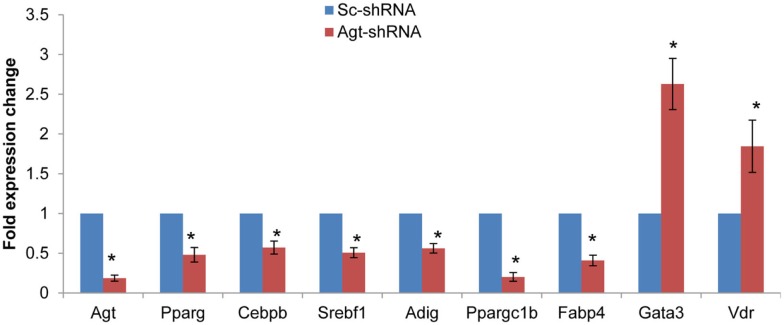
Inflammatory adipokines secreted from adipose tissue are major contributors to obesity-associated inflammation and other metabolic dysfunctions. We and others have recently documented the contribution of adipose tissue renin-angiotensin system to the pathogenesis of obesity, inflammation, and insulin resistance. We hypothesized that adipocyte-derived angiotensinogen (Agt) plays a critical role in adipogenesis and/or lipogenesis as well as inflammation. This was tested using 3T3-L1 adipocytes, stably transfected with Agt-shRNA or scrambled Sc-shRNA as a control. Transfected preadipocytes were differentiated and used to investigate the role of adipose Agt through microarray and PCR analyses and adipokine profiling. As expected, Agt gene silencing significantly reduced the expression of Agt and its hormone product angiotensin II (Ang II), as well as lipid accumulation in 3T3-L1 adipocytes. Microarray studies identified several genes involved in lipid metabolism and inflammatory pathways which were down-regulated by Agt gene inactivation, such as glycerol-3-phosphate dehydrogenase 1 (Gpd1), serum amyloid A 3 (Saa3), nucleotide-binding oligomerization domain containing 1 (Nod1), and signal transducer and activator of transcription 1 (Stat1). Mouse adipogenesis PCR arrays revealed lower expression levels of adipogenic/lipogenic genes such as peroxisome proliferator activated receptor gamma (PPARγ), sterol regulatory element binding transcription factor 1 (Srebf1), adipogenin (Adig), and fatty acid binding protein 4 (Fabp4). Further, silencing of Agt gene significantly lowered expression of pro-inflammatory adipokines including interleukin-6 (IL-6), tumor necrosis factor-alpha (TNF-α), and monocyte chemotactic protein-1 (MCP-1). In conclusion, this study directly demonstrates critical effects of Agt in adipocyte metabolism and inflammation and further support a potential role for adipose Agt in the pathogenesis of obesity-associated metabolic alterations.
脂肪组织分泌的炎性脂肪因子是肥胖相关炎症和其他代谢功能障碍的主要原因。我们和其他人最近已经证明了脂肪组织肾素-血管紧张素系统对肥胖、炎症和胰岛素抵抗的发病机制的贡献。我们假设脂肪细胞衍生的血管紧张素原 (Agt) 在脂肪生成和/或脂肪生成以及炎症中发挥关键作用。这是通过使用稳定转染 Agt-shRNA 或作为对照的 scrambled Sc-shRNA 的 3T3-L1 脂肪细胞来测试的。转染的前脂肪细胞分化,并用于通过微阵列和 PCR 分析以及脂肪因子谱分析来研究脂肪 Agt 的作用。正如预期的那样,Agt 基因沉默显著降低了 3T3-L1 脂肪细胞中 Agt 及其激素产物血管紧张素 II (Ang II) 的表达以及脂质积累。微阵列研究确定了几个参与脂质代谢和炎症途径的基因,这些基因被 Agt 基因失活下调,例如甘油-3-磷酸脱氢酶 1 (Gpd1)、血清淀粉样蛋白 A3 (Saa3)、核苷酸结合寡聚化结构域包含 1 (Nod1) 和信号转导和转录激活因子 1 (Stat1)。小鼠脂肪生成 PCR 阵列显示出更高的脂肪生成/脂肪生成基因的表达水平,如过氧化物酶体增殖物激活受体γ (PPARγ)、固醇调节元件结合转录因子 1 (Srebf1)、脂肪生成素 (Adig) 和脂肪酸结合蛋白 4 (Fabp4)。此外,Agt 基因的沉默显著降低了促炎脂肪因子的表达,包括白细胞介素 6 (IL-6)、肿瘤坏死因子-α (TNF-α) 和单核细胞趋化蛋白 1 (MCP-1)。总之,这项研究直接证明了 Agt 在脂肪细胞代谢和炎症中的关键作用,并进一步支持脂肪 Agt 在肥胖相关代谢改变发病机制中的潜在作用。