Department of Chemistry and Biochemistry, Montana State University, Bozeman, MT 59717, USA.
ISME J. 2013 Jul;7(7):1402-12. doi: 10.1038/ismej.2013.31. Epub 2013 Mar 14.
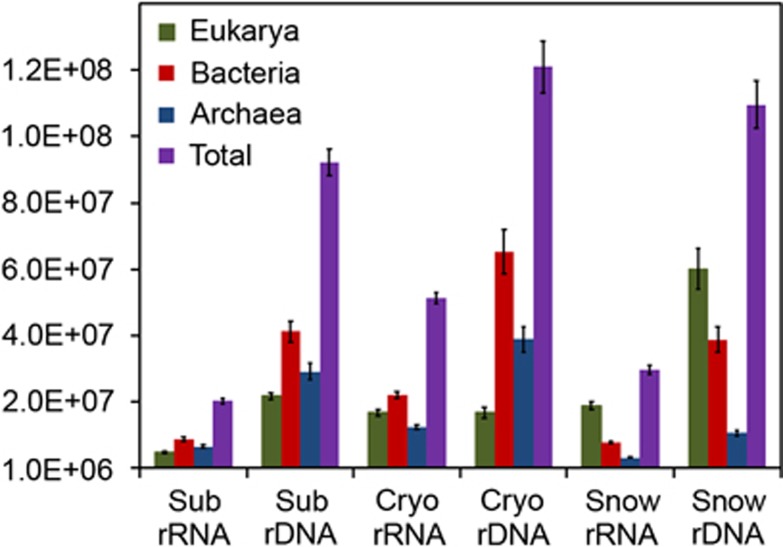
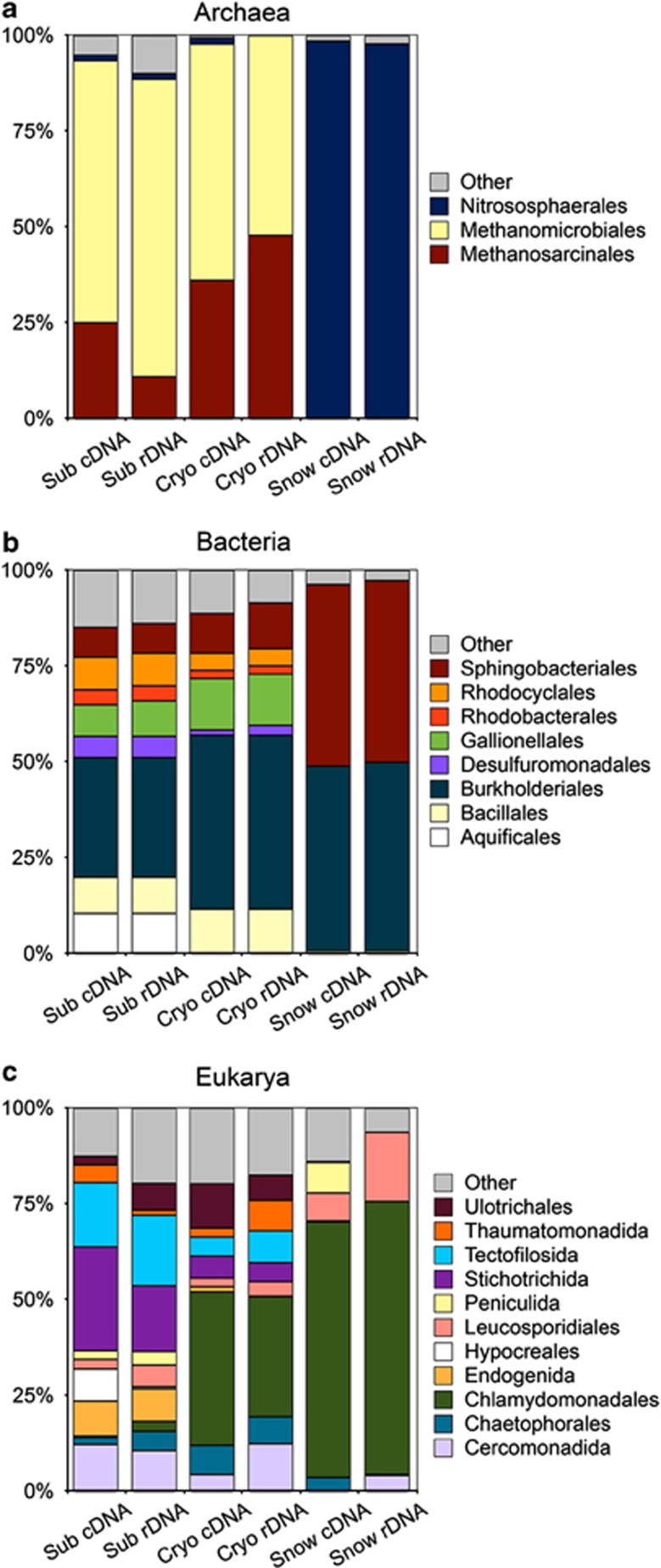
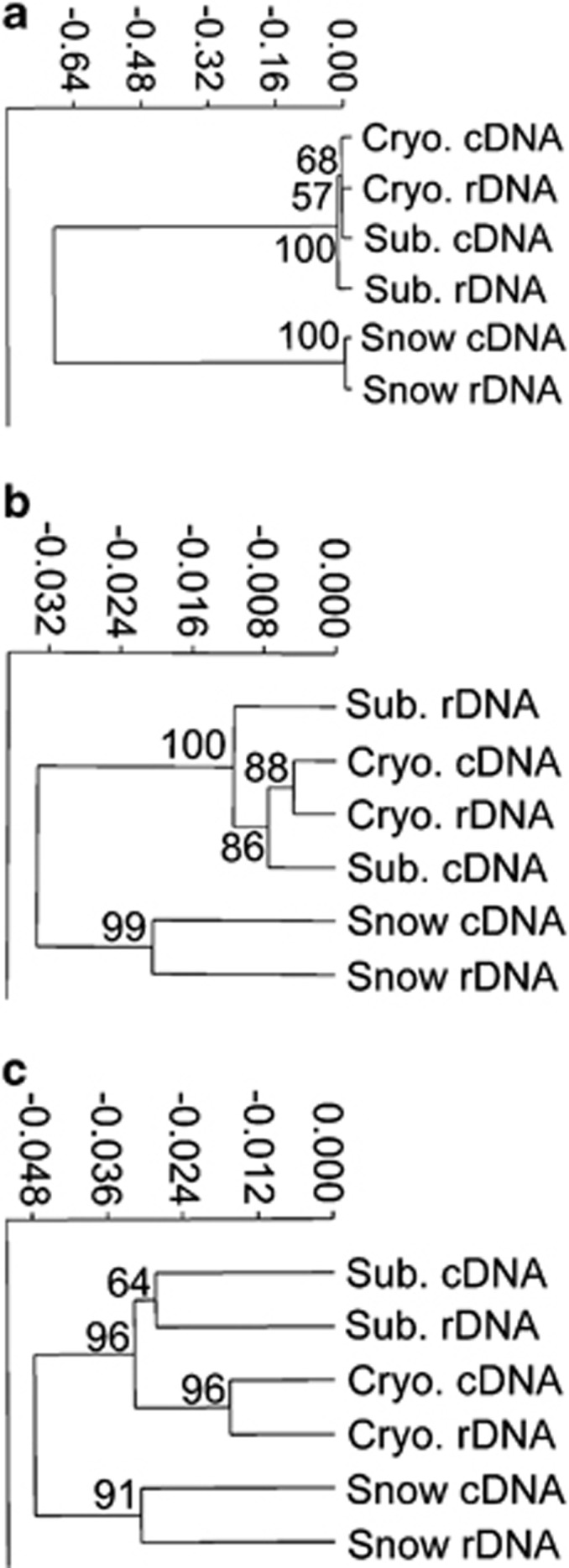
Geologic, chemical and isotopic evidence indicate that Earth has experienced numerous intervals of widespread glaciation throughout its history, with roughly 11% of present day Earth's land surface covered in ice. Despite the pervasive nature of glacial ice both today and in Earth's past and the potential contribution of these systems to global biogeochemical cycles, the composition and phylogenetic structure of an active microbial community in subglacial systems has yet to be described. Here, using RNA-based approaches, we demonstrate the presence of active and endogenous archaeal, bacterial and eukaryal assemblages in cold (0-1 °C) subglacial sediments sampled from Robertson Glacier, Alberta, Canada. Patterns in the phylogenetic structure and composition of subglacial sediment small subunit (SSU) ribosomal RNA (rRNA) assemblages indicate greater diversity and evenness than in glacial surface environments, possibly due to facilitative or competitive interactions among populations in the subglacial environment. The combination of phylogenetically more even and more diverse assemblages in the subglacial environment suggests minimal niche overlap and optimization to capture a wider spectrum of the limited nutrients and chemical energy made available from weathering of bedrock minerals. The prevalence of SSU rRNA affiliated with lithoautotrophic bacteria, autotrophic methane producing archaea and heterotrophic eukarya in the subglacial environment is consistent with this hypothesis and suggests an active contribution to the global carbon cycle. Collectively, our findings demonstrate that subglacial environments harbor endogenous active ecosystems that have the potential to impact global biogeochemical cycles over extended periods of time.
地质、化学和同位素证据表明,地球在其历史上经历了多次广泛的冰川作用,目前大约有 11%的地球陆地表面被冰雪覆盖。尽管冰川冰在今天和地球的过去都广泛存在,并且这些系统有可能对全球生物地球化学循环做出贡献,但在亚冰区系统中,活跃微生物群落的组成和系统发育结构尚未被描述。在这里,我们使用基于 RNA 的方法,证明了在加拿大阿尔伯塔省罗伯逊冰川的冷(0-1°C)亚冰区沉积物中存在活跃的内源性古菌、细菌和真核生物组合。亚冰区沉积物小亚基(SSU)核糖体 RNA(rRNA)组合的系统发育结构和组成模式表明,多样性和均匀度大于冰川表面环境,这可能是由于亚冰区环境中的种群之间存在促进或竞争相互作用。亚冰区环境中具有更加均匀和多样化的组合的组合表明,生态位重叠最小,并且可以优化以捕获来自基岩矿物风化的有限营养物质和化学能量的更广泛的光谱。亚冰区环境中与自养产甲烷古菌和异养真核生物相关的 SSU rRNA 的流行,与这一假说一致,表明它们对全球碳循环的积极贡献。总的来说,我们的发现表明,亚冰区环境中存在内源性的活跃生态系统,这些系统有可能在较长时间内影响全球生物地球化学循环。