Department of Pediatrics, Division of Pediatric Hematology/Oncology, Aflac Cancer Center and Blood Disorders Service of Children's Healthcare of Atlanta, Emory University School of Medicine, Atlanta, Georgia 30322, USA.
J Cell Mol Med. 2013 May;17(5):579-96. doi: 10.1111/jcmm.12041. Epub 2013 Mar 14.
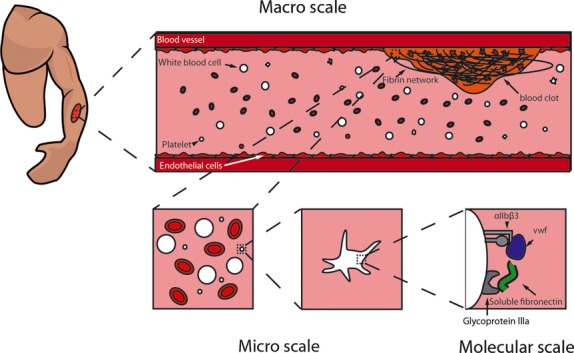
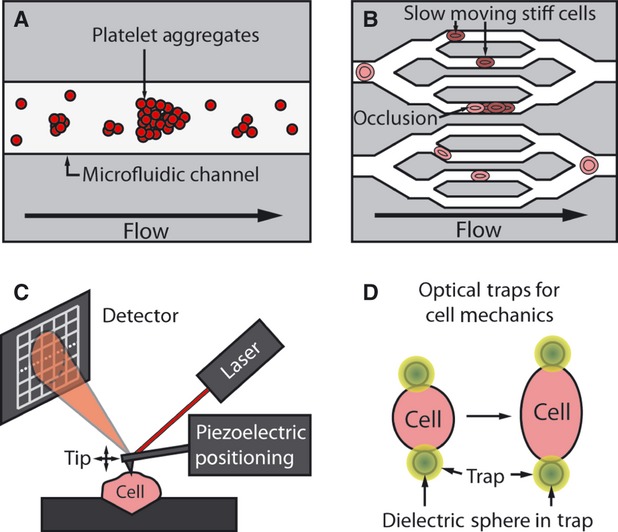
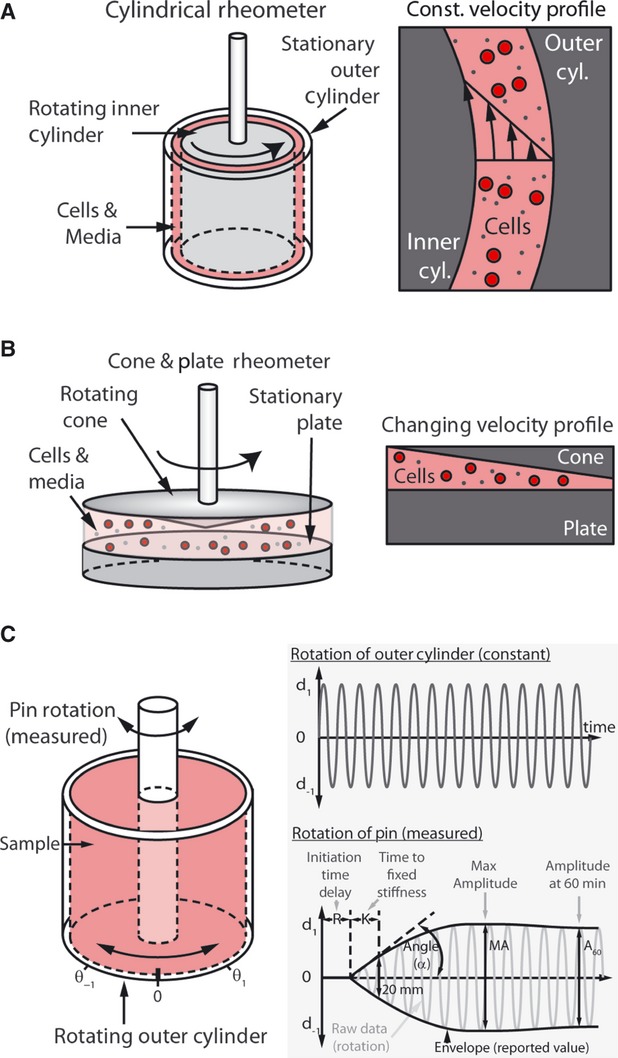
Although the processes of haemostasis and thrombosis have been studied extensively in the past several decades, much of the effort has been spent characterizing the biological and biochemical aspects of clotting. More recently, researchers have discovered that the function and physiology of blood cells and plasma proteins relevant in haematologic processes are mechanically, as well as biologically, regulated. This is not entirely surprising considering the extremely dynamic fluidic environment that these blood components exist in. Other cells in the body such as fibroblasts and endothelial cells have been found to biologically respond to their physical and mechanical environments, affecting aspects of cellular physiology as diverse as cytoskeletal architecture to gene expression to alterations of vital signalling pathways. In the circulation, blood cells and plasma proteins are constantly exposed to forces while they, in turn, also exert forces to regulate clot formation. These mechanical factors lead to biochemical and biomechanical changes on the macro- to molecular scale. Likewise, biochemical and biomechanical alterations in the microenvironment can ultimately impact the mechanical regulation of clot formation. The ways in which these factors all balance each other can be the difference between haemostasis and thrombosis. Here, we review how the biomechanics of blood cells intimately interact with the cellular and molecular biology to regulate haemostasis and thrombosis in the context of health and disease from the macro- to molecular scale. We will also show how these biomechanical forces in the context of haemostasis and thrombosis have been replicated or measured in vitro.
尽管过去几十年中已经广泛研究了止血和血栓形成的过程,但大部分工作都集中在描述凝血的生物学和生物化学方面。最近,研究人员发现,与血液学过程相关的血细胞和血浆蛋白的功能和生理学不仅受生物学调控,还受机械调控。考虑到这些血液成分所处的极其动态的流体环境,这并不完全令人惊讶。体内的其他细胞,如成纤维细胞和内皮细胞,已被发现会对其物理和机械环境产生生物学反应,从而影响细胞生理学的各个方面,从细胞骨架结构到基因表达,再到重要信号通路的改变。在循环中,血细胞和血浆蛋白在不断地受到力的作用,同时它们也通过力的作用来调节血栓的形成。这些机械因素导致宏观到分子尺度上的生化和生物力学变化。同样,微环境中的生化和生物力学改变最终可能会影响血栓形成的机械调节。这些因素相互平衡的方式可能是止血和血栓形成的区别。在这里,我们回顾了血细胞的生物力学如何在宏观到分子尺度上与细胞和分子生物学相互作用,以调节健康和疾病状态下的止血和血栓形成。我们还将展示这些在止血和血栓形成背景下的生物力学力如何在体外得到复制或测量。