1. Research Institute for Islamic and Complementary Medicine (RICM), Tehran University of Medical Sciences, Tehran, Iran ; 2. Department of Anatomy, Faculty of Medicine, Tehran University of Medical Sciences, Tehran, Iran.
Cell J. 2012 Fall;14(3):177-84. Epub 2012 Dec 12.
The spice Zingiber officinale or ginger possesses antioxidant activity and neuroprotective effects. The effects of this traditional herbal medicine on 3,4-methylenedioxymethamphetamine (MDMA) induced neurotoxicity have not yet been studied. The present study considers the effects of Zingiber officinale on MDMA-induced spatial memory impairment and apoptosis in the hippocampus of male rats.
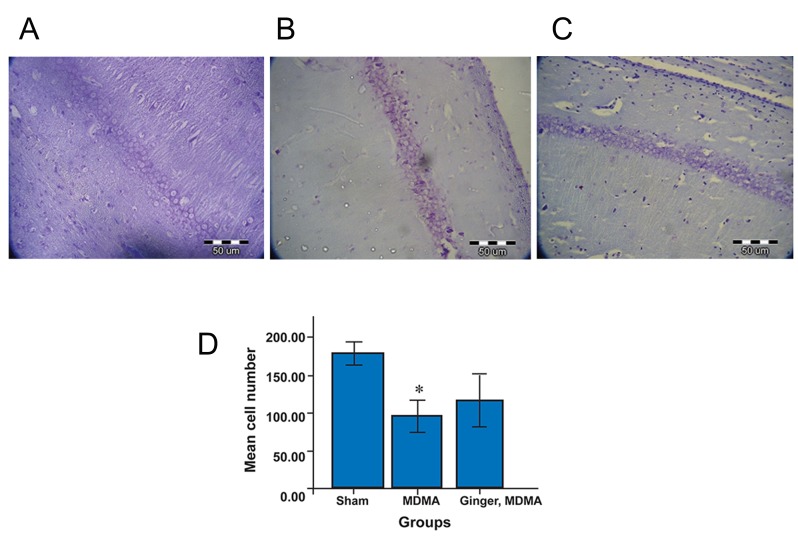
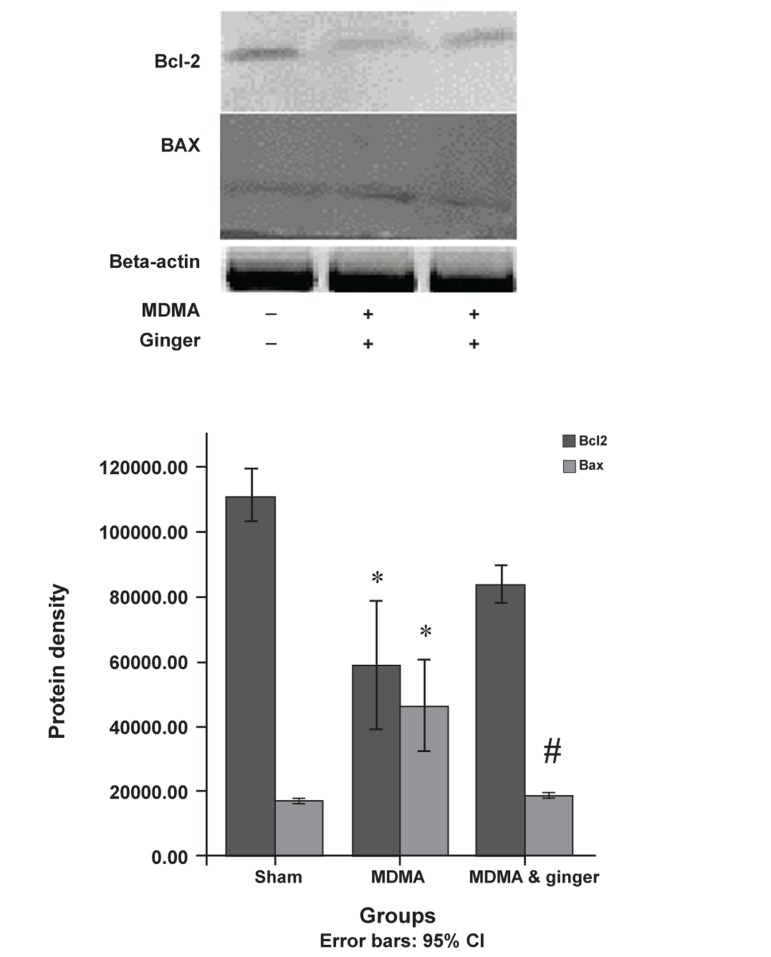
In this experimental study, 21 adult male Sprague Dawley rats (200-250 g) were classified into three groups (control, MDMA, and MDMA plus ginger). The groups were intraperitoneally administered 10 mg/kg MDMA, 10 mg/kg MDMA plus 100 mg/kg ginger extract, or 1 cc/kg normal saline as the control solution for one week (n=7 per group). Learning memory was assessed by Morris water maze (MWM) after the last administration. Finally, the brains were removed to study the cell number in the cornu ammonis (CA1) hippocampus by light microscope, Bcl-2 by immunoblotting, and Bax expression by reverse transcription polymerase chain reaction (RT-PCR). Data was analyzed using SPSS 16 software and a one-way ANOVA test.
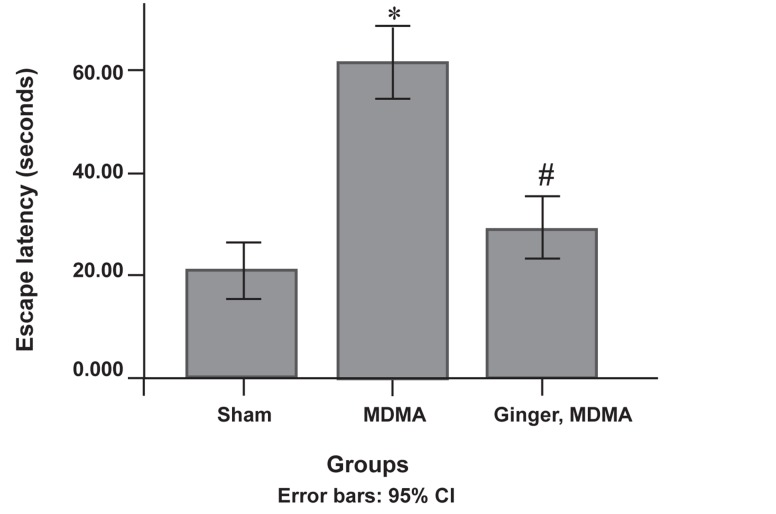
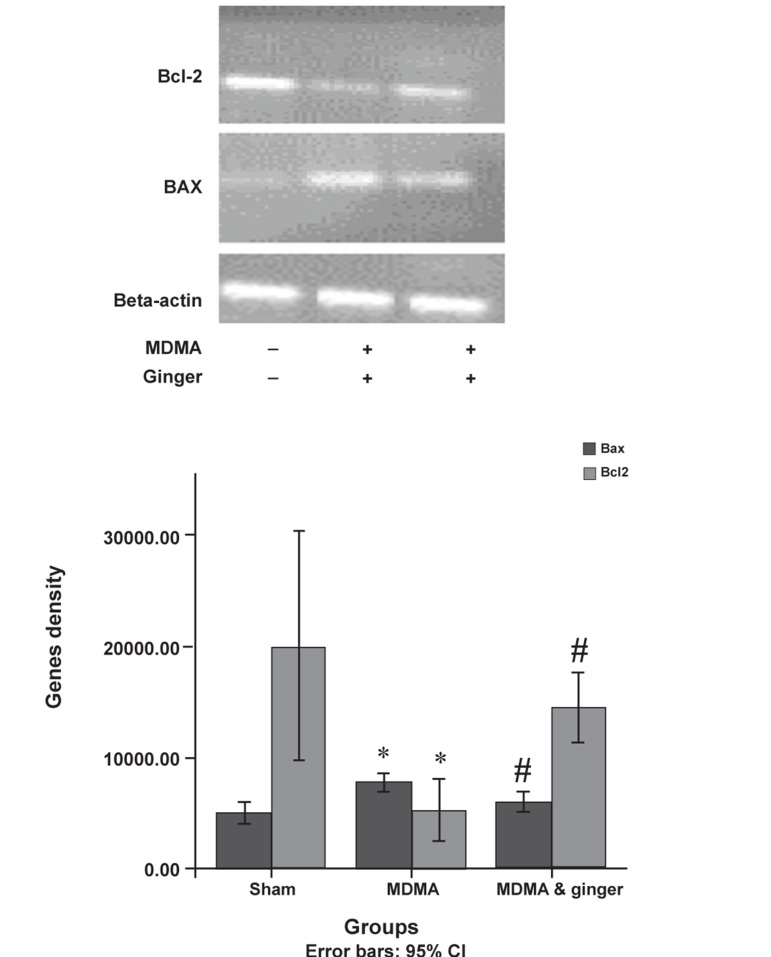
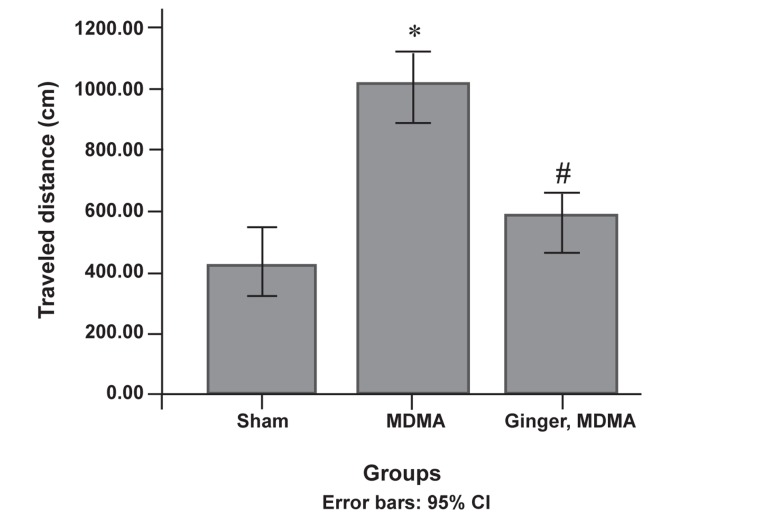
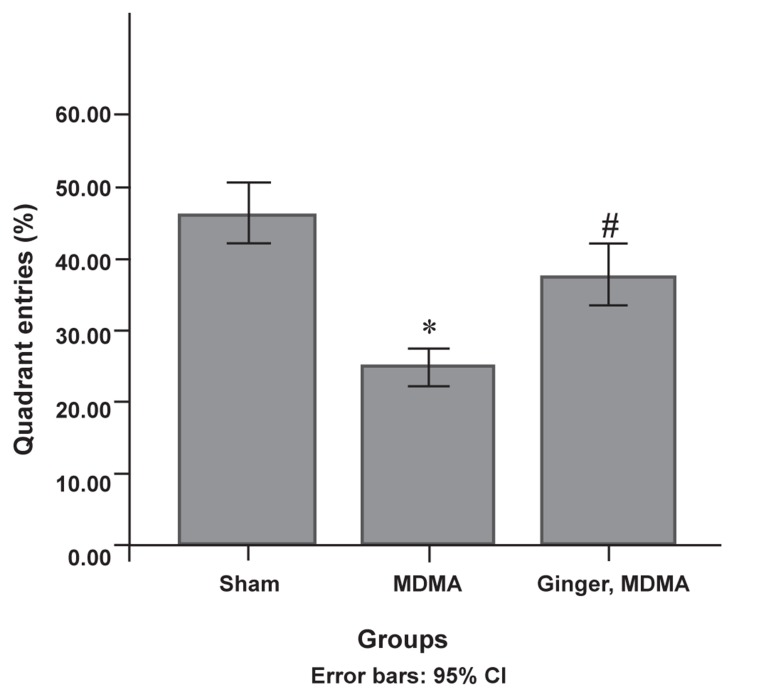
Escape latency and traveled distances decreased significantly in the MDMA plus ginger group relative to the MDMA group (p<0.001). Cell number increased in the MDMA plus ginger group in comparison to the MDMA group. Down-regulation of Bcl-2 and up-regulation of Bax were observed in the MDMA plus ginger group in comparison to the MDMA group (p<0.05).
Our findings suggest that ginger consumption may lead to an improvement of MDMA-induced neurotoxicity.
香料姜黄或生姜具有抗氧化活性和神经保护作用。这种传统草药对 3,4-亚甲基二氧甲基苯丙胺(MDMA)诱导的神经毒性的影响尚未得到研究。本研究考虑了姜黄对 MDMA 诱导的雄性大鼠海马空间记忆损伤和细胞凋亡的影响。
在这项实验研究中,将 21 只成年雄性 Sprague Dawley 大鼠(200-250g)分为三组(对照组、MDMA 组和 MDMA 加姜黄组)。各组腹腔注射 10mg/kg MDMA、10mg/kg MDMA 加 100mg/kg 姜黄提取物或 1cc/kg 生理盐水作为对照溶液,每周一次(每组 7 只)。末次给药后,通过 Morris 水迷宫(MWM)评估学习记忆。最后,通过光镜研究海马角回(CA1)的细胞数,通过免疫印迹法研究 Bcl-2,通过逆转录聚合酶链反应(RT-PCR)研究 Bax 表达。使用 SPSS 16 软件和单向方差分析进行数据分析。
与 MDMA 组相比,MDMA 加姜黄组的逃避潜伏期和行驶距离显著降低(p<0.001)。与 MDMA 组相比,MDMA 加姜黄组的细胞数增加。与 MDMA 组相比,MDMA 加姜黄组观察到 Bcl-2 下调和 Bax 上调(p<0.05)。
我们的研究结果表明,姜黄的摄入可能会导致 MDMA 诱导的神经毒性的改善。