Betiol J, Villa L L, Sichero L
Laboratório de Biologia Molecular, Centro de Investigação Translacional em Oncologia, Instituto do Câncer do Estado de São Paulo,São Paulo, SP, Brasil.
Braz J Med Biol Res. 2013 Mar;46(3):217-26. doi: 10.1590/1414-431x20132703. Epub 2013 Mar 15.
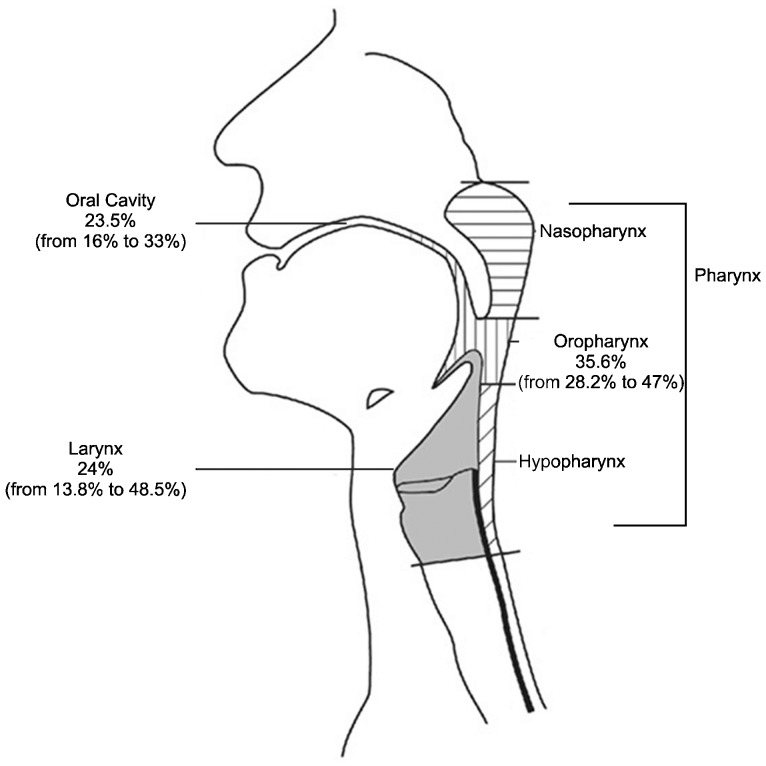
Human papillomavirus (HPV)-related head and neck squamous cell carcinoma (HNSCC) is considered to be a distinct clinical entity with better prognosis than the classical tobacco- and alcohol-associated tumors. The increasing incidence of this neoplasia during the last decades highlights the need to better understand the role of HPV in the development of these cancers. Although the proportion of HNSCC attributed to HPV varies considerably according to anatomical site, overall approximately 25% of all HNSCC are HPV-DNA positive, and HPV-16 is by far the most prevalent type. In this review we discuss the existing evidence for a causal association between HPV infection and HNSCC at diverse anatomical head and neck subsites.
人乳头瘤病毒(HPV)相关的头颈部鳞状细胞癌(HNSCC)被认为是一种独特的临床实体,其预后比典型的烟草和酒精相关肿瘤更好。在过去几十年中,这种肿瘤的发病率不断上升,凸显了更好地了解HPV在这些癌症发生发展中作用的必要性。尽管归因于HPV的HNSCC比例根据解剖部位有很大差异,但总体而言,所有HNSCC中约25%为HPV-DNA阳性,而HPV-16是迄今为止最常见的类型。在本综述中,我们讨论了HPV感染与不同解剖部位的头颈部亚部位HNSCC之间因果关联的现有证据。