Hefei National Laboratory for Physical Sciences at Microscale, Department of Materials Science & Engineering, and Department of Chemistry, University of Science and Technology of China, Hefei 230026, P. R. China.
Sci Rep. 2013;3:1568. doi: 10.1038/srep01568.
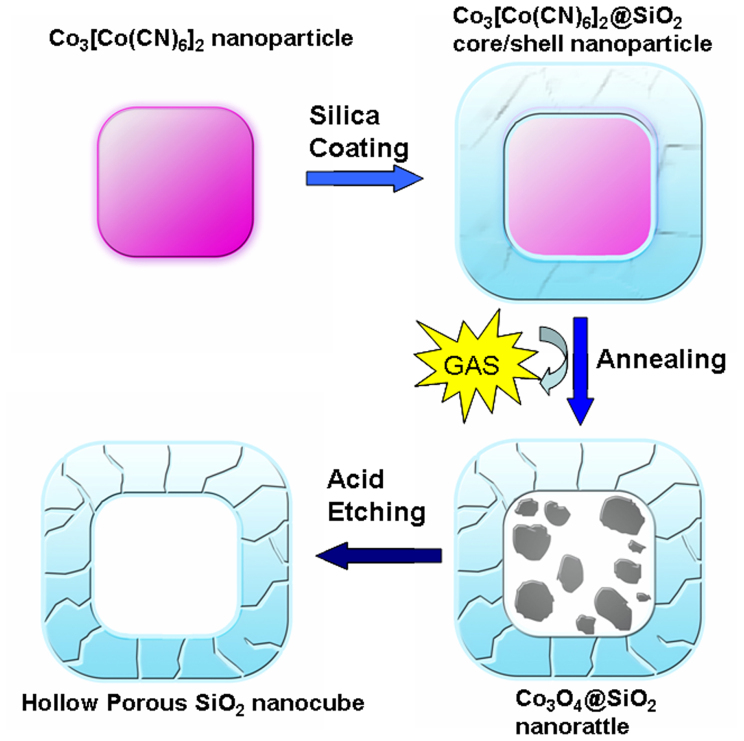
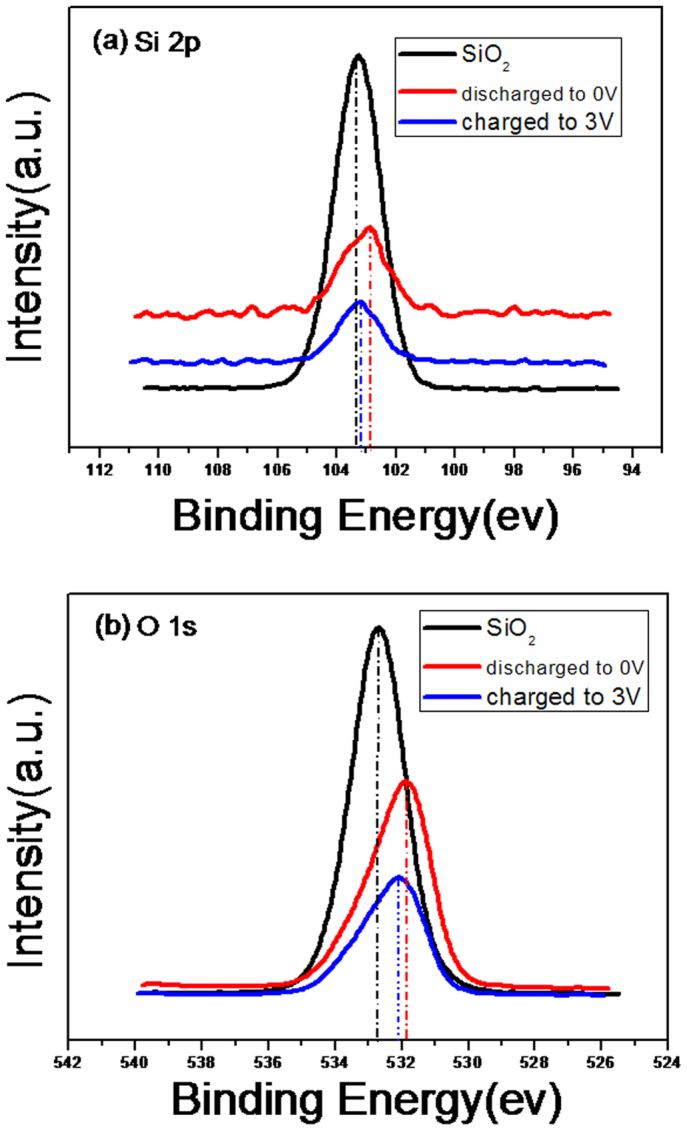
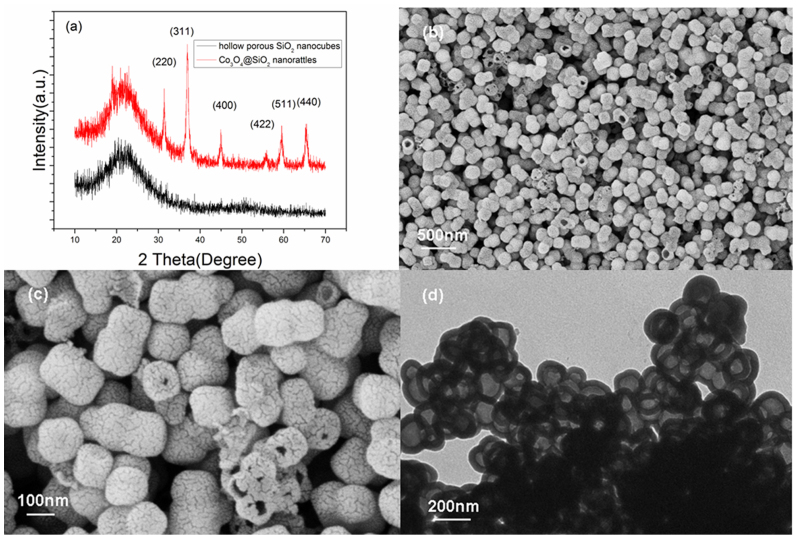
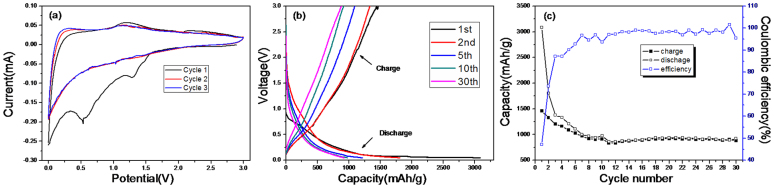
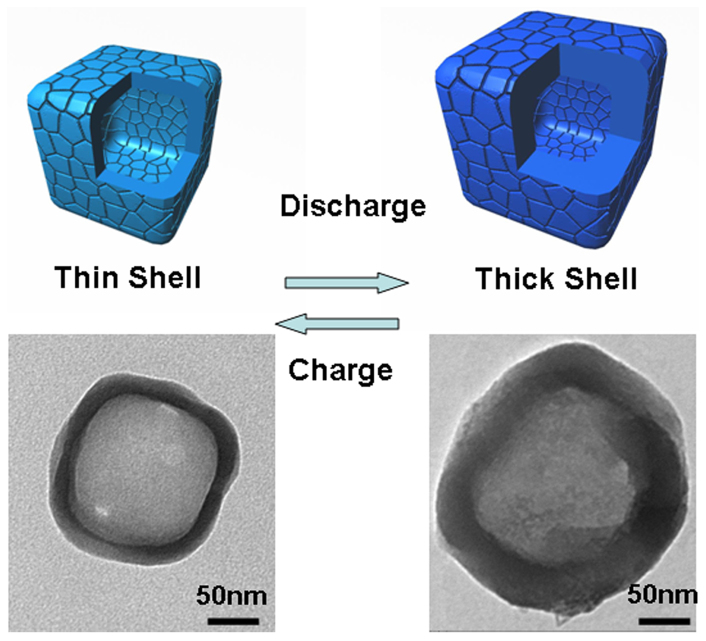
The high theoretical capacity and low discharge potential of silicon have attracted much attention on Si-based anodes. Herein, hollow porous SiO2 nanocubes have been prepared via a two-step hard-template process and evaluated as electrode materials for lithium-ion batteries. The hollow porous SiO2 nanocubes exhibited a reversible capacity of 919 mAhg(-1) over 30 cycles. The reasonable property could be attributed to the unique hollow nanostructure with large volume interior and numerous crevices in the shell, which could accommodate the volume change and alleviate the structural strain during Li ions' insertion and extraction, as well as allow rapid access of Li ions during charge/discharge cycling. It is found that the formation of irreversible or reversible lithium silicates in the anodes determines the capacity of a deep-cycle battery, fast transportation of Li ions in hollow porous SiO2 nanocubes is beneficial to the formation of Li2O and Si, contributing to the high reversible capacity.
硅具有高理论容量和低放电电位,因此备受关注,成为硅基阳极的研究热点。本文通过两步硬模板法制备了具有空心多孔结构的纳米立方氧化硅,并将其作为锂离子电池的电极材料进行了评估。空心多孔纳米立方氧化硅在 30 个循环中表现出 919 mAhg(-1)的可逆容量。其合理的性能可归因于独特的空心纳米结构,具有较大的内部体积和壳层中的众多缝隙,这可以适应锂离子插入和提取过程中的体积变化和结构应变,并允许在充电/放电循环期间快速进入锂离子。研究发现,电池中不可逆或可逆的硅锂化合物的形成决定了深循环电池的容量,而在空心多孔纳米立方氧化硅中锂离子的快速传输有利于 Li2O 和 Si 的形成,有助于获得高可逆容量。